
By Aaryan C Last updated: November 2026
Choosing the right plant protein powder for muscle gain comes down to four things: a complete amino acid profile, at least 2.5 g of leucine per serving, a clean ingredient list, and third-party testing. A pea-rice blend checks all four boxes because pea protein is rich in lysine while rice protein fills the methionine gap — together, they match whey's amino acid score. Ameta-analysis of 9 studies confirms that plant protein produces similar muscle and strength gains as whey when total daily protein intake is matched.
If you are serious about building muscle on a plant-based or flexitarian diet in India, this guide walks you through exactly what to look for — and what to avoid — before you buy.
Why Plant Protein Works for Muscle Gain (What the Research Says)
Plant protein builds muscle as effectively as whey when total daily intake and training are matched — multiple studies now confirm this.
A common gym myth is that plant protein cannot build muscle as effectively as whey. The evidence disagrees.
Astudy published in the Journal of the International Society of Sports Nutrition found that pea protein produced the same increase in biceps muscle thickness as whey protein over 12 weeks of resistance training. Participants took 25 g twice daily.
Ameta-analysis of 9 studies (266 participants) concluded that plant protein supplementation produced "similar gains in strength and lean body mass" compared to whey during resistance exercise training.
Astudy in Nutrients compared pea and whey protein after eccentric exercise and found comparable muscle recovery outcomes. The authors noted that leucine-fortified pea protein may further close any remaining gap.
|
Study |
Year |
Finding |
|
Babault et al. (JISSN) |
2015 |
Pea protein = whey for biceps thickness over 12 weeks |
|
Messina et al. (meta-analysis) |
2018 |
Plant protein = whey for strength and lean mass (9 studies) |
|
Banaszek et al. (Nutrients) |
2020 |
Pea protein comparable to whey for post-exercise recovery |
The takeaway: When you eat enough total protein and choose a blend with a complete amino acid profile, plant protein builds muscle just as well as whey.
Step 1: Check the Amino Acid Profile
The most important factor in choosing a plant protein for muscle gain is the amino acid profile — specifically, whether it has enough leucine and all nine essential amino acids.
Not all plant proteins are created equal. Single-source proteins have gaps:
|
Protein Source |
Strength |
Weakness |
|
Pea protein |
High in lysine, arginine, BCAAs |
Low in methionine |
|
Rice protein |
High in methionine, cysteine |
Low in lysine |
|
Complete profile |
Taste and digestibility concerns |
|
|
Hemp protein |
Good fats, fibre |
Lower protein content per scoop |
Why a pea-rice blend wins: When you combine pea and rice protein, the amino acid profilebecomes complementary — pea fills the lysine gap in rice, and rice fills the methionine gap in pea. The result is a PDCAAS (Protein Digestibility-Corrected Amino Acid Score) close to 1.0, which is the same as whey. For a deeper comparison, see our guide onpea vs soy vs rice protein.
What to look for on the label:
-
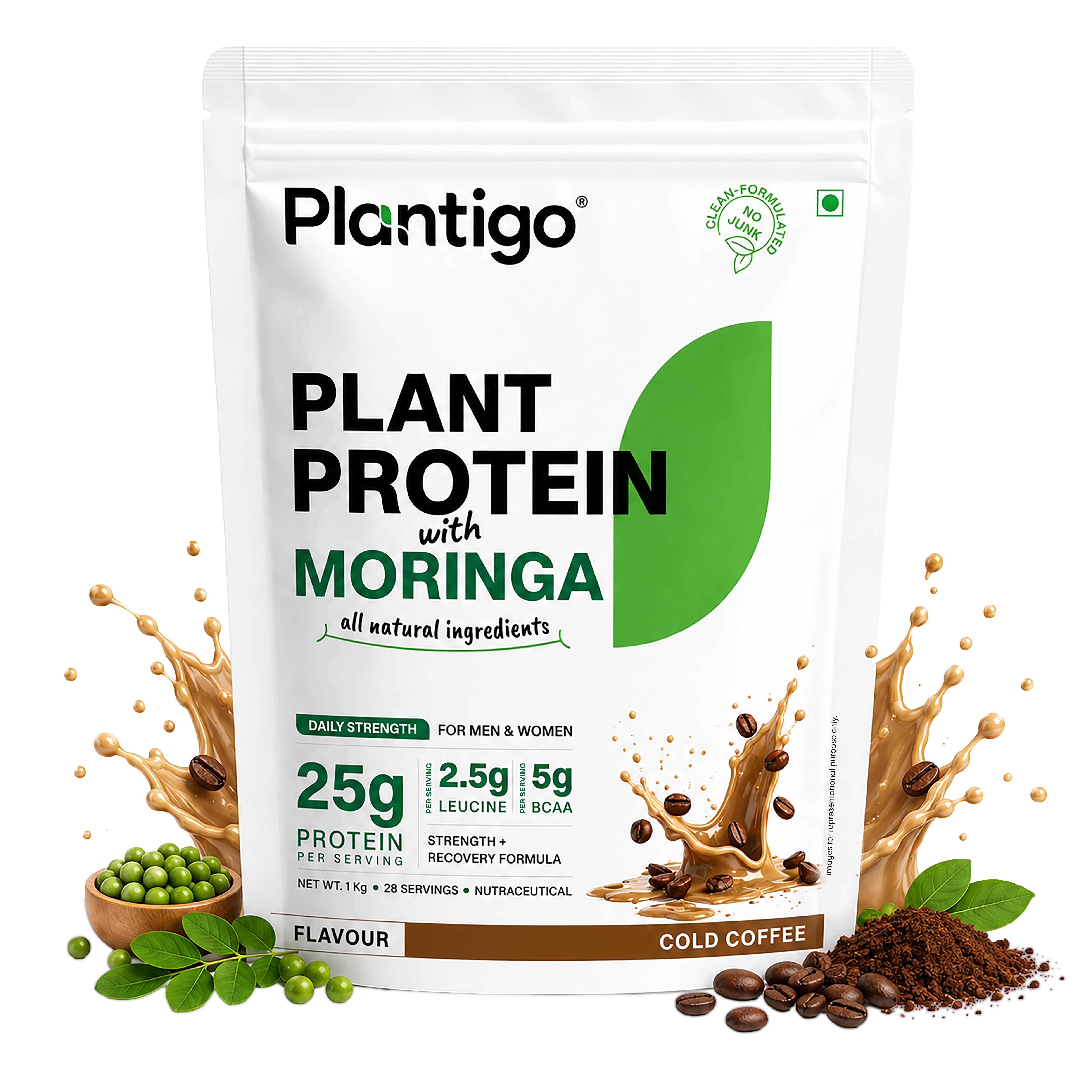
Leucine per serving: At least 2.5 g — thethreshold needed to trigger muscle protein synthesis
-
BCAAs per serving: At least 5 g
-
Total protein per scoop: At least 20–25 g
-
Protein source listed first in the ingredient list
Step 2: Look at Protein Per Scoop and Serving Size
Marketing can be misleading — some brands show protein per 100 g instead of per scoop, or use a large scoop to inflate the number.
|
What to Check |
Good Sign |
Red Flag |
|
Protein per scoop |
20–30 g per 30–35 g scoop |
Less than 15 g per scoop |
|
Protein percentage |
70%+ of scoop weight is protein |
Below 50% (rest is fillers) |
|
Serving size |
Clearly mentioned in grams |
Only mentioned as "1 scoop" |
|
Added sugars |
Less than 2 g |
More than 5 g per serving |
Quick math: Divide protein per serving by scoop size. If a brand gives you 20 g protein from a 40 g scoop, that is only 50% protein — the rest is sweeteners, thickeners, or fillers. A good plant protein should deliver at least 65–75% protein by weight.
Step 3: Avoid These Ingredients
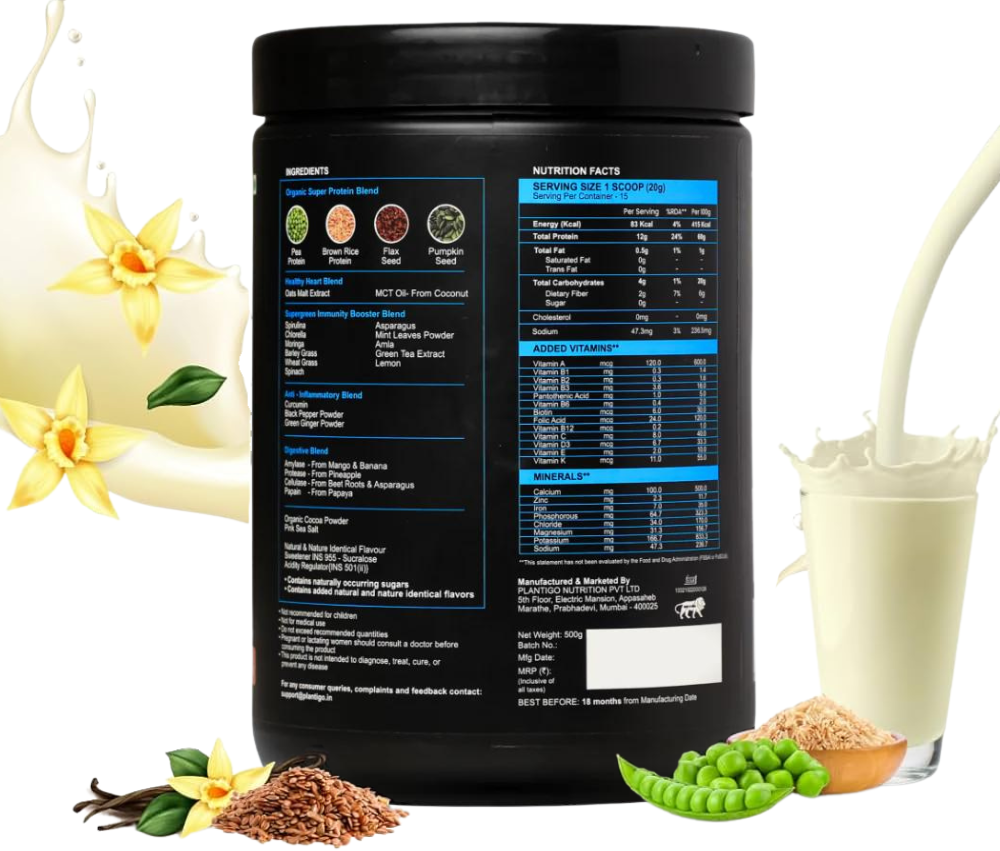
Scan the back label for fillers, artificial sweeteners, and "proprietary blends" that hide ingredient ratios.
Ingredients to watch out for:
-
Maltodextrin or dextrose — cheap carb fillers that spike blood sugar
-
Artificial sweeteners (sucralose, aspartame, acesulfame-K) — unnecessary; look for stevia or monk fruit
-
"Proprietary blends" — hides actual protein source ratios
-
Added creatine or BCAAs at tiny doses — marketing tactic; not enough to be effective
-
Thickeners like carrageenan in large amounts
The clean label checklist:
✅ Pea protein isolate + rice protein listed as first two ingredients
✅ Natural sweetener (stevia, monk fruit)
✅ Digestive enzymes added (protease, papain)
✅ No artificial colours or flavours
✅ Third-party tested (FSSAI + additional certification)
Step 4: Match Protein Intake to Your Muscle Gain Goal
The amount of protein you need depends on your training intensity and body weight — the ICMR recommendation of 0.8 g/kg is for sedentary adults, not gym-goers.
Research shows most Indians already fall short of even the basic 0.8–1.0 g/kg recommendation. For muscle gain, the targets are significantly higher:
|
Goal |
Daily Protein Need |
Example (70 kg person) |
|
General fitness |
0.8–1.0 g/kg body weight |
56–70 g/day |
|
Muscle maintenance |
1.2–1.4 g/kg |
84–98 g/day |
|
Muscle gain (moderate training) |
1.6–1.8 g/kg |
112–126 g/day |
|
Muscle gain (intense training) |
1.8–2.2 g/kg |
126–154 g/day |
Research suggests spreading protein across 4 meals at 0.4 g/kg per meal is more effective for muscle protein synthesis than eating most protein in one or two meals.
For most Indian gym-goers aiming for muscle gain: 1.6–2.0 g/kg per day is the sweet spot. If your diet gives you 50–60 g throughdal, paneer, and other high-protein Indian foods, one to two scoops of plant protein (40–50 g) can fill the gap.
Learn more about daily protein math in our guide onhow much protein you actually need per day.
Step 5: Consider Timing and Stacking
When you take protein matters — but not as much as how much you take overall.
|
Timing |
Purpose |
What to Do |
|
Within 1–2 hours post-workout |
Muscle repair and MPS |
25–30 g plant protein shake |
|
Morning (with breakfast) |
Break overnight fast, prevent muscle breakdown |
20–25 g protein with oats or roti |
|
Before bed |
Slow-release repair during sleep |
20 g protein with a banana or warm milk |
|
Between meals |
Prevent long protein gaps |
15–20 g as a mid-meal snack shake |
For a detailed breakdown, read our guide on thebest time to take protein.
Stacking for better results
If you are vegetarian and training hard for muscle gain, consider stacking your plant protein with:
-
Creatine monohydrate (3–5 g/day): Asystematic review found that vegetarians have 20–30% lower baseline creatine stores than meat-eaters, andbenefit more from supplementation.
-
Vitamin D3: Essential for muscle function; many Indians are deficient.
-
Omega-3 (algal DHA): Supports recovery and reduces inflammation.
How to Use Plant Protein Powder for Muscle Gain (Practical Indian Recipes)
You don't have to drink a plain shake every time. Here are four ways to use plant protein that work with an Indian kitchen.

1. Post-Workout Shake Blend 1 scoop plant protein + 1 banana + 200 ml cold milk or water + 1 tbsp peanut butter. Drink within 1 hour of training.
2. Protein Oats (Breakfast) Cook 50 g oats, let cool slightly, stir in 1 scoop plant protein + chopped almonds + honey.
3. Protein Roti Dough Mix 1 scoop unflavoured plant protein into atta dough before rolling. Adds 20+ g protein to 3–4 rotis.
4. Evening Sattu-Style Shake Blend 1 scoop plant protein + 2 tbsp roasted chana sattu + 200 ml buttermilk + pinch of black salt + cumin. A high-protein Indian classic.
7 Mistakes to Avoid When Choosing Plant Protein for Muscle Gain
1. Buying based on price alone. The cheapest option often uses low-quality fillers. Check protein percentage per scoop first.
2. Ignoring the amino acid profile. A single-source plant protein (only pea, or only rice) will have amino acid gaps. Always choose a blend or supplement with extra leucine.
3. Expecting results without resistance training. Protein powder is fuel, not magic. Without progressive overload in the gym, extra protein gets stored or excreted — not turned into muscle.
4. Taking too much at once. Your body uses about0.4 g/kg per meal for muscle building. For a 70 kg person, that is ~28 g per sitting. Excess beyond that offers diminishing returns.
5. Skipping food sources. Protein powder supplements your diet — it does not replace meals.Indian foods like paneer, rajma, chole, and moong dal should form your protein base.
6. Not checking third-party testing. In India, FSSAI registration is mandatory, but some brands also test for heavy metals and banned substances through third-party labs. Look for this.
7. Falling for "mass gainer" labels. Many mass gainers are 70% maltodextrin (sugar) and 15% protein. You are better off adding banana, oats, and peanut butter to a goodplant protein powder.

Plant Protein vs Whey for Muscle Gain: Quick Comparison
|
Factor |
Plant Protein (Pea-Rice Blend) |
Whey Protein |
|
Amino acid completeness |
Complete when blended |
Complete |
|
Leucine per 25 g serving |
2.0–2.5 g |
2.5–3.0 g |
|
Muscle gain (matched protein) |
Equal (meta-analysis) |
Equal |
|
Digestibility (PDCAAS) |
0.89–1.0 (blend) |
1.0 |
|
Lactose |
None |
Present (may cause bloating) |
|
Cholesterol |
None |
Small amounts |
|
Suitable for lactose-intolerant |
Yes |
No (unless isolate) |
|
Environmental impact |
Lower |
Higher |
|
Common allergens |
None (unless soy-based) |
Dairy |
For a detailed comparison, read our guide onplant protein vs whey protein.
If you are lactose intolerant, see our guide onchoosing a lactose-free protein powder.
Who Should Choose Plant Protein for Muscle Gain?
For Men
Men typically need 1.6–2.2 g/kg daily for muscle gain. Two scoops of a pea-rice blend (40–50 g protein) plus a high-protein Indian diet usually gets you there. If you are training heavy (4–6 days/week), prioritise the post-workout and morning windows.
For Women
Women respond equally well to protein supplementation for muscle gain, but typically need slightly less — 1.4–1.8 g/kg per day. One scoop (20–25 g) post-workout plus protein-rich meals is usually sufficient. Astudy found that plant protein produces satiety responses comparable to whey — so you won't feel hungrier switching to plant-based.
For Beginners
If you have never used protein powder before, start with one scoop per day (post-workout) and build up. Read ourbeginner's guide to protein powder for a complete walkthrough.
For Older Adults
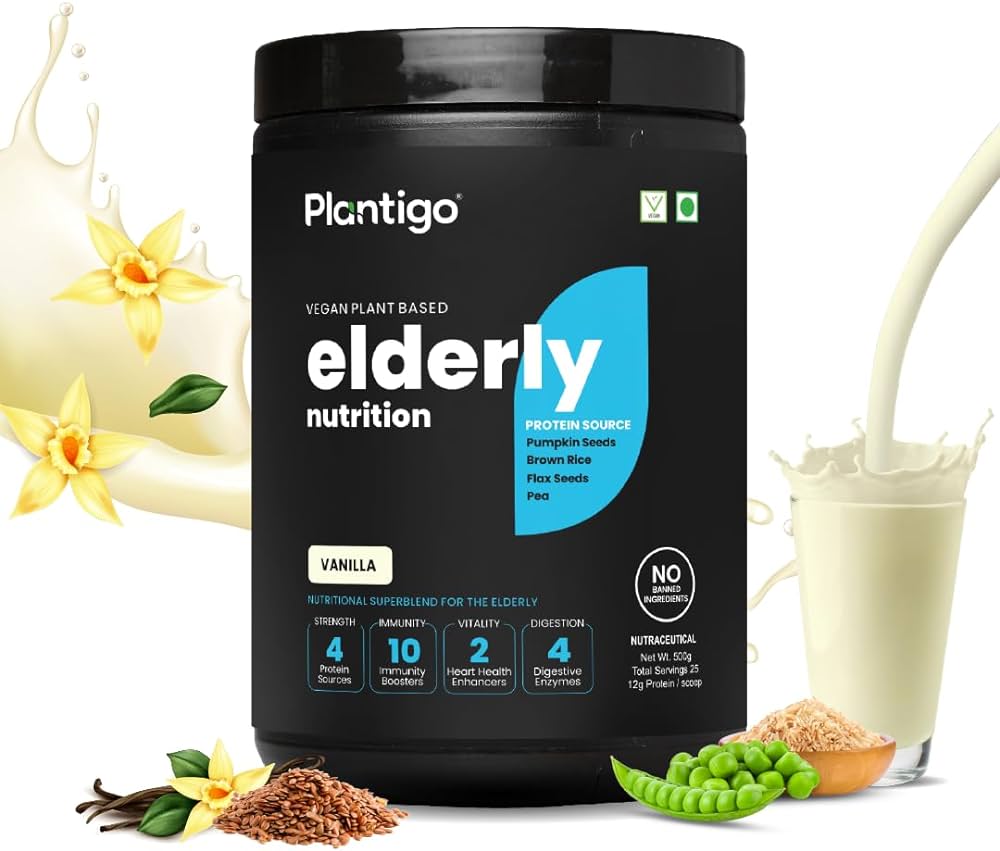
Adults over 50 need more protein per meal (at least 30 g) to trigger the same muscle protein synthesis response. Aplant protein formulated for seniors can help maintain muscle mass during aging. Read our guide onchoosing protein powder for elderly parents.
The Bottom Line
Choosing the right plant protein powder for muscle gain is not complicated once you know what to look for. Pick a pea-rice blend with at least 20 g protein per scoop, check for 2.5 g leucine and clean ingredients, match your total intake to 1.6–2.0 g/kg body weight, and pair it with consistent resistance training.
The science is clear: plant protein builds the same amount of muscle as whey when total protein and training are matched. The real variable is not the protein source — it is whether you show up to train and eat enough.
👉 Looking for a clean pea-rice protein for muscle gain? Check out ourplant protein collection or themuscle gain formula.
Frequently Asked Questions
1. Can plant protein really build muscle as well as whey?
Yes. A 2018 meta-analysis of 9 studies found plant protein produced equal muscle and strength gains when total protein intake was matched.
2. How much plant protein should I take daily for muscle gain?
Aim for 1.6–2.0 g/kg body weight from all sources. One to two scoops (20–50 g) can fill the gap left by your Indian diet.
3. Is pea protein alone enough for muscle gain?
It works, but a pea-rice blend is better — it provides a complete amino acid profile since pea is low in methionine, which rice supplies.
4. When is the best time to drink plant protein for muscle gain?
Within 1–2 hours post-workout is ideal. But total daily intake matters more than exact timing.
5. Do I need to add creatine with plant protein?
Not required but recommended — vegetarians have 20–30% lower baseline creatine stores and benefit more from supplementation.
6. Can plant protein cause bloating or gas?
Some people get initial bloating from pea protein. Start with half a scoop and choose a product with digestive enzymes.
7. Is plant protein safe for diabetics who want to build muscle?
Yes, most plant proteins have a low glycemic index. Avoid brands with maltodextrin or sugar. See ourguide for diabetics.
8. How do I know if a plant protein brand in India is genuine?
Check for FSSAI license, third-party lab reports, transparent amino acid profile on the label, and no proprietary blends.
Disclaimer: This article is for educational purposes only and does not constitute medical advice. Consult a healthcare professional or certified nutritionist before starting any new supplement regimen.