Last updated: October 2026
Taking protein powder within 2 hours of your workout — before or after — is effective for muscle growth, but total daily protein intake matters more than exact timing. A2013 meta-analysis of 23 studies found that protein timing had no significant independent effect on muscle hypertrophy or strength once total daily intake was accounted for. The "30-minute anabolic window" is largely a myth. Here's what the research actually says about when to take your protein.
Before vs After Workout: What the Research Says
Both pre- and post-workout protein produce similar muscle-building results — the difference is negligible. A2017 study published in PeerJ directly compared pre-workout vs post-workout protein intake and found no significant difference in muscle thickness, body composition, or strength gains over 8 weeks.
|
Timing |
What Happens |
Best For |
|
30–60 min before workout |
Amino acids available during training; may reduce muscle breakdown |
Those who train fasted or early morning |
|
Within 2 hours after workout |
Supports muscle protein synthesis during recovery |
Most gym-goers (the standard approach) |
|
Both (split dose) |
Covers both windows |
High-intensity or long training sessions (90+ min) |
The practical takeaway: If you eat a protein-rich meal 2–3 hours before training, you already have amino acids circulating during your workout. A post-workout shake adds value mainly if your last meal was 4+ hours ago.
For how much protein you need per serving and per day, see our guide onhow much protein per day.
The "Anabolic Window" Myth
The idea that you must consume protein within 30 minutes of training or "lose your gains" is not supported by current research. This concept was based on early studies that didn't control for total daily protein intake.
TheISSN position stand on nutrient timing (2017) concluded:
|
Old Belief |
What Research Shows |
|
Must eat within 30 min post-workout |
A 2-hour window is equally effective |
|
Missing the window wastes the workout |
Total daily intake matters far more than timing |
|
Liquid protein absorbs faster, so it's better post-workout |
Whole food protein within 2 hours produces the same results |
|
Fasted training without immediate protein kills gains |
Only a concern if your previous meal was 5+ hours ago |
What actually matters: Hit your daily protein target (0.8–2.0g per kg body weight depending on goals), spread it across 3–4 meals with 20–30g per sitting, and don't overthink the exact minute you consume it.
Best Time by Goal
Your optimal protein timing depends on what you're trying to achieve — muscle gain, weight loss, or general health. Here's a breakdown:
For Muscle Gain
-
Priority: 20–30g protein within 2 hours of training
-
Split approach: 15g pre-workout + 15–20g post-workout for sessions over 90 minutes
-
Before bed: 20–30g slow-digesting protein (like a pea-rice blend) may support overnight muscle recovery — a2012 study found that protein before sleep increased muscle protein synthesis rates by 22% overnight
-
Total daily target: 1.4–2.0g per kg body weight (ISSN recommendation)
If muscle gain is your primary goal, aplant protein for muscle gain formula with 20g+ per serving and added BCAAs gives you the most efficient option.

For Weight Loss
-
Priority: Protein at breakfast — it reduces hunger hormones and keeps you full longer
-
Morning shake: Replace a carb-heavy breakfast (poha, toast, biscuits) with a protein shake + fruit
-
Between meals: A mid-morning or evening scoop curbs snacking on high-calorie foods
-
Total daily target: 1.2–1.6g per kg to preserve muscle while losing fat
For General Health & Recovery
-
Priority: Consistent daily intake across meals matters most
-
Best slot: Between meals (10 AM or 4 PM) to fill the protein gaps that typical Indian meals leave
-
Seniors: Between meals works best — it adds to intake without suppressing appetite for regular meals
-
Total daily target: 0.8–1.0g per kg for sedentary adults; 1.0–1.2g for active adults
Morning vs Night: When Is Better?
Morning protein is better for appetite control and weight management; nighttime protein is better for muscle recovery and growth. Both are effective — choose based on your goal.
|
Factor |
Morning Protein |
Nighttime Protein |
|
Appetite control |
✅ Reduces hunger through the day |
Minimal effect on daytime appetite |
|
Muscle recovery |
Moderate (if taken post-morning workout) |
✅ Supports overnight muscle protein synthesis |
|
Blood sugar |
✅ Blunts the glucose spike from carb-heavy breakfasts |
Minimal effect |
|
Sleep quality |
No significant effect |
No negative effect at moderate doses (20–30g) |
|
Best for |
Weight loss, breakfast skippers |
Muscle gain, evening gym-goers |
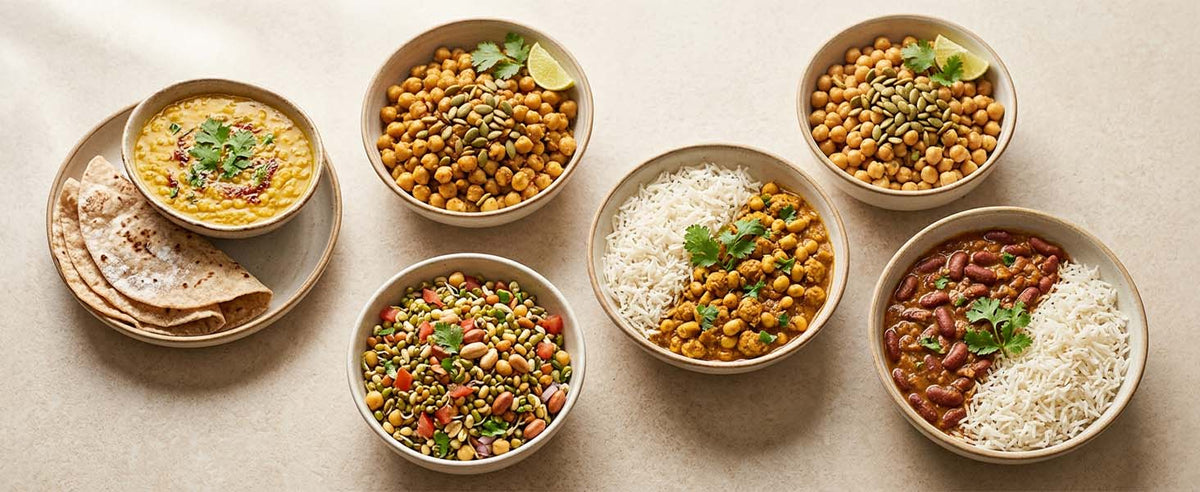
For most Indians: Morning is the bigger opportunity. Typical Indian breakfasts (poha, idli, upma, paratha) deliver 3–8g protein against a 20g+ target. Adding a scoop ofplant protein to your morning routine fixes the most common protein gap in the Indian diet.
How to Time Protein on an Indian Diet
Most Indians bunch protein at dinner (dal + sabzi) and eat almost none at breakfast — spreading it across the day is the single most impactful timing change. Here's a realistic Indian protein schedule:

|
Time |
What to Have |
Protein |
|
7–8 AM |
Protein shake + banana OR besan chilla + curd |
15–20g |
|
10–11 AM |
Handful of roasted chana + peanuts |
10g |
|
1 PM |
Dal + roti/rice + sabzi |
15–18g |
|
4–5 PM |
Protein shake (post-workout if you train evenings) |
10–15g |
|
8 PM |
Dal/paneer + roti + curd |
18–22g |
|
Total |
68–85g |
This hits the target for most active adults weighing 55–70kg. Pair it with high protein Indian foods to maximise whole-food intake and use theprotein calculator to set your exact target.
For a full list of protein-dense options to slot into each meal, see our guide onprotein-rich Indian foods.
Common Timing Mistakes
These timing errors don't ruin your progress — but fixing them gives you noticeably better results.
|
Mistake |
Why It Hurts |
Fix |
|
Skipping breakfast protein |
12+ hour overnight fast extended further; muscle breakdown continues |
Add a shake or eggs/chilla to breakfast |
|
Only taking protein on gym days |
Muscle repair happens for 24–48 hours post-training |
Take protein daily, not just on workout days |
|
Mega-dose in one sitting (50g+) |
Diminishing returns beyond 30–40g per meal for muscle synthesis |
Split into 3–4 doses of 20–30g |
|
Taking protein with a heavy meal |
Slows absorption when you're already getting protein from food |
Take it between meals or with low-protein meals |
|
Relying only on the supplement |
Whole foods provide fibre, vitamins, and minerals that powder doesn't |
Supplement fills the gap — food is the base |
If you're unsure whether your current intake is adequate, check forsigns of protein deficiency.
The Verdict
Total daily protein intake matters more than exact timing — but smart timing gives you an extra edge. Here's the hierarchy:
-
Hit your daily target first — this drives 80% of results
-
Spread protein across 3–4 meals — 20–30g per sitting
-
Don't skip breakfast protein — the biggest gap in Indian diets
-
Take it within 2 hours of training — before or after both work
-
Consider a bedtime dose — if muscle gain is the priority
For howplant protein vs whey protein compare on absorption and timing, see our comparison guide.
👉Shop Plantigo's plant protein range
Disclaimer: This article is for educational purposes only and is not a substitute for medical or nutritional advice. Consult a certified sports nutritionist for personalised timing recommendations.
FAQs
1. Should I take protein powder before or after workout?
Both work equally well. Research shows no significant difference in muscle gains. Take it within 2 hours of training — or split the dose if sessions exceed 90 minutes.
2. Is the 30-minute anabolic window real?
No — a meta-analysis of 23 studies found no independent effect of timing on muscle growth once total daily protein was matched. A 2-hour window is equally effective.
3. Can I take protein powder on an empty stomach?
Yes — it's safe and absorbs faster. Morning fasted protein is especially useful for Indians who eat carb-heavy breakfasts with almost no protein.
4. Is it OK to take protein powder before bed?
Yes — research shows 20–30g before sleep increases overnight muscle protein synthesis by 22% without affecting sleep quality.
5. How many times a day should I take protein powder?
1–2 scoops for most people — once between meals and once around training. The rest of your protein should come from whole foods like dal, paneer, and legumes.
6. Does protein timing matter for weight loss?
Somewhat — protein at breakfast reduces hunger and snacking through the day. But total daily intake and calorie deficit matter far more than timing.