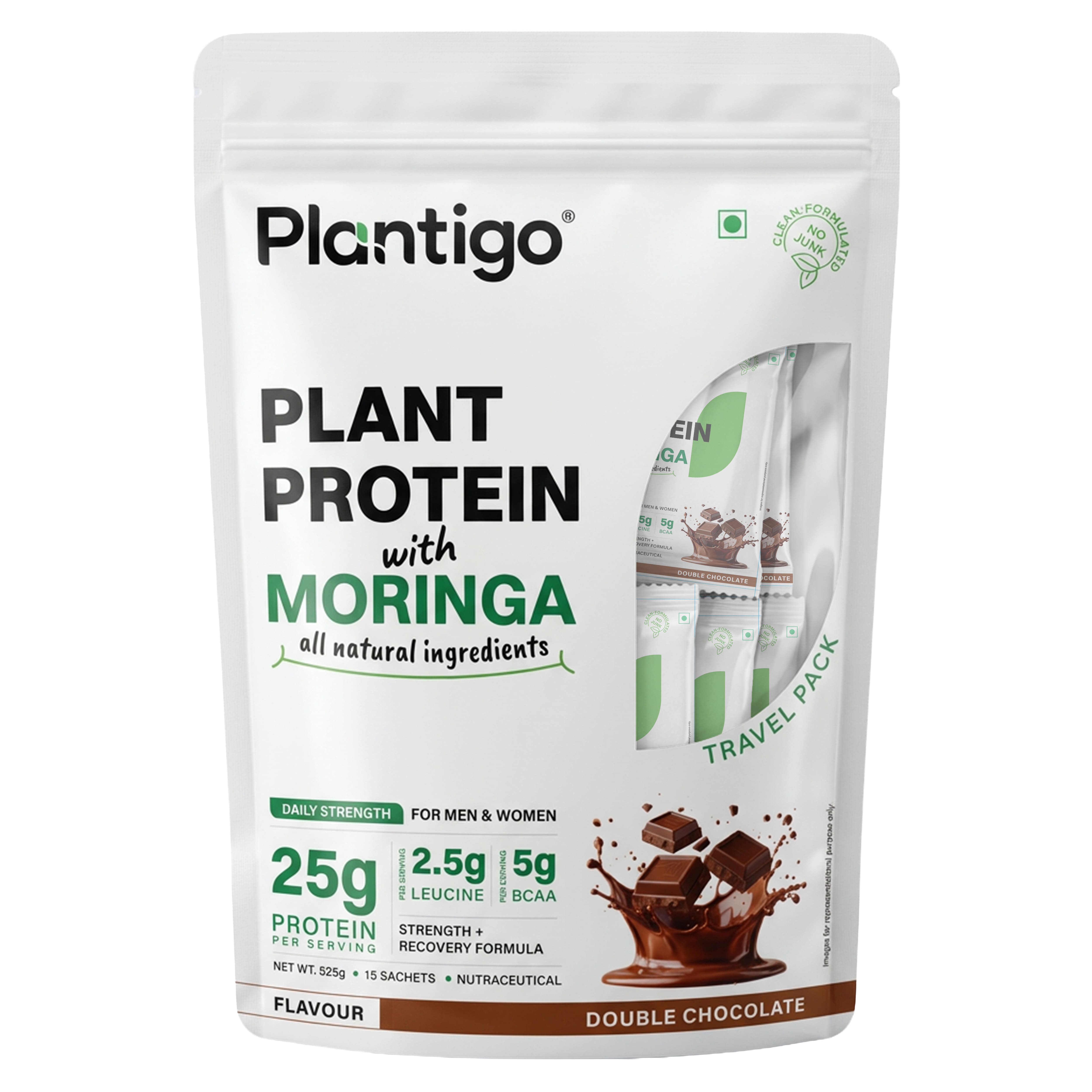

Plant protein is the better choice for most Indians. About 3 in 4 Indians are lactose intolerant to some degree, which means whey — a milk derivative — causes bloating, gas, and discomfort for a majority of buyers. A pea-and-rice plant protein blend matches whey on protein quality (PDCAAS ~0.98–1.0 vs whey's 1.0) and delivers comparable muscle gains, without the digestive trouble.
That said, whey still has its place. Here's the full comparison.
Plant Vs Whey Protein Comparison
|
Factor |
Whey Protein |
Plant Protein (Pea + Rice Blend) |
|
Source |
Cow's milk (dairy byproduct) |
Peas, brown rice, or soy |
|
PDCAAS Score |
1.0 |
0.98–1.0 (blended) |
|
Leucine per serving |
~2.5–3g |
~2.0–2.3g |
|
Lactose |
Yes (concentrate has more) |
None |
|
Digestibility for Indians |
Problematic for ~75% |
Easy on the stomach |
|
Muscle gain |
Proven |
Comparable (research-backed) |
|
Average cost (India) |
₹25–40 per 25g protein |
₹30–50 per 25g protein |
|
Suitable for vegetarians |
Lacto-vegetarian only |
Yes (all vegetarians) |
|
Common side effects |
Bloating, acne, gas |
Minimal |
What Is Whey Protein?
Whey is the liquid left over when milk is curdled during cheese-making. It's dried and processed into powder form. There are two main types:
Whey concentrate contains 70–80% protein along with some lactose and fat. It's cheaper but harder to digest for lactose-intolerant individuals.
Whey isolate goes through extra filtering to remove most lactose, reaching 90%+ protein. It's easier on the stomach but costs more — and even isolate retains trace lactose that can trigger symptoms in highly sensitive people.
What Is Plant Protein?
Plant protein powder is extracted from sources like peas, brown rice, soy, or hemp. The key distinction:
Single-source plant proteins (pea alone or rice alone) have incomplete amino acid profiles. Pea protein is low in methionine; rice protein is low in lysine.
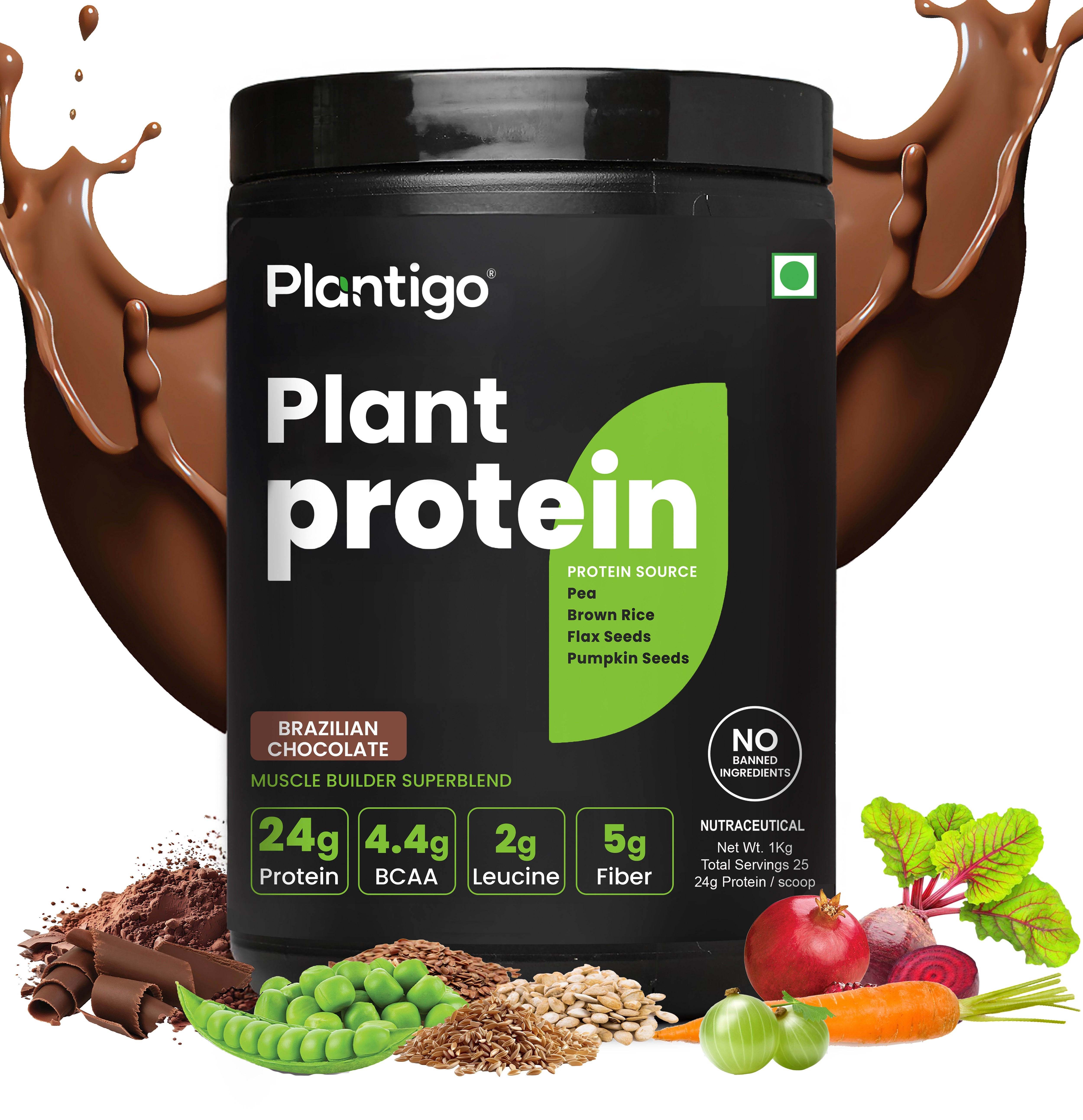
Blended plant proteins combine two or more sources — typically pea and brown rice in a 70:30 ratio — to create a complete amino acid profile with a PDCAAS of 0.98–1.0. This is nearly identical to whey.
If you're choosing aplant protein powder, always check whether it's a blend.

Whey Protein Side Effects Indians Face
This is where the India-specific data matters most.
Amulti-region survey published in the Journal of Gastroenterology and Hepatology found that about 3 in 4 Indians cannot digest milk properly. The prevalence is even higher in South India —at least 82% according to regional studies.

Common whey protein side effects in India:
-
Bloating and gas — the most reported complaint, especially with whey concentrate
-
Acne breakouts — dairy proteins increase insulin-like growth factor (IGF-1), which triggers sebum production
-
Stomach cramps — particularly after shakes made with milk instead of water
Plant protein eliminates all three issues because it contains zero lactose and no dairy-derived hormones.
Muscle Building: Can Plant Protein Match Whey?
Yes — with a caveat.
A2019 pea protein study found that pea protein produced equivalent gains in muscle thickness compared to whey protein over 8 weeks of resistance training.
The key finding: total daily protein intake matters more than the source. TheISSN position stand recommends 1.4–2.0g of protein per kilogram of body weight per day for active individuals. Hit that target with either source, and the muscle-building results are comparable.
Whey does have a slight edge in leucine content (~2.5–3g per serving vs ~2.0–2.3g in plant blends). Leucine is the primary amino acid that triggers muscle protein synthesis. But this difference can be offset by consuming a slightly larger serving of plant protein or adding leucine-rich foods likekabuli chana or soy to your diet.
Digestibility: The Indian Factor
For Indian consumers, digestibility isn't a nice-to-have — it's the deciding factor.
The average Indian diet is alreadyhigh in legumes and grains like besan, dal, and roti. The gut microbiome of most Indians is well-adapted to digesting plant-based proteins.
Whey, on the other hand, introduces a dairy-derived protein that many Indian digestive systems aren't equipped to handle efficiently. This isn't a matter of preference — it's genetics. The lactase enzyme that breaks down lactose becomes less active after childhood in a majority of South Asian populations.
If you've ever felt heavy or bloated after a whey shake, lactose malabsorption is likely the reason.
Cost Comparison in India
Don't compare tub prices. Compare cost per gram of actual protein.
Here's how to calculate it:
Formula: (Price of tub ÷ Total protein in tub) = Cost per gram of protein
For example:
-
A ₹2,000 whey tub with 750g of actual protein = ₹2.67 per gram
-
A ₹1,600 plant protein tub with 600g of actual protein = ₹2.67 per gram
The prices are closer than most people assume. Whey concentrate is usually cheaper per gram, but whey isolate (which you need if you're lactose intolerant) costs as much or more than plant protein.
Bottom line: If you'd need whey isolate anyway because of digestive issues, plant protein gives you the same value without the compromise.
The Verdict
For most Indians, plant protein is the smarter choice. Here's the decision framework:
Choose plant protein if you:
-
Experience any bloating, gas, or discomfort with dairy
-
Are vegetarian or want to avoid animal-derived supplements
-
Have acne-prone skin
-
Want a protein that's easier on the Indian digestive system
Choose whey protein if you:
-
Digest dairy without any issues
-
Want the highest leucine content per serving
-
Prefer whey concentrate for budget reasons and have no lactose sensitivity
For the ~75% of Indians who are lactose intolerant, the choice is clear. A blendedplant protein with a PDCAAS of 0.98+ gives you everything whey does — without the side effects.
FAQs
1. Is plant protein as good as whey for muscle building?
Yes. Studies show pea protein produces equivalent muscle gains to whey when you hit 1.4–2.0g protein per kg body weight daily. The total amount matters more than the source.
2. Does whey protein cause acne?
It can. Dairy proteins raise IGF-1 levels, which trigger excess sebum production. Plant protein doesn't have this effect.
3. Which is cheaper — whey or plant protein in India?
Whey concentrate is slightly cheaper per gram, but whey isolate costs about the same as plant protein. Always compare cost per gram, not tub price.
4. Can I mix plant protein with milk?
You can, but if you're avoiding dairy side effects, use water, coconut milk, or almond milk instead.
5. Does plant protein contain all essential amino acids?
Single-source ones don't, but a pea + rice blend creates a complete amino acid profile with a PDCAAS of 0.98–1.0.
6. Is whey isolate safe for lactose-intolerant people?
It removes most lactose but retains traces — highly sensitive people may still bloat. Plant protein is the safer bet if you react to dairy at all.