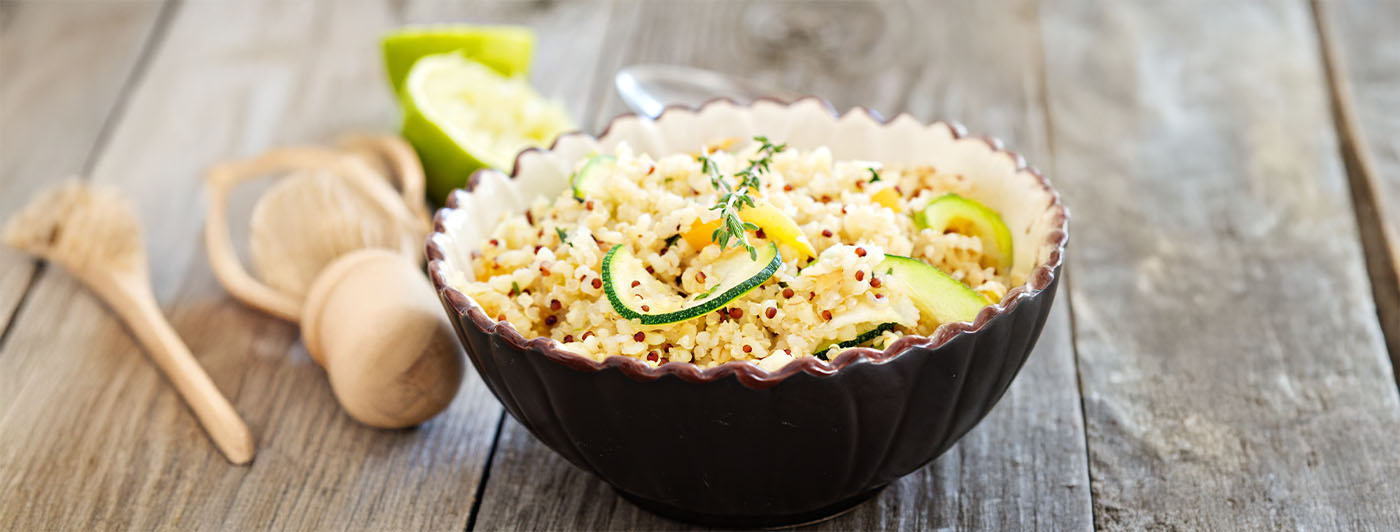
Quinoa sits on Indian kitchen shelves increasingly often — bought for its reputation as a health food, used occasionally in upma or salad, but rarely understood nutritionally. Most Indians eating quinoa assume it is primarily a protein food. The actual picture is more nuanced: quinoa's protein per 100g is meaningful, its amino acid completeness is genuinely rare among plant foods, but its carbohydrate and micronutrient profile is what makes it useful as a daily grain. Understanding the full numbers tells you exactly how quinoa fits into an Indian diet — and what it cannot do alone.
How Much Protein Does Quinoa Contain per 100g?
Quinoa contains 14g of protein per 100g raw and 4.1g per 100g cooked — making it one of the highest-protein grains available, and notably one of the few plant foods containing all nine essential amino acids in proportions adequate for adult requirements, according to aPMC review on quinoa nutritional profiling. For comparison, white rice has 2.7g protein per 100g cooked and wheat roti has approximately 3g per piece. Quinoa's protein advantage is real but modest at typical Indian serving sizes — a 100g cooked portion (roughly one katori) delivers 4.1g, not the 14g of the raw grain most labels display.
Complete Nutritional Breakdown: Quinoa per 100g
1. Macronutrient Profile — Raw vs Cooked
|
Nutrient |
Quinoa Raw (per 100g) |
Quinoa Cooked (per 100g) |
White Rice Cooked (per 100g) |
Oats Raw (per 100g) |
|
Protein (g) |
14g |
4.1g |
2.7g |
13g |
|
Carbohydrates (g) |
64g |
21.3g |
28g |
66g |
|
Fibre (g) |
7g |
2.8g |
0.4g |
10g |
|
Fat (g) |
6.1g |
1.9g |
0.3g |
6.9g |
|
Calories (kcal) |
368 |
120 |
130 |
389 |
|
GI |
~53 |
~53 |
64–72 |
~55 |
Source: USDA FoodData Central; PMC quinoa nutrition review 2024
2. Micronutrient Profile — Where Quinoa Stands Out
|
Micronutrient |
Quinoa Cooked (per 100g) |
White Rice Cooked (per 100g) |
Whole Wheat Roti (per piece ~30g) |
|
Iron (mg) |
1.5mg |
0.2mg |
0.7mg |
|
Magnesium (mg) |
64mg |
12mg |
25mg |
|
Zinc (mg) |
1.1mg |
0.5mg |
0.6mg |
|
Folate (mcg) |
42mcg |
3mcg |
8mcg |
|
Phosphorus (mg) |
152mg |
43mg |
57mg |
|
Potassium (mg) |
172mg |
35mg |
60mg |
Quinoa's micronutrient profile — particularly iron, magnesium, and folate — makes it meaningfully superior to white rice as a daily grain. For Indians on vegetarian diets with low iron intake, the 1.5mg iron per 100g cooked is a useful daily contribution, especially when paired with vitamin C sources like lemon juice or tomatoes that improve non-haem iron absorption.
3. Amino Acid Profile — Why Completeness Matters
Quinoa is one of the very few plant foods that provides all nine essential amino acids in proportions adequate for adult daily requirements — confirmed in aPMC amino acid study on quinoa. This is the core nutritional claim that separates quinoa from rice, wheat, and most other Indian grains.
|
Amino Acid |
Quinoa |
Compared to Indian Grains |
|
Lysine |
Good |
Rare in grains — quinoa is an exception |
|
Leucine |
Moderate |
Adequate for adults; lower for infants |
|
Methionine + Cysteine |
Limiting |
Lowest relative to FAO requirements |
|
Tryptophan |
Good |
Higher than wheat and rice |
|
Threonine |
Good |
Exceeds FAO adult requirements |
The practical implication for Indians: quinoa paired with dal creates a stronger complete protein meal than rice with dal, because quinoa's lysine and tryptophan complement dal's overall amino acid profile more effectively than rice does. See ourlysine-rich plant foods guide for why lysine is the most critical amino acid in Indian vegetarian diets.
4. Protein by Serving Size — What Indians Actually Eat
|
Quinoa Preparation |
Serving Size |
Protein |
|
Raw quinoa |
100g |
14g |
|
Cooked quinoa (1 katori) |
100g |
4.1g |
|
Quinoa upma (1 bowl) |
~150g cooked |
~6g |
|
Quinoa khichdi (with dal) |
~100g quinoa + 1 katori dal |
~4g + 8g = 12g |
|
Quinoa salad (1 serving) |
~100g cooked |
~4.1g |
|
Quinoa pulao |
~150g cooked |
~6g |
The takeaway: quinoa contributes 4–6g protein per typical Indian serving — more than rice but not enough to anchor daily protein needs. Its value is as a superior grain substitute, not a primary protein source.
Quinoa vs Other Indian Protein Sources: Which Is Better?
|
# |
Parameter |
Quinoa (cooked, 100g) |
White Rice (cooked, 100g) |
Oats (raw, 100g) |
Roti (1 piece, ~30g) |
Winner |
|
1 |
Protein |
4.1g |
2.7g |
13g |
~3g |
Oats |
|
2 |
Complete amino acids |
Yes |
No |
No |
No |
Quinoa |
|
3 |
Fibre |
2.8g |
0.4g |
10g |
~2g |
Oats |
|
4 |
Glycaemic Index |
~53 |
64–72 |
~55 |
~62 |
Quinoa |
|
5 |
Iron |
1.5mg |
0.2mg |
4.3mg |
0.7mg |
Oats |
|
6 |
Magnesium |
64mg |
12mg |
138mg |
~25mg |
Oats |
|
7 |
Gluten-free |
Yes |
Yes |
Oats contain avenin |
No |
Quinoa / Rice |
|
8 |
Calories per 100g |
120 kcal |
130 kcal |
389 kcal |
~70–80 kcal |
Roti |
|
9 |
Indian kitchen versatility |
Upma, khichdi, pulao |
Universal |
Porridge, chilla |
Universal |
Rice / Roti |
One-line verdict: Quinoa does not win on protein density — oats and dal are both stronger. Quinoa wins on amino acid completeness, lower GI than white rice, and micronutrient density. For Indians replacing white rice as their daily grain, quinoa is the strongest nutritional upgrade available. For a direct comparison with oats, read ouroats protein breakdown.

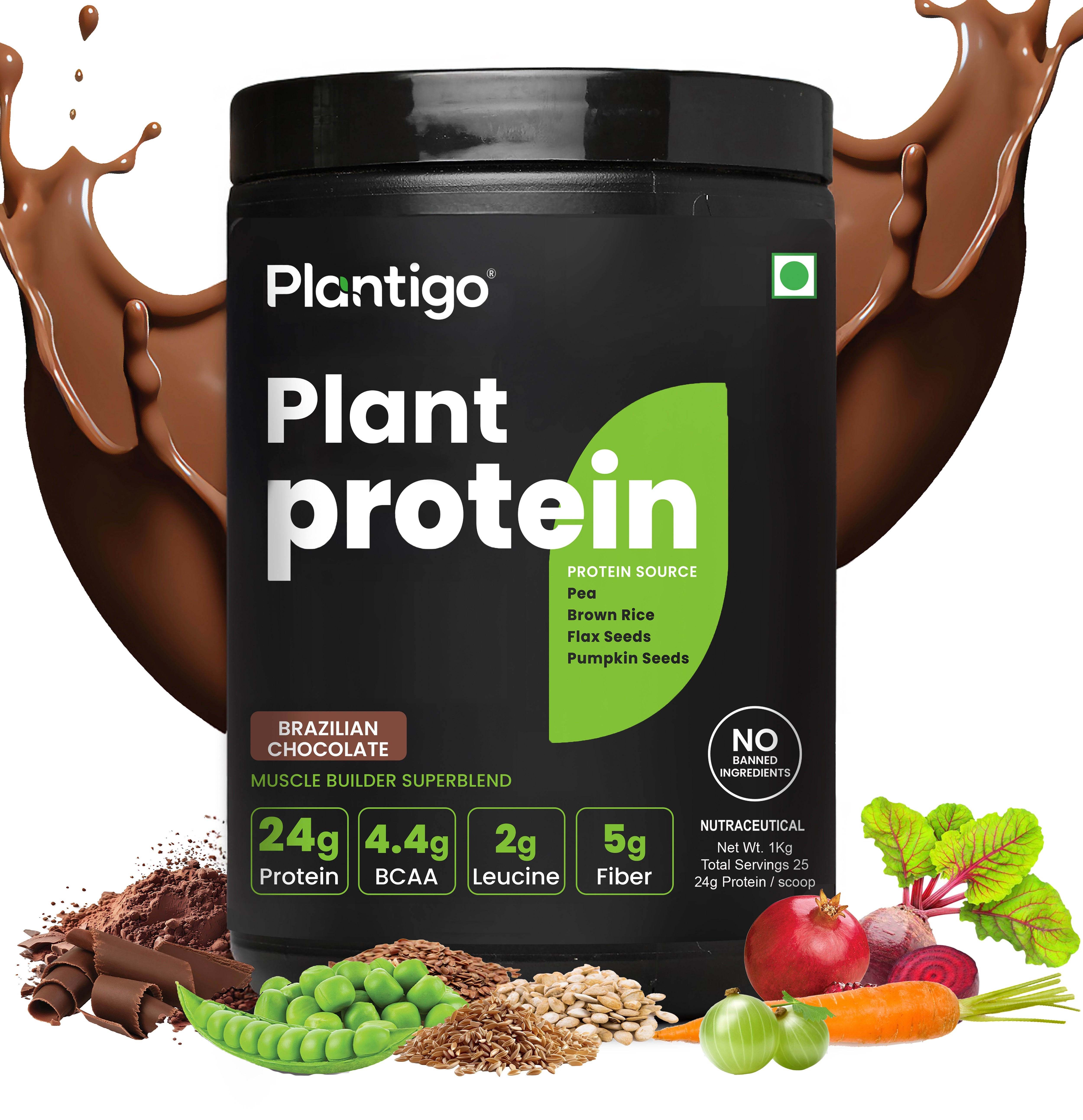
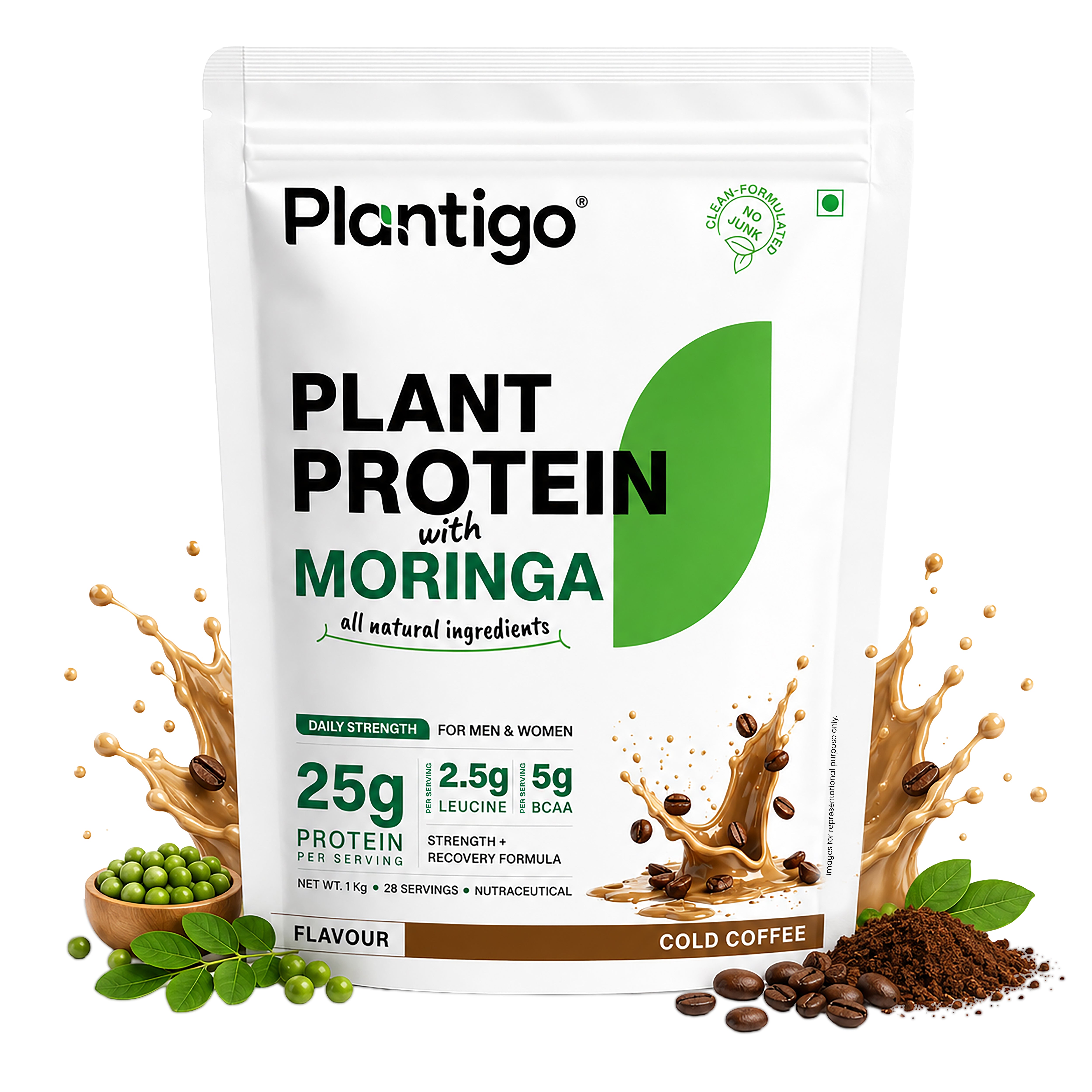
If quinoa alone isn't closing your daily protein gap, Plantigo bridges it with a complete plant-based blend of Canadian Pea Isolate, Brown Rice, Pumpkin Seed, and Flaxseed — all 9 essential amino acids, zero Class 2 preservatives, Eurofins-tested, with a 30-day taste guarantee.View Plantigo Plant Protein
Benefits of Quinoa for Indians

1. Complete Plant Protein
One of the only grains containing all 9 essential amino acids — critical for vegetarian Indians where lysine is consistently the limiting amino acid.
-
Lysine content rare in grains — fills the gap left by rice and wheat
-
Pairs with dal for a more complete amino acid profile than dal-rice
-
4.1g protein per 100g cooked — 52% more than white rice at the same calorie count
2. Blood Sugar Management
GI of ~53 makes quinoa safer than white rice for blood sugar — relevant for India's 101 million diabetics.
-
Lower glucose response than white rice (GI 64–72)
-
2.8g fibre per 100g slows carbohydrate absorption
-
Suitable as a daily rice replacement for diabetics and pre-diabetics
3. Iron for Vegetarians
1.5mg iron per 100g cooked — 7.5x more than white rice — one of the better grain sources of non-haem iron for vegetarian Indians.
-
Pair with lemon juice or tomatoes to double iron absorption
-
42mcg folate supports red blood cell production alongside iron
-
Particularly useful for women aged 20–45 at risk of iron-deficiency anaemia
4. Gut Health and Satiety
2.8g fibre per 100g cooked — 7x more than white rice — supports gut health and reduces between-meal hunger.
-
Higher satiety than rice at equivalent calories
-
Naturally gluten-free — tolerated by Indians with wheat sensitivity
5. Antioxidant Protection
Quercetin and kaempferol in quinoa have anti-inflammatory activity not found in white rice or refined grains.
-
Retained in whole grain form — processing does not strip them
-
Work synergistically with vitamin C in Indian chutneys and rasam
How Much Quinoa Should You Eat Per Day?
One katori (100g cooked, ~40g raw) per day is a practical daily amount — replacing one rice serving with quinoa. This delivers 4.1g protein, 1.5mg iron, 64mg magnesium, and 42mcg folate at just 120 kcal.
1. Who Benefits Most
-
Indians replacing white rice with a lower-GI grain for blood sugar control
-
Vegetarians needing lysine from a grain source to complement dal
-
Women aged 20–45 with low dietary iron intake
-
Active Indians needing a complete protein grain post-workout
2. Who Should Be Cautious
-
Those with oxalate kidney stones — quinoa contains 396–715mg oxalates per 100g
-
People with saponin sensitivity — always rinse quinoa thoroughly before cooking
-
Anyone expecting quinoa to replace protein supplements — at 4.1g per 100g cooked, it cannot
How to Include Quinoa in Your Indian Diet
1. Quinoa khichdi: Replace rice with quinoa in standard moong dal khichdi — 1:1 substitution works directly. The combination delivers ~12g protein per bowl and amino acid complementarity. See ourmoong dal protein guide for why this pairing is nutritionally complete.
2. Quinoa upma: Standard upma recipe with quinoa instead of semolina. Add mustard seeds, curry leaves, green chilli, and mixed vegetables. Lighter than semolina upma, higher in protein and fibre.
3. Quinoa pulao: Cook quinoa with cumin, bay leaf, peas, and carrots in the same method as rice pulao. Serves as a complete one-pot meal when paired with raita or dal.
4. Quinoa salad (lunch): 100g cooked quinoa with cucumber, tomato, coriander, lemon juice, and roasted chana. Total protein: ~8g. Lemon juice simultaneously improves iron absorption — a practical nutritional pairing. For more on how chana complements quinoa, see ourchana protein guide.
5. Post-workout bowl: 100g cooked quinoa + 1 scoop plant protein stirred in + sliced banana + a handful of soaked almonds. Total protein: ~22–24g. Complete amino acids from both quinoa and plant protein with sustained energy from the grain.
Quinoa vs Other Indian Grains
1. Quinoa vs White Rice
White rice has 2.7g protein per 100g cooked, GI of 64–72, 0.4g fibre, and virtually no micronutrient value after polishing. Quinoa outperforms it on every nutritional metric. For Indians with diabetes or insulin resistance, replacing one daily rice meal with quinoa reduces the glycaemic load of that meal by approximately 25–30%.
Quinoa advantage: Complete protein, 7x more fibre, 7.5x more iron, significantly lower GI.
2. Quinoa vs Oats
Oats deliver 13g protein per 100g raw — 3x quinoa's cooked value — with 10g fibre and 4.3mg iron. Oats are the stronger protein and fibre source. Quinoa's advantage is amino acid completeness and lower calorie density per cooked serving. See ouroats protein guide for the full comparison.
Quinoa advantage: Complete amino acids, gluten-free, lower calorie density per cooked serving, more versatile in Indian cooking.
3. Quinoa vs Roti
One roti (~30g atta) delivers ~3g protein, 70–80 kcal, and GI of ~62. Quinoa at 100g cooked delivers 4.1g protein, 120 kcal, and GI of ~53. Roti remains the more practical daily staple — cheaper, faster, universally accepted. Quinoa works as a supplement to roti meals, not a replacement. See ourroti protein breakdown for serving-by-serving comparison.
Quinoa advantage: Complete amino acids, lower GI, higher micronutrient density.
4. Quinoa vs Plant Protein Supplement
A 25g serving of plant protein delivers 20–22g protein — equivalent to eating nearly 500g of cooked quinoa. Quinoa is a grain, not a protein source in the supplement sense. For Indians using quinoa as their primary protein strategy, the numbers will not close the daily gap.
Supplement advantage: 5x more protein per gram consumed, complete amino acids from multi-source blend, consistent dose regardless of preparation method.
The Bottom Line
Quinoa contains 14g protein per 100g raw and 4.1g per 100g cooked — one of the few plant grains with complete amino acid coverage. For Indians, its real value is as a superior rice substitute: lower GI, more iron, more magnesium, and complete protein versus white rice's nutritional near-blank. It does not compete with dal, paneer, or plant protein supplements on protein density. Use quinoa as your daily grain, pair it with dal for amino acid completeness, and use a clean plant protein supplement to close the remaining daily gap that grains alone cannot fill.
Frequently Asked Questions
1. Is quinoa really high in protein?
Quinoa has 14g protein per 100g raw — high for a grain. At a typical cooked serving of 100g, it delivers 4.1g — more than rice but less than dal or oats. Its real advantage is complete amino acid coverage, not protein density.
2. Is quinoa better than roti?
Nutritionally yes — quinoa has a lower GI (~53 vs ~62), complete amino acids, and 7x more iron than wheat roti. Practically, roti remains cheaper and faster; quinoa works best as an occasional rice replacement rather than a roti substitute.
3. Which is better quinoa or oats?
Oats lead on protein (13g vs 4.1g per 100g cooked) and fibre (10g vs 2.8g). Quinoa leads on amino acid completeness and calorie efficiency per cooked serving. For blood sugar management, both are comparable at GI ~53–55.
4. What if I eat 1 cup of quinoa daily?
1 cup cooked quinoa (~185g) delivers approximately 8g protein, 5g fibre, 2.8mg iron, and 220 kcal. This is a healthy daily grain portion — it supports blood sugar control, gut health, and partial iron needs without exceeding calorie targets.
5. Is quinoa better than rice?
Yes for most nutritional metrics — lower GI, 52% more protein, 7x more fibre, 7.5x more iron per 100g cooked. For Indians managing diabetes, anaemia, or weight, quinoa is a meaningful upgrade from white rice.
External Sources
Disclaimer: This article is for educational purposes only. If you have diabetes, kidney disease, oxalate stones, or are on medication, consult your doctor or dietitian before making major dietary changes.