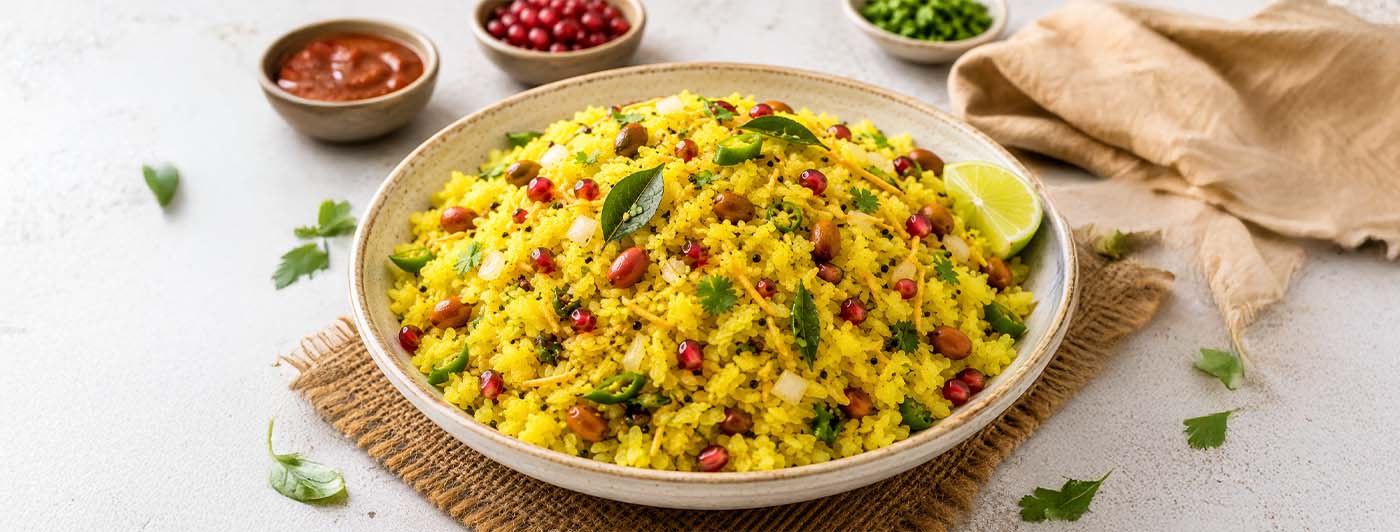
Poha is the breakfast that most Indians eat without thinking too hard about nutrition — light, quick, easy on the stomach, and somehow always satisfying. But for anyone tracking daily protein intake, it raises a real nutrition question: is it delivering enough, and if not, what is the simplest way to fix that without changing the dish? The honest answer is that poha protein is modest — this is primarily a carbohydrate breakfast — but with four simple additions it becomes one of the most versatile protein-upgradeable breakfasts in the Indian kitchen.
How Much Protein Does Poha Have?
Poha protein is approximately 2.4g per 100g raw (dry flattened rice) — making it a moderate carbohydrate food with low protein density — according to theICMR-NIN IFCT 2017. A standard 80g dry poha breakfast (the amount most Indians use) delivers approximately 2–2.5g protein before any additions. With roasted chana, peanuts, and a side of curd, the same breakfast reaches 15–18g protein — a meaningful transformation through toppings rather than a change of dish.
Complete Data Breakdown: Poha Protein
1. Poha Protein by Serving Size
|
Serving |
Dry Weight |
Cooked Weight |
Poha Protein |
Calories |
|
Small bowl |
50g dry |
~150g cooked |
1.2g |
180 kcal |
|
Standard breakfast |
80g dry |
~240g cooked |
2g |
288 kcal |
|
Large bowl |
100g dry |
~300g cooked |
2.4g |
360 kcal |
|
500g raw poha |
500g dry |
— |
12g |
1,800 kcal |
Source: ICMR-NIN IFCT 2017
2. Full Nutritional Profile — Poha per 100g Raw
|
Nutrient |
Poha (per 100g raw) |
|
Protein |
2.4g |
|
Carbohydrates |
76–80g |
|
Fibre |
0.2–0.5g |
|
Fat |
0.5g |
|
Calories |
360 kcal |
|
Iron |
20mg (fortified varieties) |
|
Thiamine (B1) |
0.06mg |
|
GI |
~70–72 |
Poha is a processed form of white rice — it shares white rice's nutritional limitations (low protein, low fibre, moderate-high GI) but has one significant advantage: iron content. Fortified poha carries up to 20mg iron per 100g — theICMR-NIN DGI 2024 specifically reference fortified poha as a practical iron delivery vehicle for Indian women and children.
3. Poha vs Other Indian Breakfasts
|
Breakfast |
Standard Serving |
Protein from Poha |
Total Protein |
Notes |
|
Plain poha |
80g dry |
2g |
2g |
Low protein baseline |
|
Poha + roasted chana (30g) |
80g + 30g |
2g + 7.5g |
9.5g |
Best poha upgrade |
|
Poha + peanuts (20g) |
80g + 20g |
2g + 5.2g |
7.2g |
Common addition |
|
Poha + curd (100g) |
80g + 100g |
2g + 3.5g |
5.5g |
Moderate upgrade |
|
2 medium idlis + sambar |
80g + 150ml |
— |
8–11g |
Better protein base |
|
Oats (80g) |
80g |
— |
10–11g |
Nearly 5x the protein |
|
2 rotis |
60g |
— |
6–8g |
More protein per gram |
Protein per poha serving is lower than most Indian breakfast alternatives. For a direct oats comparison, see ouroats protein guide. For a roti comparison, read ourroti protein breakdown.
Poha vs Other Breakfast Options: Scored Comparison
|
# |
Parameter |
Poha |
Verdict |
|
1 |
Protein per 100g raw |
2.4g |
Lowest among Indian breakfast grains |
|
2 |
Protein per standard serving |
~2g |
Very low — needs additions |
|
3 |
GI |
~70–72 |
High — similar to white rice |
|
4 |
Iron (fortified) |
Up to 20mg/100g |
Poha wins — best iron source among Indian breakfasts |
|
5 |
Fibre |
0.2–0.5g |
Very low |
|
6 |
Digestibility |
Excellent |
Poha wins — lightest Indian breakfast grain |
|
7 |
Calories per 80g serving |
~288 kcal |
Moderate — same as 2 rotis |
|
8 |
Preparation time |
10–15 minutes |
Poha wins on speed |
|
9 |
Protein upgradability |
High |
Poha wins — absorbs toppings and additions easily |
|
10 |
Is it junk food? |
No |
Whole grain origin, low fat, naturally fortified — not junk |
One-line verdict: Poha is not a protein food — it is a carbohydrate food with good iron content, excellent digestibility, and outstanding ability to absorb protein-rich additions. The breakfast version of a blank canvas.

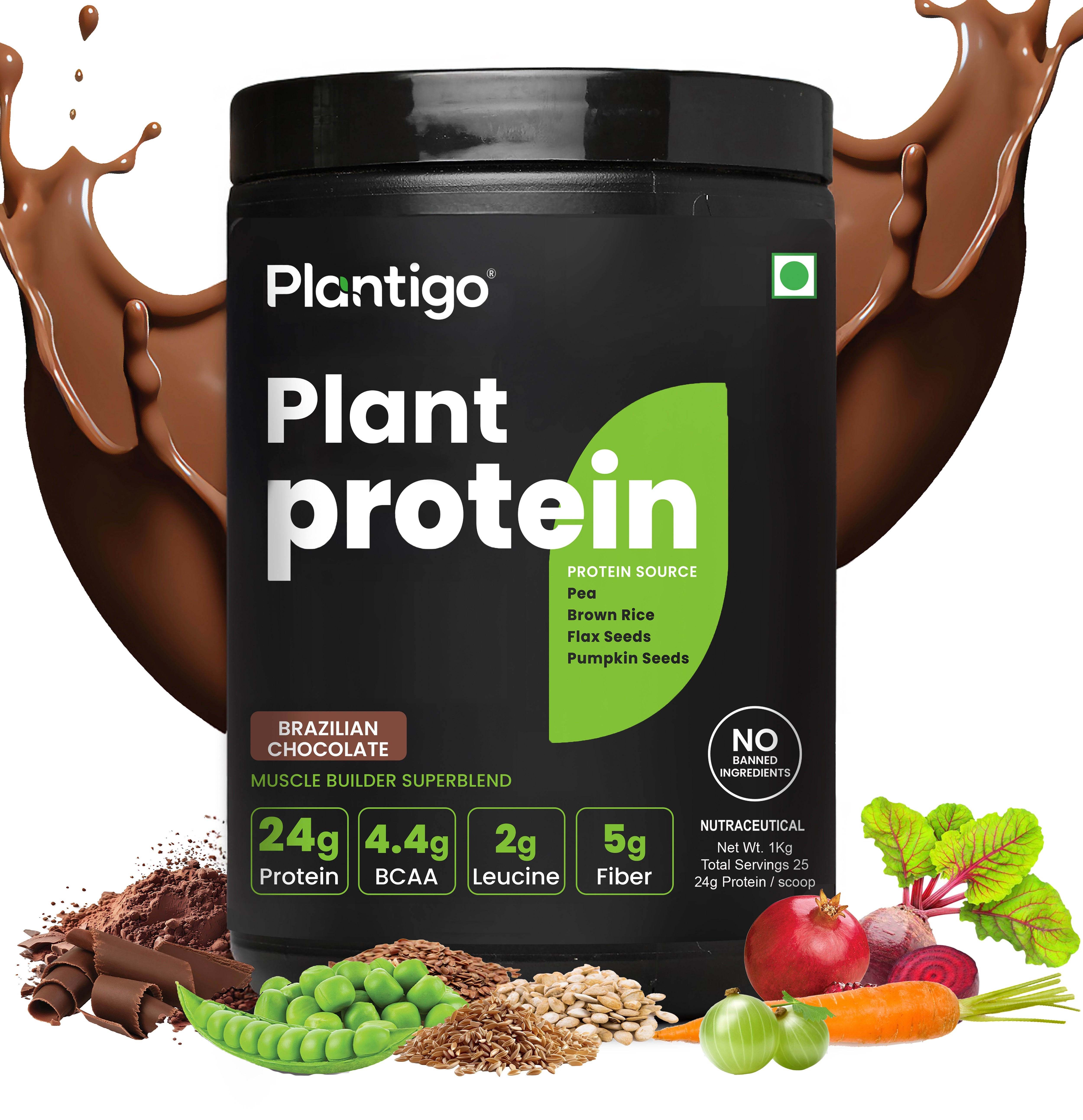
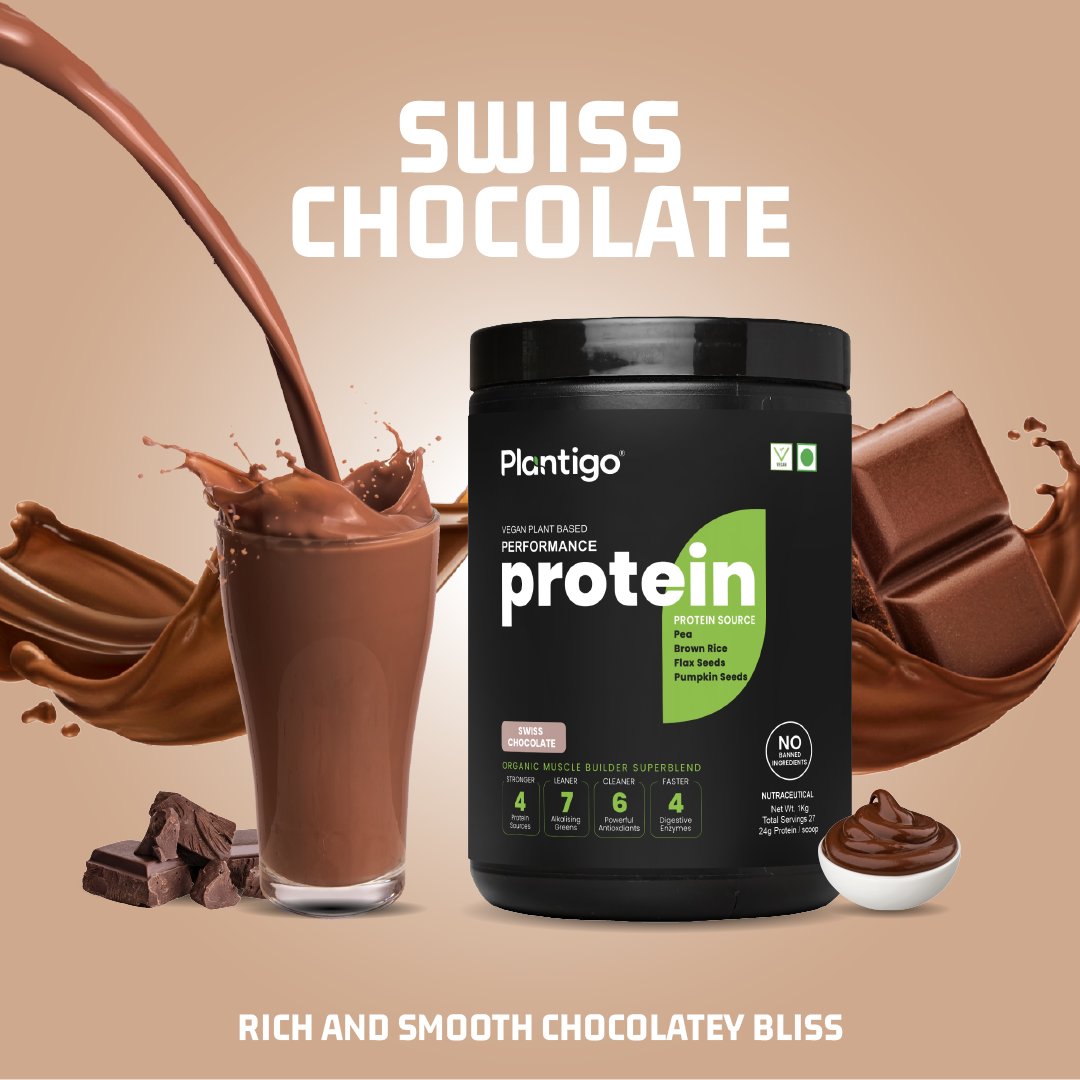
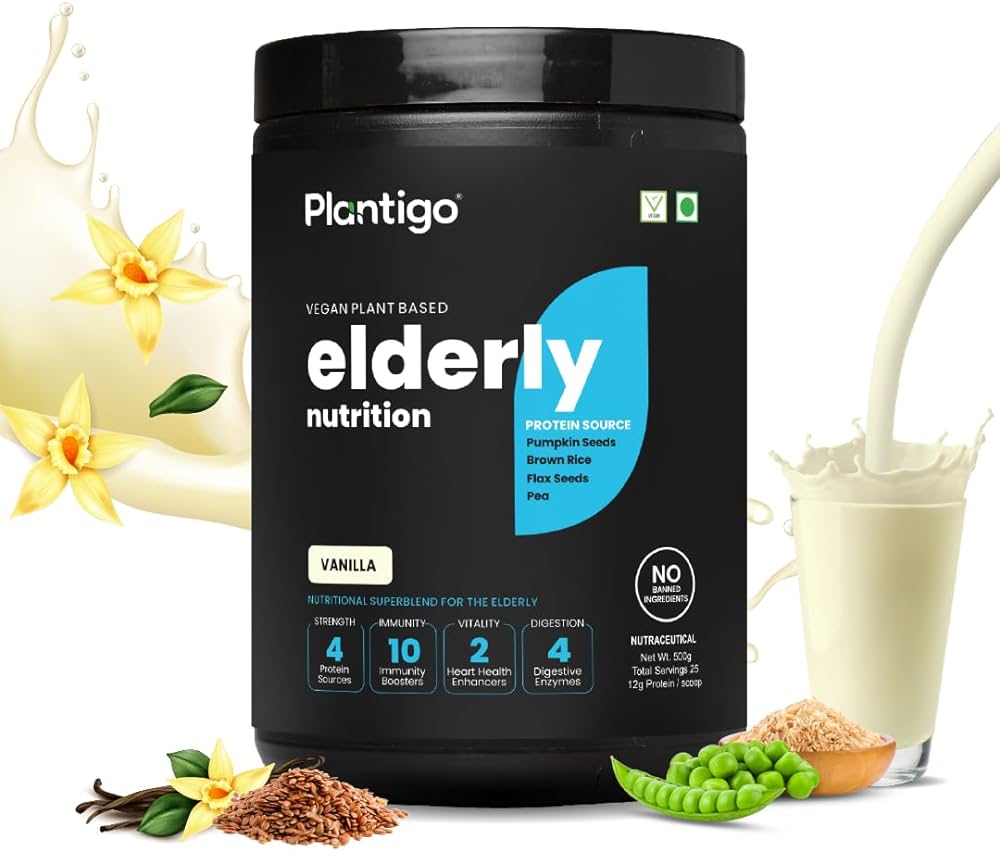
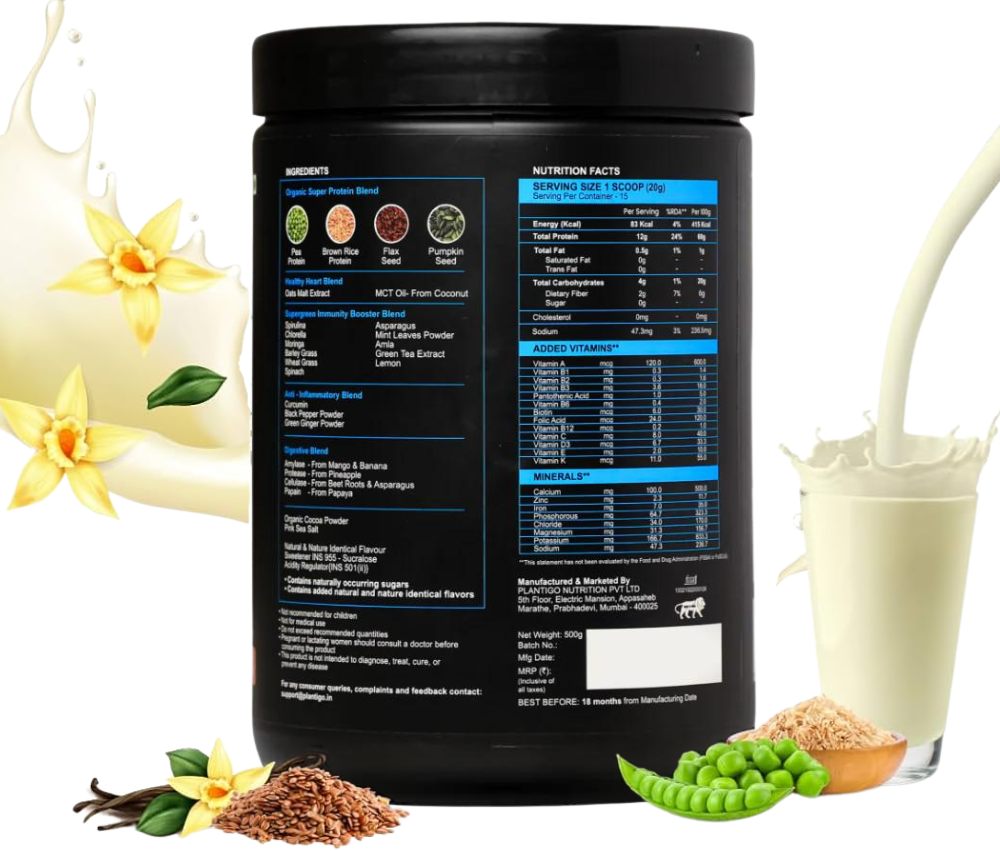
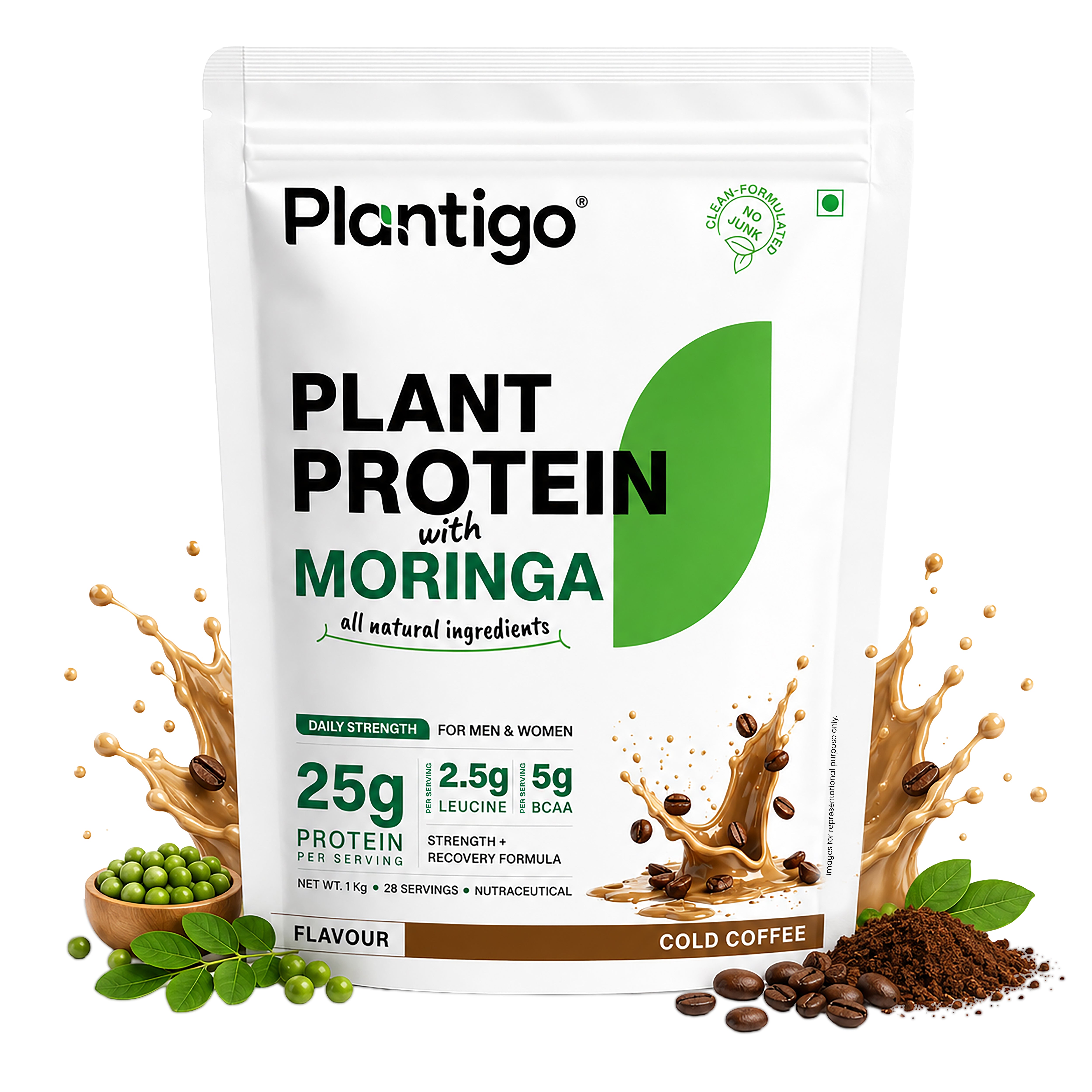
If poha alone isn't closing your daily protein gap, Plantigo bridges it — a complete pea, rice, pumpkin seed, and flaxseed blend with all 9 essential amino acids, zero Class 2 preservatives, Eurofins-tested, and a 30-day guarantee.View Plantigo Plant-Based Protein
Benefits of Poha for Indians

1. Best Iron Source
Fortified poha delivers up to 20mg iron per 100g — recommended byICMR-NIN DGI 2024 for addressing iron deficiency in Indian women and children.
-
Covers the full 15mg daily iron requirement for women in a single 80g serving
-
Add lemon juice while cooking — Vitamin C boosts iron absorption significantly
2. Easy to Digest
Poha is partially pre-cooked during flattening — the lightest and most digestible Indian breakfast grain.
-
Safe for sensitive stomachs, post-illness recovery, and elderly adults
-
No bloating unlike oats or whole grains; ready in 10–15 minutes
3. Low Fat, Weight-Friendly
At 0.5g fat per 100g, poha is a clean calorie base for high-protein, low-fat additions.
-
Roasted chana adds 7.5g protein at only 2.4g fat — the ideal upgrade
-
Fills the plate without the calorie density of paratha or upma
4. Highly Upgradeable
Plain poha delivers just 2g protein per serving — but its texture makes it the most protein-upgradeable Indian breakfast.
-
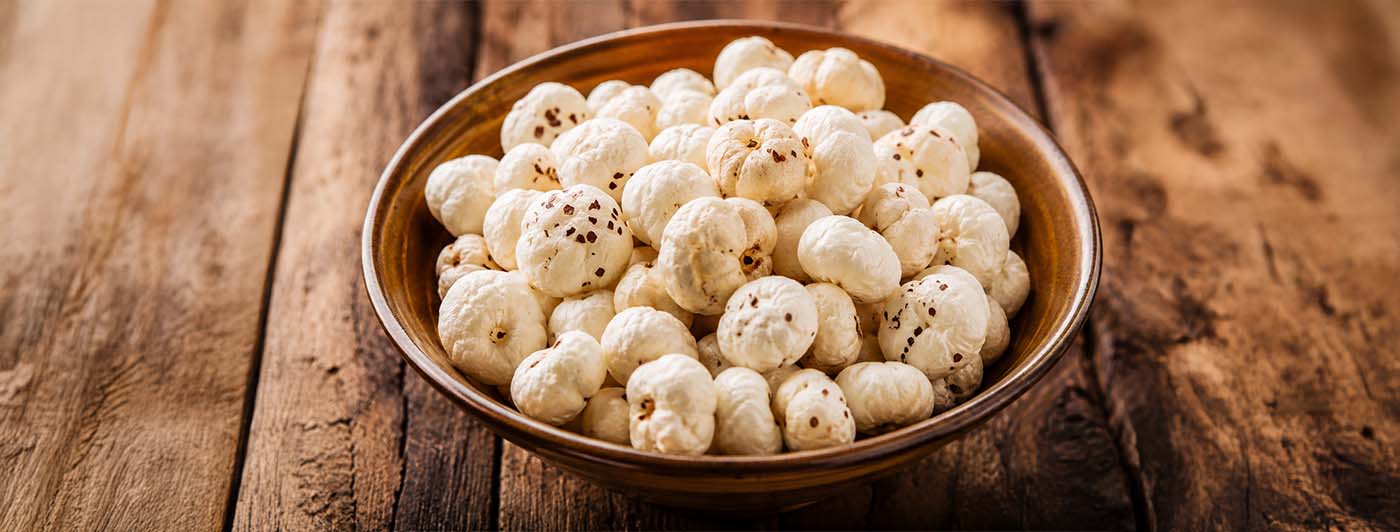
Roasted chana (30g): +7.5g protein — see ourroasted chana guide
-
Moong dal mixed in: +8–10g — see ourmoong dal protein guide
-
1 scoop Plantigo in side curd: +25g invisibly
How to Boost Your Poha Protein — From 2g to 20g+
This is the most practical section in the article. Plain poha alone is insufficient for daily protein targets. These four additions transform it without changing its essential character:
1. Roasted chana (30g added while tempering): +7.5g protein. Stir in at the end to keep the crunch. Together = 9.5g total protein. The classic upgrade most Maharashtra and Madhya Pradesh households already do.
2. Peanuts (20g added while tempering): +5.2g protein. Standard poha preparation already includes peanuts — double the quantity and you double the protein contribution from this addition alone.
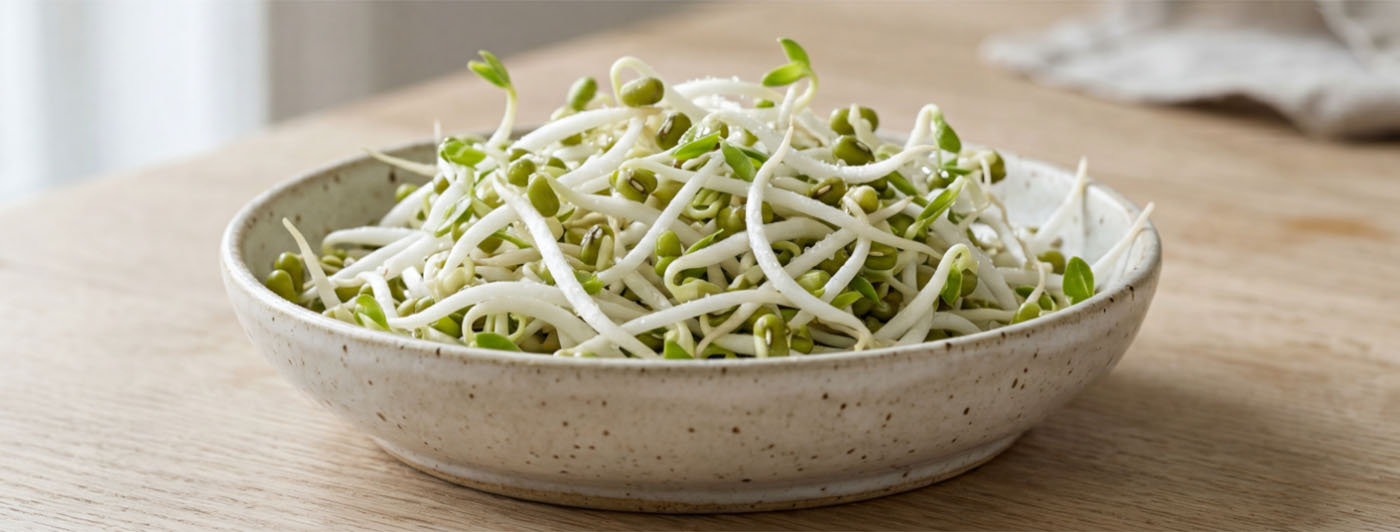
3. Sprouted moong (50g added raw at end): +1.7g protein + Vitamin C. Adds texture, freshness, and iron absorption benefit. Ourprotein in moong sprouts guide covers the full nutritional case.
4. Side of thick dal or sambar (150ml): +8–10g protein. The most traditional upgrade — poha + dal side makes the meal nutritionally complete. For dal protein values, see ourdal protein per 100g guide.
5. Plantigo in curd (1 scoop): +25g protein. Mix 1 scoop into 150g curd served as a side. The protein gap is solved — total breakfast protein reaches 28–30g without changing the poha itself.
The upgraded poha breakfast: 80g poha + 30g roasted chana + 20g peanuts + 150g curd with Plantigo = 2 + 7.5 + 5.2 + 25 = ~40g protein at one breakfast.
Poha vs Other Indian Protein Sources
1. Poha vs Oats
Oats at 80g deliver 10–11g protein vs just 2g from plain poha at the same dry weight. Oats also have beta-glucan fibre, lower GI (~55), and higher satiety. The only areas poha wins: iron content, digestibility, and speed of preparation. For everyday high-protein breakfast, oats outperform plain poha significantly — but upgraded poha with roasted chana and peanuts can match or exceed oats on protein.
Poha advantage: Higher iron, lighter on digestion, faster to prepare, more versatile for Indian flavour combinations.
2. Poha vs Idli
2 medium idlis + sambar deliver 8–11g protein vs plain just 2g from the same weight. Idli has the fermentation advantage (probiotic benefit, better protein digestibility). Plain poha loses on protein but wins on iron and preparation simplicity. For the idli comparison in detail, read ouridli protein guide.
Poha advantage: Better iron, faster, more protein-upgrade-friendly.
3. Poha vs Roti
2 medium rotis deliver 6–8g protein vs just 2g from a standard poha serving. Roti also has more fibre and a slightly lower GI than poha. For strict protein tracking, roti outperforms plain poha. Upgraded poha with chana and peanuts reverses this comparison.
Poha advantage: Lower fat, better iron, easier to upgrade with high-protein additions.
The Bottom Line
Poha protein is 2.4g per 100g raw and approximately 2g per standard 80g breakfast serving — not a high-protein food. Plain poha as a standalone breakfast delivers very little protein toward the daily 58g requirement for a 70kg adult. But it can be transformed by additions — roasted chana, peanuts, sprouted moong, and a Plantigo-boosted curd side can take the same breakfast from 2g to 35–40g protein without changing what poha fundamentally is.
The question is not whether to eat poha — it is how to build protein additions around it so the meal earns its place in a protein-conscious daily eating pattern.
Frequently Asked Questions
1. Is poha rich in protein?
No — poha protein is just 2.4g per 100g raw, making it a carbohydrate food with low protein density. Plain poha is not a significant protein source; additions like roasted chana and peanuts are needed.
2. Is poha good for a gym diet?
Plain poha is not — 2g protein per 80g serving falls short of gym nutrition requirements. Upgraded poha with roasted chana, peanuts, and a Plantigo-boosted curd side reaches 35–40g protein, which is gym-appropriate.
3. How much protein is in 500g of poha?
500g raw poha contains approximately 12g of protein — spread across multiple servings, this is roughly 2–2.5g protein per 80–100g serving.
4. Is poha healthier than rice?
Marginally — poha and white rice have similar protein and GI. Poha wins on iron (especially fortified varieties) and preparation speed. Neither is a high-protein or high-fibre food.
5. Is poha a junk food?
No — poha is a whole grain-derived, low-fat, naturally fortified food with good iron content. The oil, toppings, and accompaniments added during preparation determine whether it stays healthy or becomes calorie-heavy.
External Sources
-
ICMR-NIN —Indian Food Composition Tables 2017
-
ICMR-NIN — RDA for Indians 2020
Disclaimer: This article is for educational purposes only. If you have diabetes, kidney disease, digestive issues, are pregnant, or are on medication, consult your doctor or dietitian before making major dietary changes.