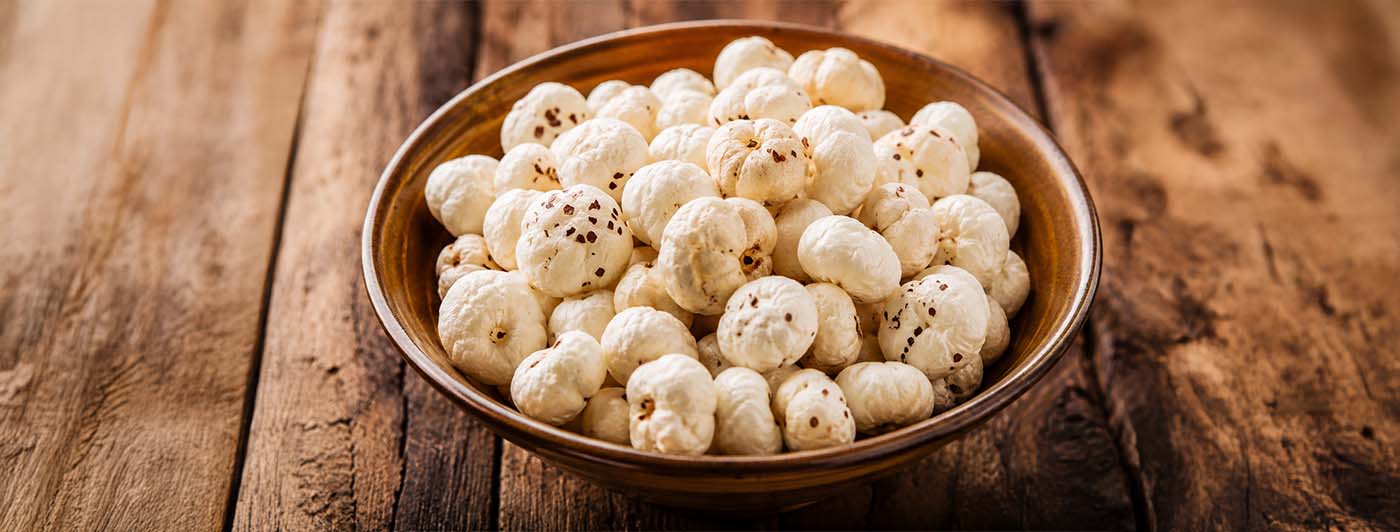
Makhana has moved from a temple prasad and fasting food to a mainstream Indian snack — and for good reason. Light, crunchy, versatile, and genuinely nutritious, it sits in a rare category of Indian snack foods that deliver real nutrition alongside their appeal. But most people who eat makhana have no clear idea what makhana protein per 100g actually is, how it compares to the other snacks it is competing with, or what the full nutritional picture looks like beyond the protein number. This guide covers all of that with specific numbers.
How Much Protein Does Makhana Have per 100g?
Makhana protein per 100g is approximately 9.7g — higher than oats (13g per 100g dry but lower per equivalent puffed serving), poha (2.4g), and white rice (6.8g), making it one of the most protein-rich Indian snack foods available — according to theICMR-NIN IFCT 2017. Afoxnut nutrition review (PMC 2024) confirms that makhana contains all essential amino acids and is easily digestible, with phosphorus and potassium as its standout micronutrients alongside protein.
Complete Data Breakdown: Makhana Protein per 100g
1. Nutritional Profile — Makhana per 100g
|
Nutrient |
Makhana (per 100g) |
|
Protein |
9.7g |
|
Carbohydrates |
76–80g |
|
Fat |
0.1–0.5g |
|
Fibre |
2.5–3g |
|
Calories |
347–362 kcal |
|
Calcium |
60–65mg |
|
Magnesium |
67mg |
|
Phosphorus |
200mg |
|
Potassium |
350mg |
|
Iron |
1.4mg |
|
GI |
~65 (moderate) |
Source: ICMR-NIN IFCT 2017
Makhana is most often cited for protein — but magnesium (67mg) and phosphorus (200mg) are equally notable. Magnesium supports muscle function, nerve transmission, and blood sugar regulation. Phosphorus supports bone health and energy metabolism.
2. Makhana Protein by Serving Size
|
Serving |
Weight |
Protein |
Calories |
|
Small handful (snack) |
20g |
1.9g |
69–72 kcal |
|
Standard serving |
30g |
2.9g |
104–109 kcal |
|
Large snack bowl |
50g |
4.9g |
174–181 kcal |
|
100g (full analysis) |
100g |
9.7g |
347–362 kcal |
50g of makhana delivers 4.9g protein — a meaningful mid-morning or evening snack at ~175 kcal with minimal fat.
3. Makhana Protein vs Other Indian Snacks
|
Snack |
30g Serving |
Protein |
Calories |
Notes |
|
Roasted chana |
30g |
7.5g |
110 kcal |
2.5x more protein per gram |
|
Makhana |
30g |
2.9g |
104–109 kcal |
Best calorie efficiency among seed snacks |
|
Peanuts |
30g |
7.8g |
170 kcal |
More protein, more fat, more calories |
|
Almonds |
30g |
6g |
173 kcal |
More protein, more fat |
|
Namkeen/mixture |
30g |
3–4g |
145 kcal |
Similar protein, more fat and sodium |
|
Biscuits (Marie) |
30g |
2g |
130 kcal |
Less protein, more sugar |
For a direct roasted chana comparison — the closest competing Indian snack — read ourroasted chana protein guide.
4. Makhana Protein vs Egg and Oats
|
Food |
100g |
Protein |
Key Difference |
|
Makhana |
100g |
9.7g |
All essential amino acids, low fat |
|
Egg (whole) |
100g |
13g |
Complete protein, higher fat, cholesterol |
|
Oats (dry) |
100g |
13–14g |
Higher protein per 100g dry but not comparable as snack |
|
White rice (cooked) |
100g |
2.7g |
Much lower protein |
|
Roasted chana |
100g |
~25g |
2.5x more protein per 100g |
9.7g per 100g is not as high as eggs (13g) or dry oats (13–14g) by raw weight — but makhana is eaten as a snack in 30–50g portions, not 100g. At 30g, 2.9g vs 6g for one egg — makhana loses on protein density but wins on satiety per calorie, fat content, and the absence of cholesterol.
Makhana vs Other Indian Snacks: Scored Comparison
|
# |
Parameter |
Makhana |
Verdict |
|
1 |
Protein per 100g |
9.7g |
Good for a seed snack — beats poha, rice, most Indian snacks |
|
2 |
Protein per 30g serving |
2.9g |
Lower than roasted chana (7.5g) and peanuts (7.8g) |
|
3 |
Fat per 100g |
0.1–0.5g |
Makhana wins — lowest fat of any Indian snack |
|
4 |
GI |
~65 |
Moderate — higher than roasted chana (28–36) |
|
5 |
Magnesium |
67mg per 100g |
Makhana wins — highest among Indian snack foods |
|
6 |
Digestibility |
Excellent |
Makhana wins — one of the lightest Indian snack options |
|
7 |
Satiety per calorie |
High |
Makhana wins — large volume, very low fat |
|
8 |
Cost per gram of protein |
₹15–30 per gram |
Expensive vs roasted chana (₹3–6/g) |
|
9 |
Complete amino acids |
Yes — all EAAs present |
Makhana wins over most single plant foods |
|
10 |
Daily snack versatility |
Roasted, ghee-fried, spiced, added to kheer |
Makhana wins on snack format range |
One-line verdict: Makhana is not the highest-protein Indian snack — roasted chana wins on that — but it is the lowest-fat, most easily digestible, magnesium-rich snack with a complete amino acid profile. Best for Indians who want a light, clean, nutritious snack without the caloric density of nuts. For an oats comparison on the breakfast protein side, see ouroats protein guide.

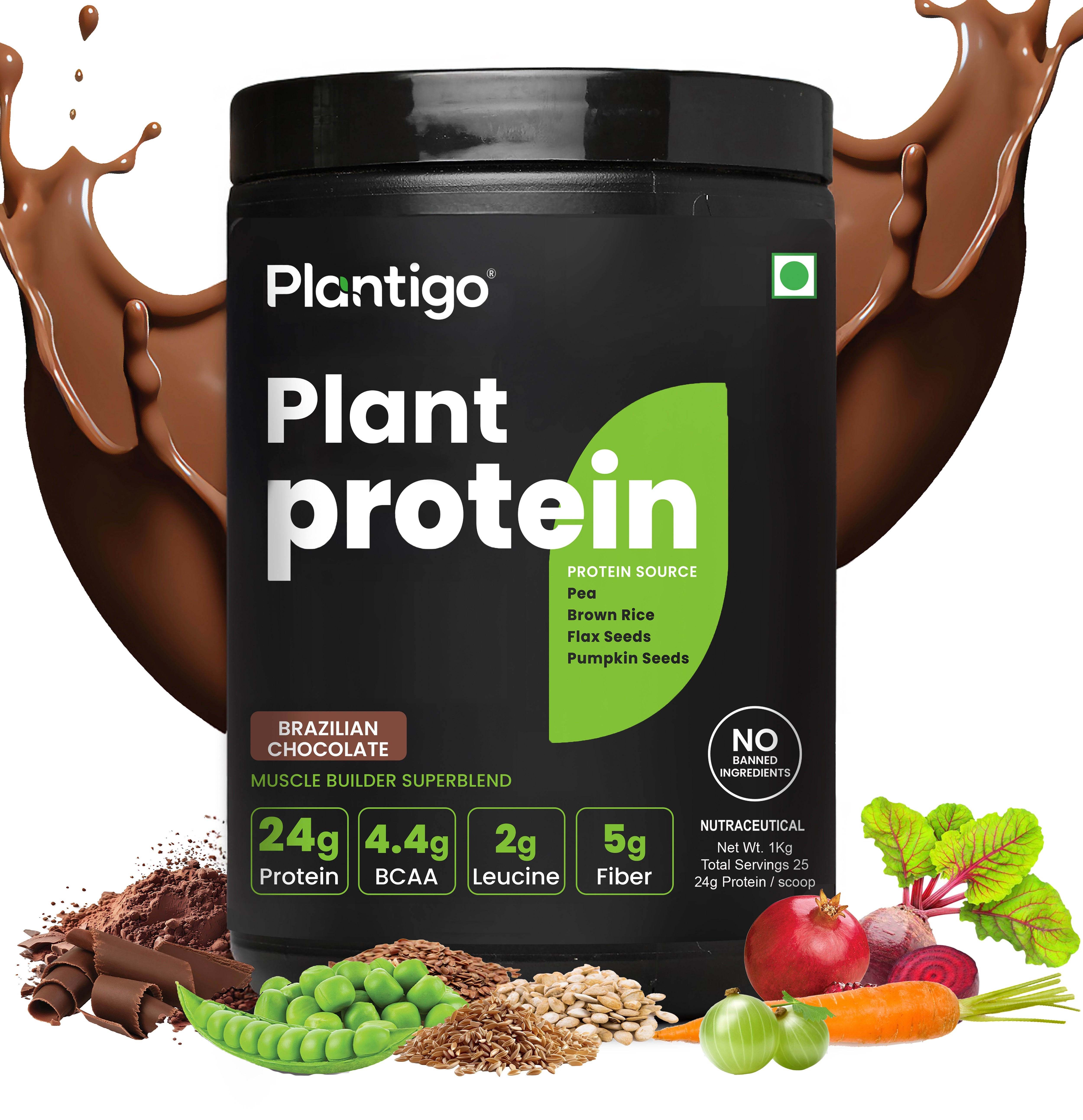
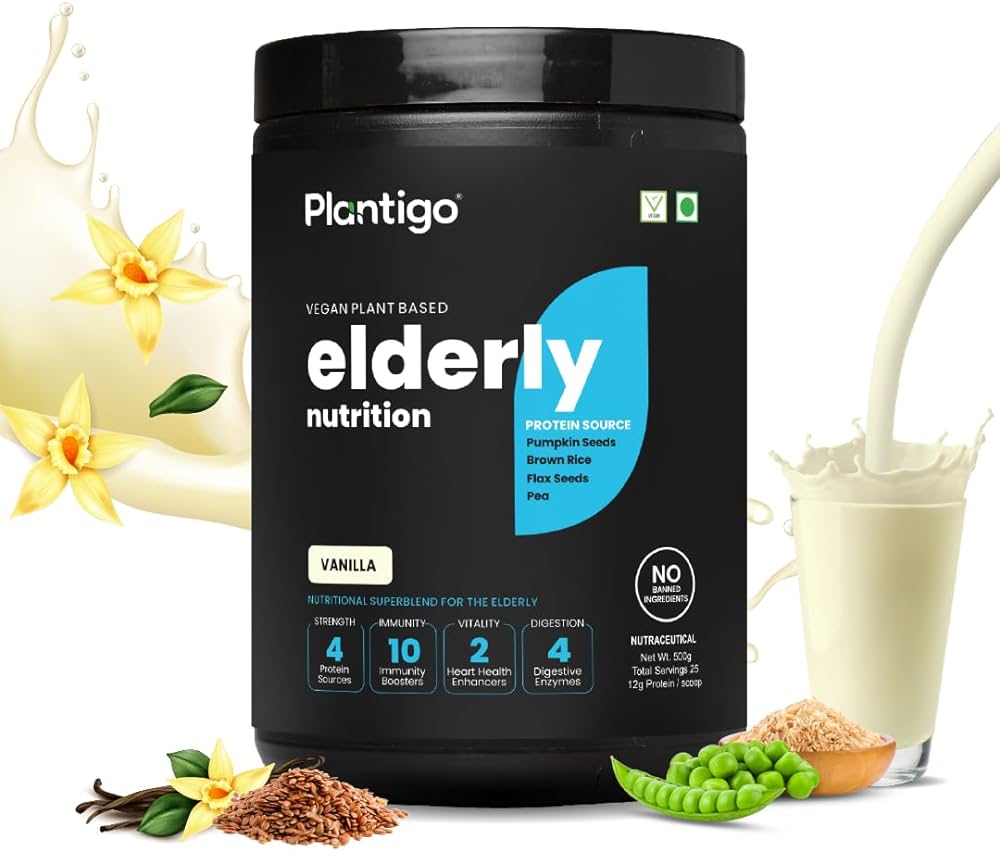
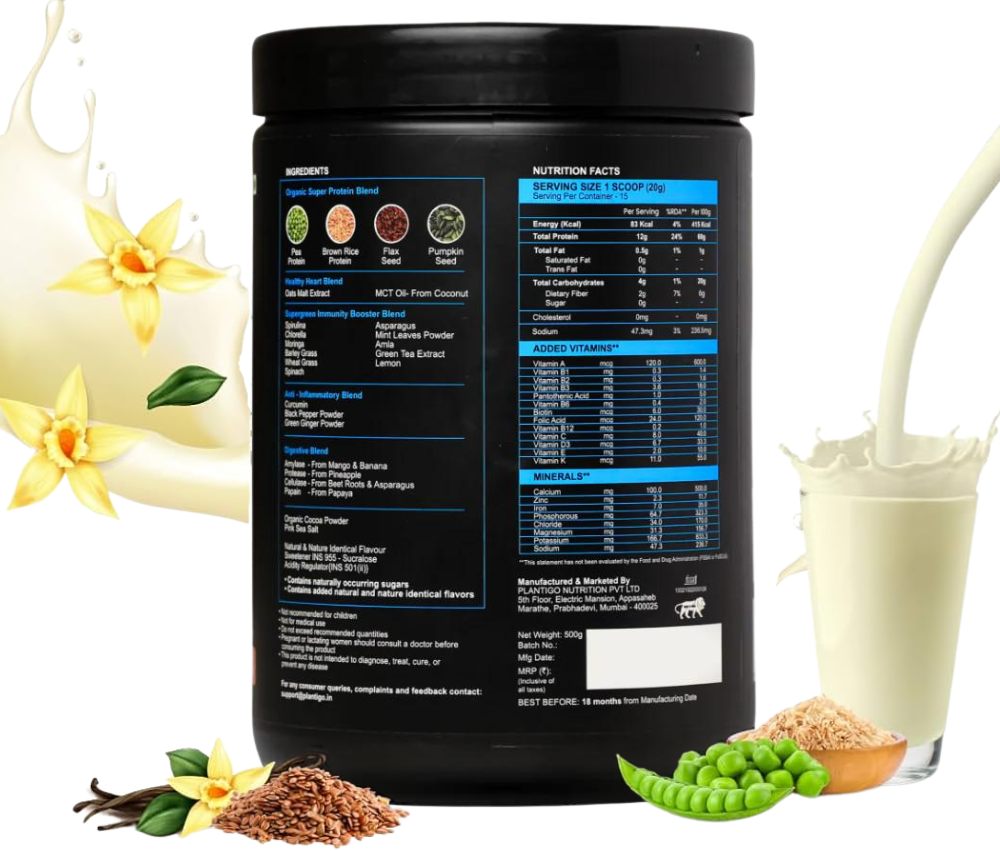
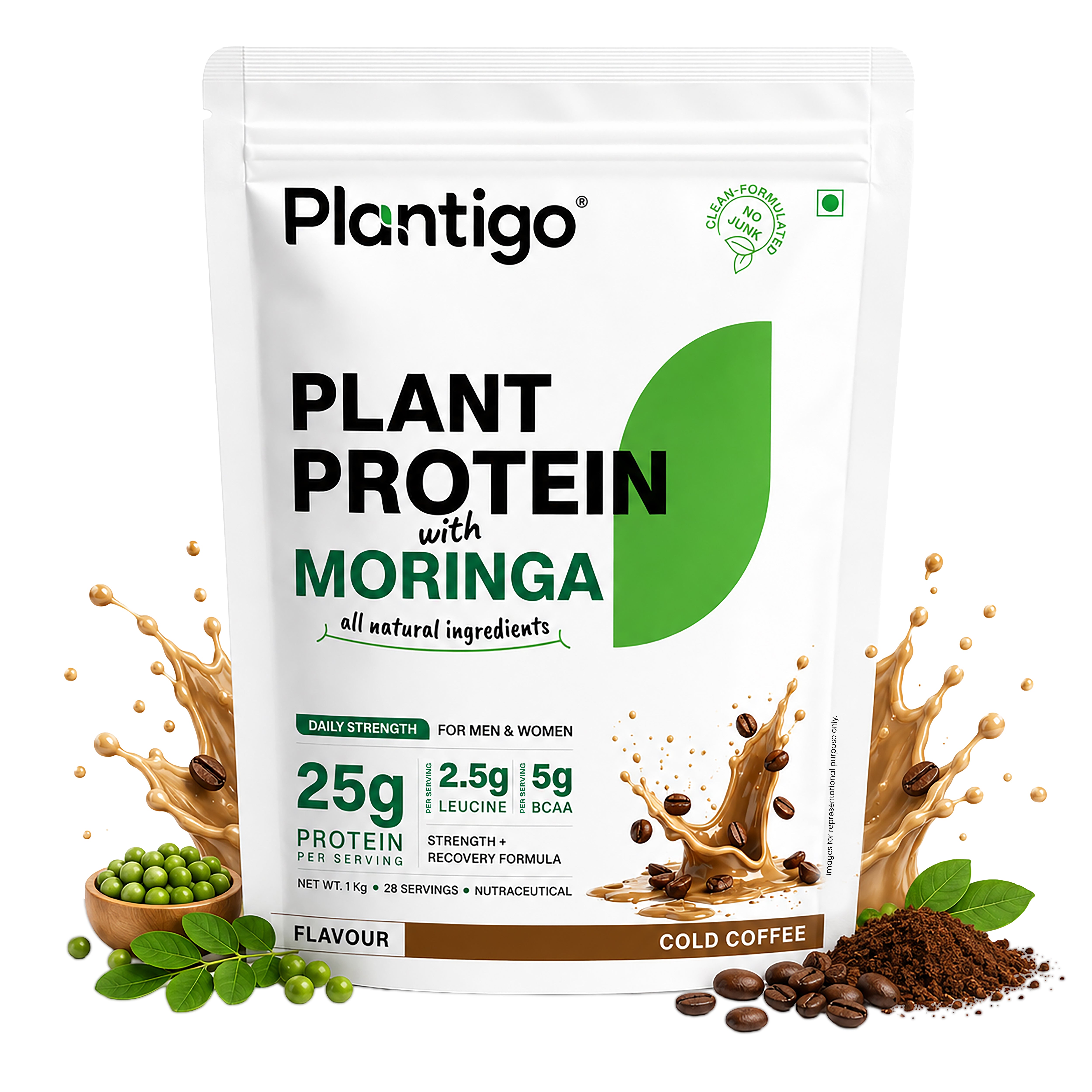
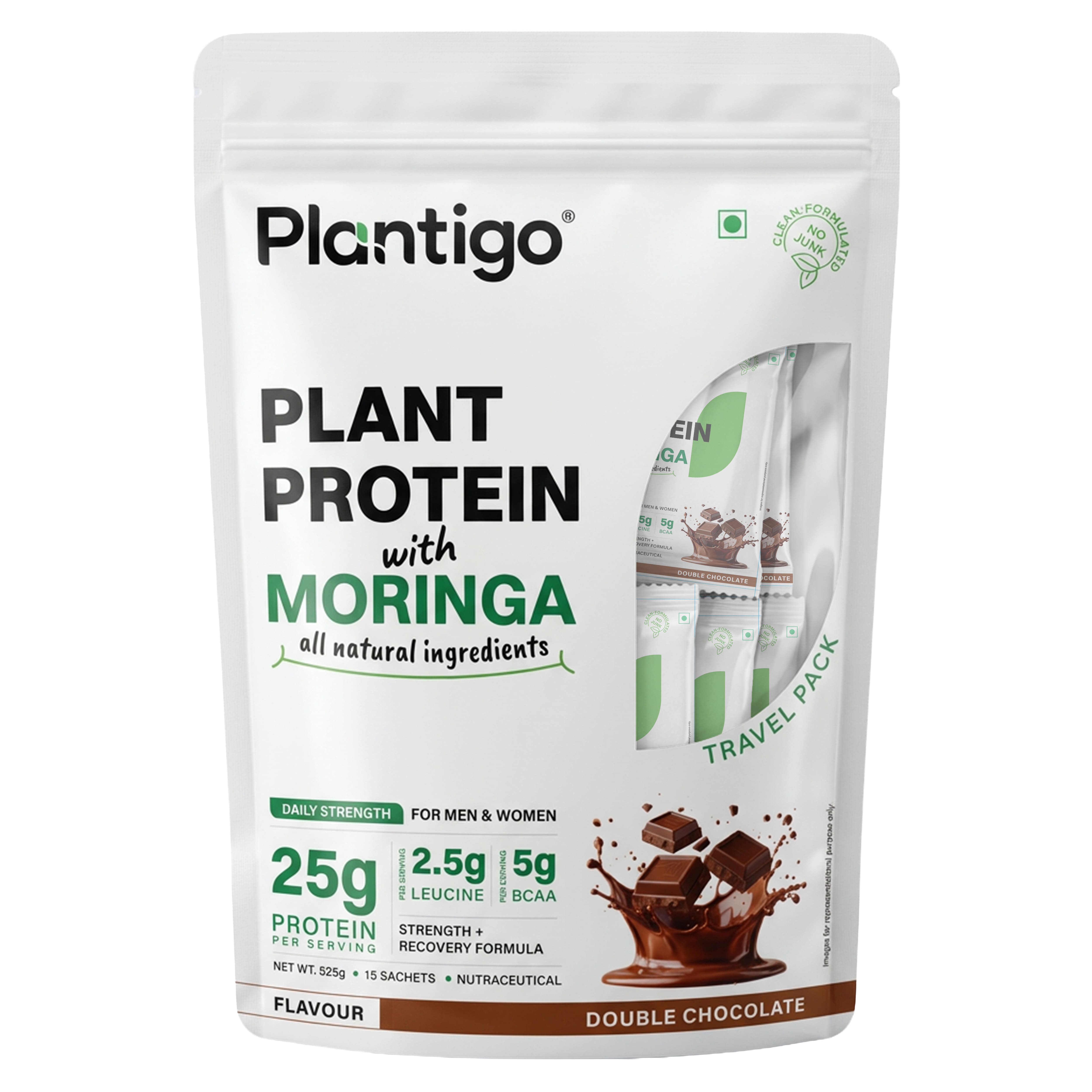
If makhana alone isn't closing your daily protein gap, Plantigo bridges it — a complete pea, rice, pumpkin seed, and flaxseed blend with all 9 essential amino acids, zero Class 2 preservatives, Eurofins-tested, and a 30-day guarantee.View Plantigo Plant-Based Protein
Benefits of Makhana for Indians

1. Complete Amino Acids
Makhana contains all 9 essential amino acids — rare among Indian plant snack foods, confirmed by afoxnut nutritional review (PMC 2024).
-
All EAAs present — no grain pairing needed for completeness
-
Easily digestible protein — suitable for elderly adults and those with sensitive digestion
2. Highest Magnesium
67mg magnesium per 100g — makhana leads all commonly eaten Indian snack foods on this micronutrient.
-
Magnesium supports blood sugar regulation, muscle function, and nerve transmission
-
Particularly valuable for diabetics managing insulin sensitivity and adults with muscle cramps
3. Near-Zero Fat
At 0.1–0.5g fat per 100g, makhana has virtually zero fat — unmatched by any other Indian snack.
-
Safe for calorie-restricted diets, post-cardiac recovery, and weight management
-
A 50g bowl at ~175 kcal fills the snack slot without the energy density of nuts or namkeen
4. Ideal for Fasting
Makhana is accepted across all regional Indian fasting traditions — the most culturally versatile snack protein in India. For the full health benefits picture beyond protein, read ourmakhana health benefits guide.
-
Sattvik, gluten-free, dairy-free, and low-allergen
-
Replaces namkeen, biscuits, or chips at any snack slot without dietary restrictions
How to Include Makhana in Your Indian Diet
1. Dry roasted (plain): 30–50g with a pinch of rock salt and pepper. 2.9–4.9g protein, ~104–175 kcal. The default use — and most calorie-efficient.
2. Ghee-roasted with spices: 30g makhana in 1 tsp ghee with turmeric, chilli, and black salt. Adds ~45 kcal from ghee. Still very light at ~150 kcal total for the snack.
3. Makhana + roasted chana trail mix: 20g makhana + 20g roasted chana = 1.9g + 5g = 6.9g protein per 40g mix. The protein gap of plain makhana is closed by the combination. See ourchana protein guide for the chana protein contribution.
4. Makhana kheer: Traditional dessert made with milk. The milk adds 3–4g protein per 150ml — combined with 30g makhana = ~5–6g protein. Higher calorie but nutritionally complete.
5. Add to sattu: Grind 20g makhana with sattu for a high-magnesium, moderate-protein drink. For sattu's protein value, see oursattu protein guide.
Makhana Protein vs Other Indian Protein Sources
1. Makhana vs Roasted Chana
Roasted chana delivers 7.5g protein per 30g vs makhana at 2.9g — 2.5x more protein at similar calories. For pure protein per snack serving, roasted chana wins decisively. Makhana wins on fat content (near-zero vs 2.4g in chana) and digestibility for sensitive stomachs.
Best approach: Combine both — 20g makhana + 20g roasted chana = 6.9g protein at ~220 kcal, better than either alone.
2. Makhana vs Oats
Oats at 50g dry delivers ~6.5g protein vs 50g makhana at 4.9g. Oats have more protein per gram, more fibre (beta-glucan), and a lower GI (~55 vs ~65). Makhana wins on fat content, digestibility, and snack convenience — it requires no cooking. For a detailed oats breakdown, read ouroats protein guide.
Best use: Oats for breakfast protein; makhana for mid-morning or evening snack protein.
3. Makhana vs Plant Protein Supplement
50g makhana delivers 4.9g protein. A single scoop of Plantigo delivers 25g. For daily protein gap-closing, a supplement is far more efficient. Makhana fills the snack slot — a supplement fills the meal-level protein gap. The two are not competing.
The Bottom Line
Makhana protein per 100g is 9.7g — making it one of the most protein-rich Indian snack foods, with a complete amino acid profile, near-zero fat, and the highest magnesium content of any common Indian snack. It is not the highest-protein snack by weight — roasted chana and peanuts lead on that. But for Indians who want a light, clean, versatile, and easily digestible snack protein, makhana earns its place. At 30–50g daily, it contributes 3–5g protein toward the daily target while delivering magnesium, phosphorus, and satiety at very low calorie cost.
Frequently Asked Questions
1. Is makhana high in protein?
Moderate — makhana protein per 100g is 9.7g, higher than most Indian snacks but lower than roasted chana (25g) or peanuts (26g) per 100g.
2. How much protein is in 50g of makhana?
50g of makhana delivers approximately 4.9g protein at ~175 kcal — a clean, low-fat snack portion, per ICMR-NIN IFCT 2017.
3. Which is better — oats or makhana?
Oats win on protein (13g vs 9.7g per 100g) and fibre. Makhana wins on fat content (near-zero), digestibility, and snack convenience — no cooking needed.
4. Which is better — egg or makhana?
Egg wins on protein (13g vs 9.7g per 100g) and absorption speed. Makhana wins on fat (near-zero vs 9g), zero cholesterol, and snack format versatility.
5. What is makhana highly rich in?
Magnesium (67mg/100g), phosphorus (200mg/100g), and potassium (350mg/100g) — makhana leads most Indian snack foods on all three micronutrients alongside its 9.7g protein.
6. Can I eat 100g of makhana daily?
Yes — 100g daily is safe for most healthy adults delivering 9.7g protein and 67mg magnesium. Those managing diabetes should note its moderate GI (~65) and pair with lower-GI foods.
External Sources
-
ICMR-NIN —IFCT 2017
-
ICMR-NIN —RDA for Indians 2020
Disclaimer: This article is for educational purposes only. If you have diabetes, kidney disease, digestive issues, are pregnant, or are on medication, consult your doctor or dietitian before making major dietary changes.