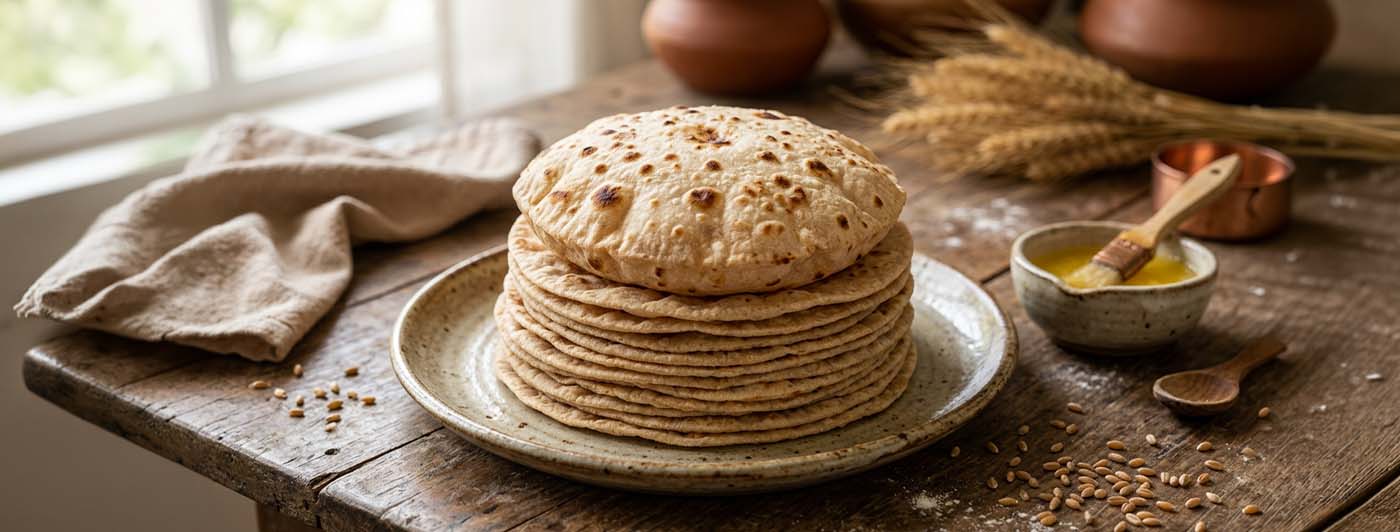
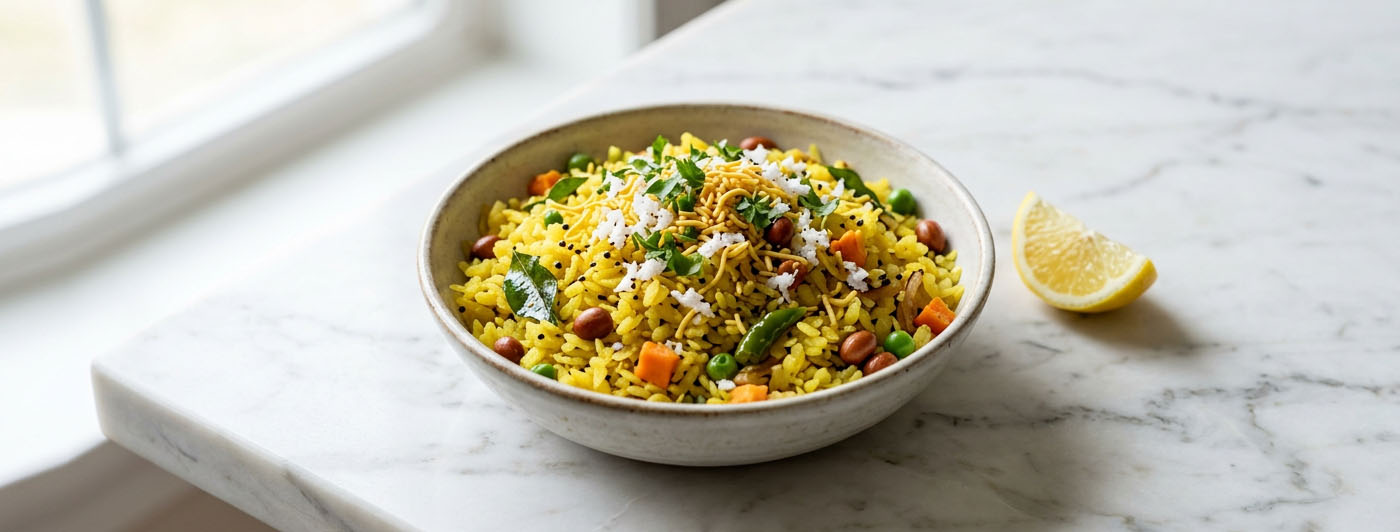
Poha is India's most popular breakfast — quick to make, light on the stomach, and eaten across Maharashtra, Madhya Pradesh, and Gujarat daily. Most Indians assume it is both low-calorie and reasonably nutritious. The calorie part is largely true. The protein part is not — a standard plate of kanda poha delivers 4–5g protein, which covers less than 10% of an adult's daily requirement. For Indians starting their day with poha and wondering why they are hungry again by 10am, the answer is in the nutrition numbers. A cleanplant protein addition to your poha can fix that gap without changing your breakfast culture.
How Many Calories Does Poha Have?
One standard plate of kanda poha (made from 75g dry poha with onion, peanuts, and minimal oil) contains approximately 270–300 kcal — one of the lowest-calorie complete Indian breakfasts available — based on ICMR-NIN food composition data showing raw flattened rice at 346 kcal per 100g dry weight with 6.6g protein. Cooked poha expands significantly — 75g dry poha absorbs water and fills a full plate — making it feel more substantial than the calorie count suggests. The GI of poha is approximately 70–80, placing it in the moderate-to-high range — lower than plain white rice but not a low-GI food, as confirmed in arice GI review.
Complete Nutritional Breakdown: Poha Calories by Preparation
1. Calories by Preparation Type
|
Poha Preparation |
Dry Poha Used |
Calories |
Protein |
Carbs |
Fat |
|
Plain poha (no oil, no additions) |
75g |
220–240 kcal |
4–5g |
58g |
0.5g |
|
Kanda poha (onion, minimal oil) |
75g |
260–280 kcal |
5–6g |
60g |
4–5g |
|
Kanda poha with peanuts |
75g + 15g peanuts |
310–340 kcal |
8–9g |
62g |
9–10g |
|
Aloo poha (potato added) |
75g + 50g potato |
320–360 kcal |
5–6g |
75g |
4–5g |
|
Indori poha (sev, farsan added) |
75g + toppings |
370–420 kcal |
8–10g |
65g |
14–16g |
|
Protein poha (plant protein added) |
75g + 1 scoop |
380–420 kcal |
24–26g |
62g |
5–6g |
Source: ICMR-NIN Indian Food Composition Tables 2017; recipe calculations based on standard ingredient quantities
2. Poha Nutritional Profile — Raw per 100g
|
Nutrient |
Poha Raw (per 100g) |
White Rice Cooked (per 100g) |
Oats Raw (per 100g) |
|
Calories (kcal) |
346 |
130 |
389 |
|
Protein (g) |
6.6g |
2.7g |
13g |
|
Carbohydrates (g) |
77.3g |
28g |
66g |
|
Fibre (g) |
1.2g |
0.4g |
10g |
|
Iron (mg) |
20mg* |
0.2mg |
4.3mg |
|
Fat (g) |
1.2g |
0.3g |
6.9g |
|
GI |
~70–80 |
64–72 |
~55 |
*Iron in poha is largely from manufacturing — traditional iron rollers deposit iron during the flattening process. FSSAI mandates iron fortification of packaged poha. Per aPMC iron fortification review, iron-fortified rice products are a priority intervention for India's anaemia burden.
3. Protein per Serving — The Real Gap
|
Serving |
Dry Poha |
Protein from Poha |
Protein with Peanuts |
% of Daily Need (56g) |
|
Small plate |
50g |
3.3g |
5.8g (+ 15g peanuts) |
6–10% |
|
Standard plate |
75g |
4.9g |
7.4g (+ 15g peanuts) |
9–13% |
|
Large plate |
100g |
6.6g |
9.1g (+ 15g peanuts) |
12–16% |
|
With 1 scoop plant protein |
75g + 25g powder |
24–26g |
— |
43–46% |
Poha's protein contribution — 4–7g per standard plate — is the single biggest nutritional limitation of this otherwise balanced breakfast. Adding peanuts improves it to 7–9g but still leaves a significant gap. Adding a scoop of plant protein transforms a 5g protein breakfast into a 24–26g protein meal without changing the taste or character of the dish.
Poha vs Other Indian Breakfasts: Which Is Better?
|
# |
Parameter |
Kanda Poha |
Plain Dosa |
Idli (2 pcs) |
Oats (cooked) |
Besan Chilla |
Winner |
|
1 |
Calories per serving |
270–300 kcal |
80–100 kcal |
85 kcal |
150 kcal |
120–140 kcal |
Idli / Dosa |
|
2 |
Protein per serving |
5–6g |
2–3g |
3–4g |
5–6g |
8–10g |
Besan chilla |
|
3 |
GI |
~70–80 |
~65–77 |
~65–70 |
~55 |
~28 |
Besan chilla |
|
4 |
Iron |
High (20mg/100g raw) |
Low |
Low |
Moderate |
Moderate |
Poha |
|
5 |
Fibre |
Low (1.2g/100g) |
Low |
Low |
High (10g/100g) |
Moderate |
Oats |
|
6 |
Preparation time |
10 min |
15 min |
25–30 min |
5 min |
10 min |
Oats |
|
7 |
Satiety (2–3 hrs) |
Moderate |
Low |
Low |
High |
Moderate–High |
Oats |
|
8 |
Indian cultural fit |
Very high |
High |
High |
Moderate |
High |
Poha / Dosa |
One-line verdict: Poha wins on iron, cultural familiarity, and ease of preparation — but loses decisively on protein, fibre, and GI. It is a good Indian breakfast only when protein is added through peanuts, dal, or a plant protein supplement. Without protein augmentation, it is a high-carbohydrate breakfast that drives mid-morning hunger. For the full oats comparison, see ouroats protein guide.

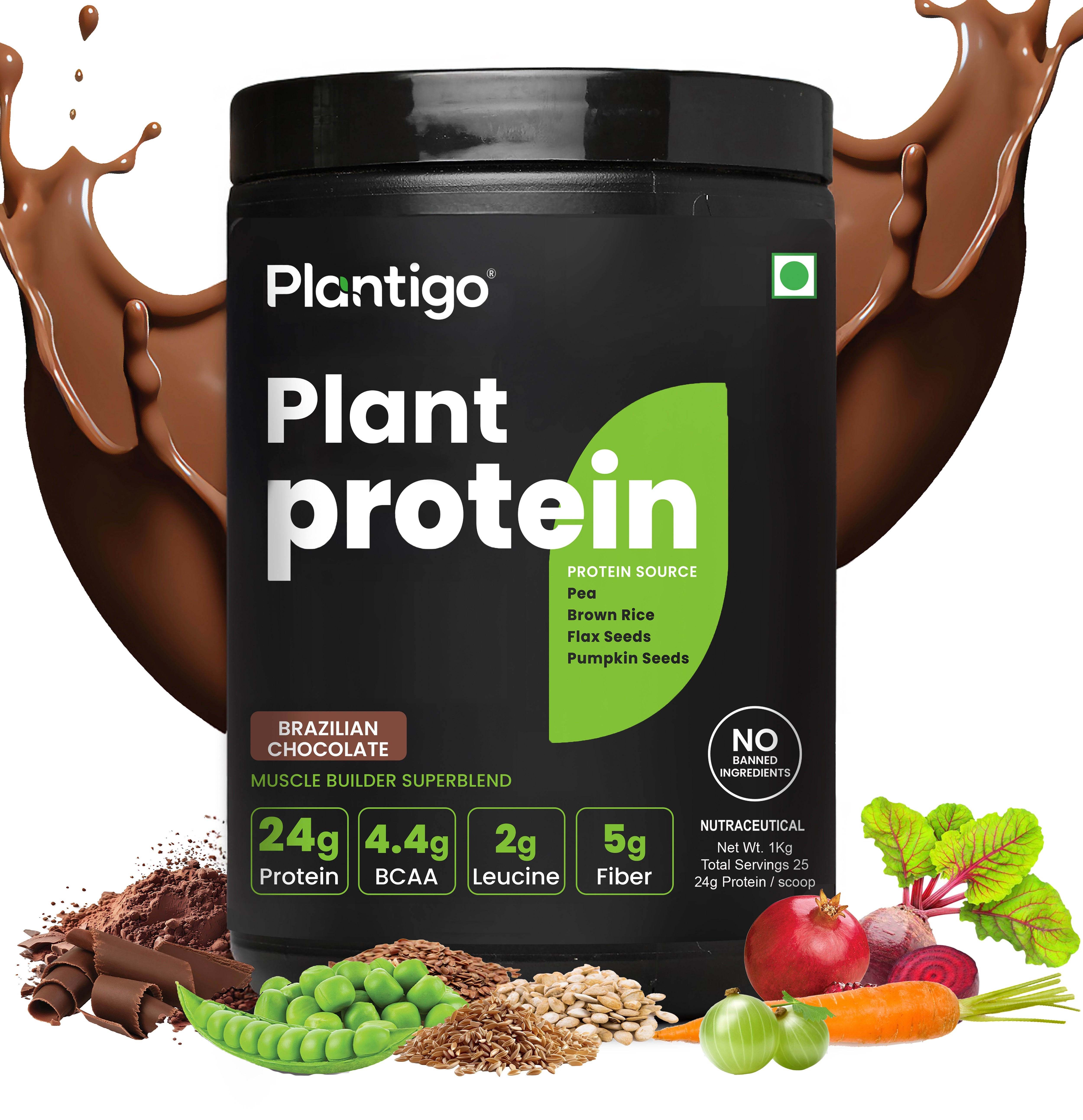
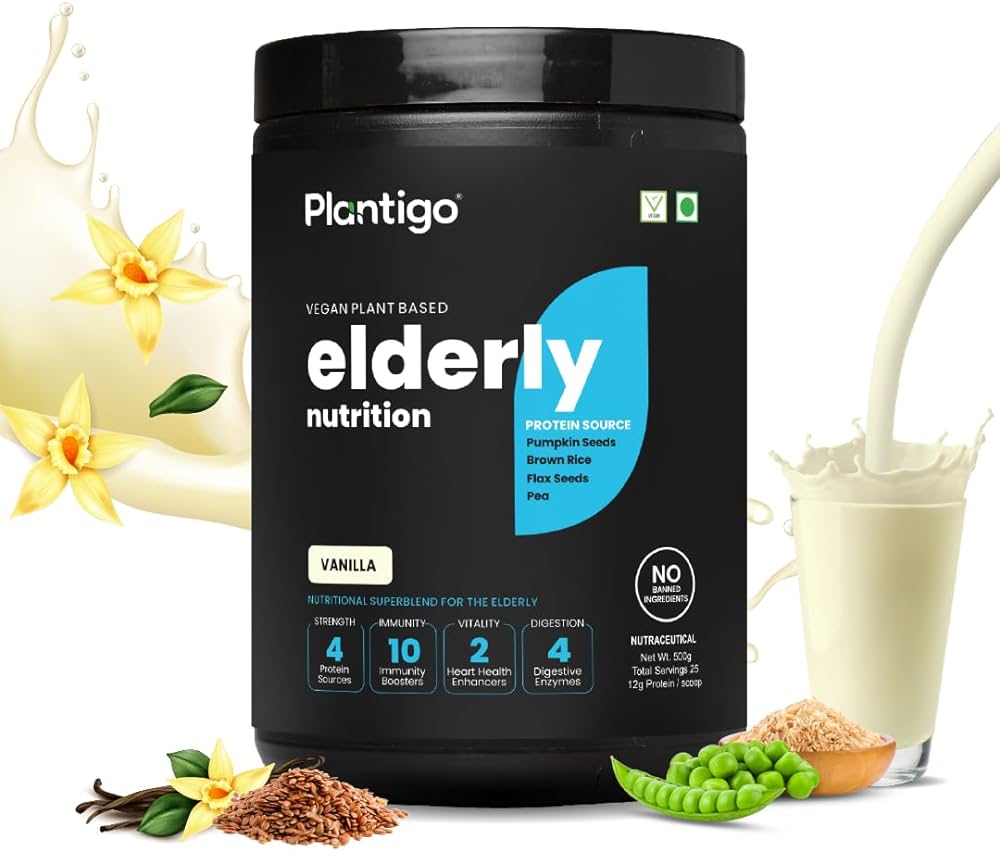
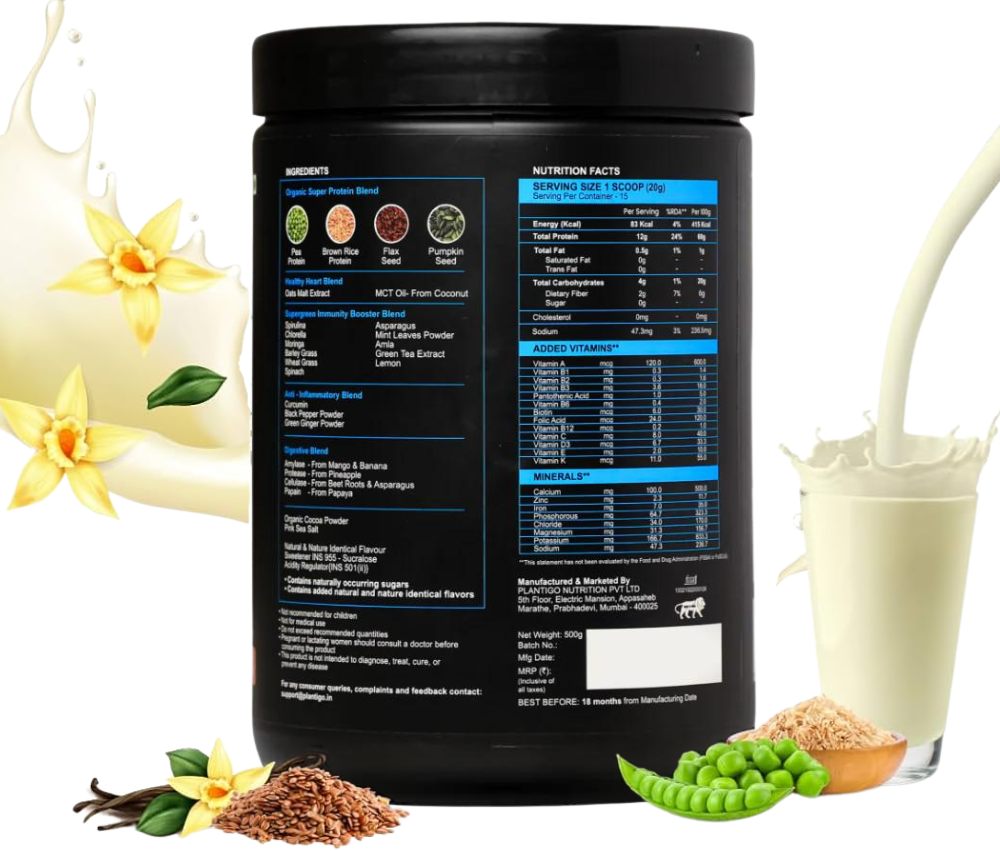
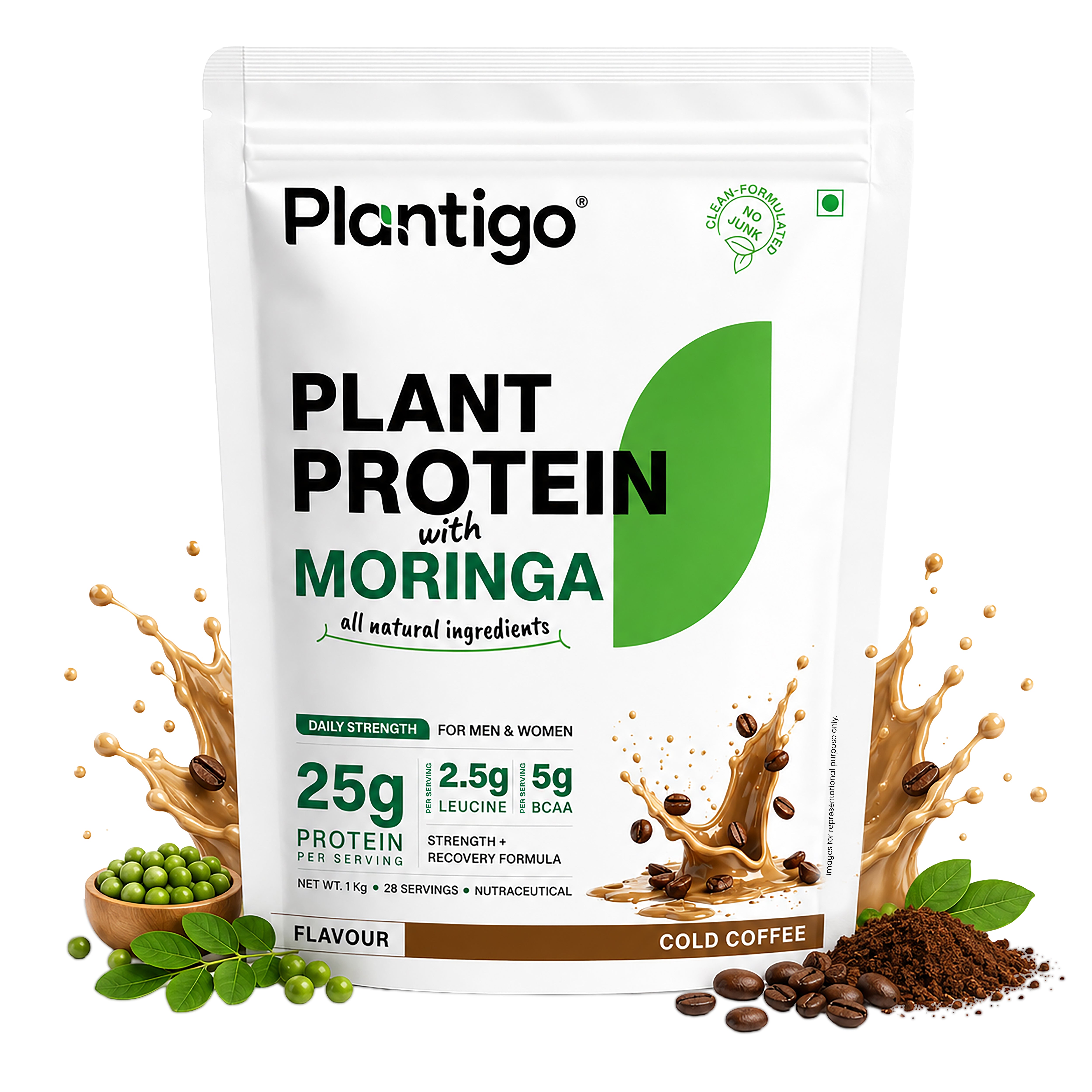
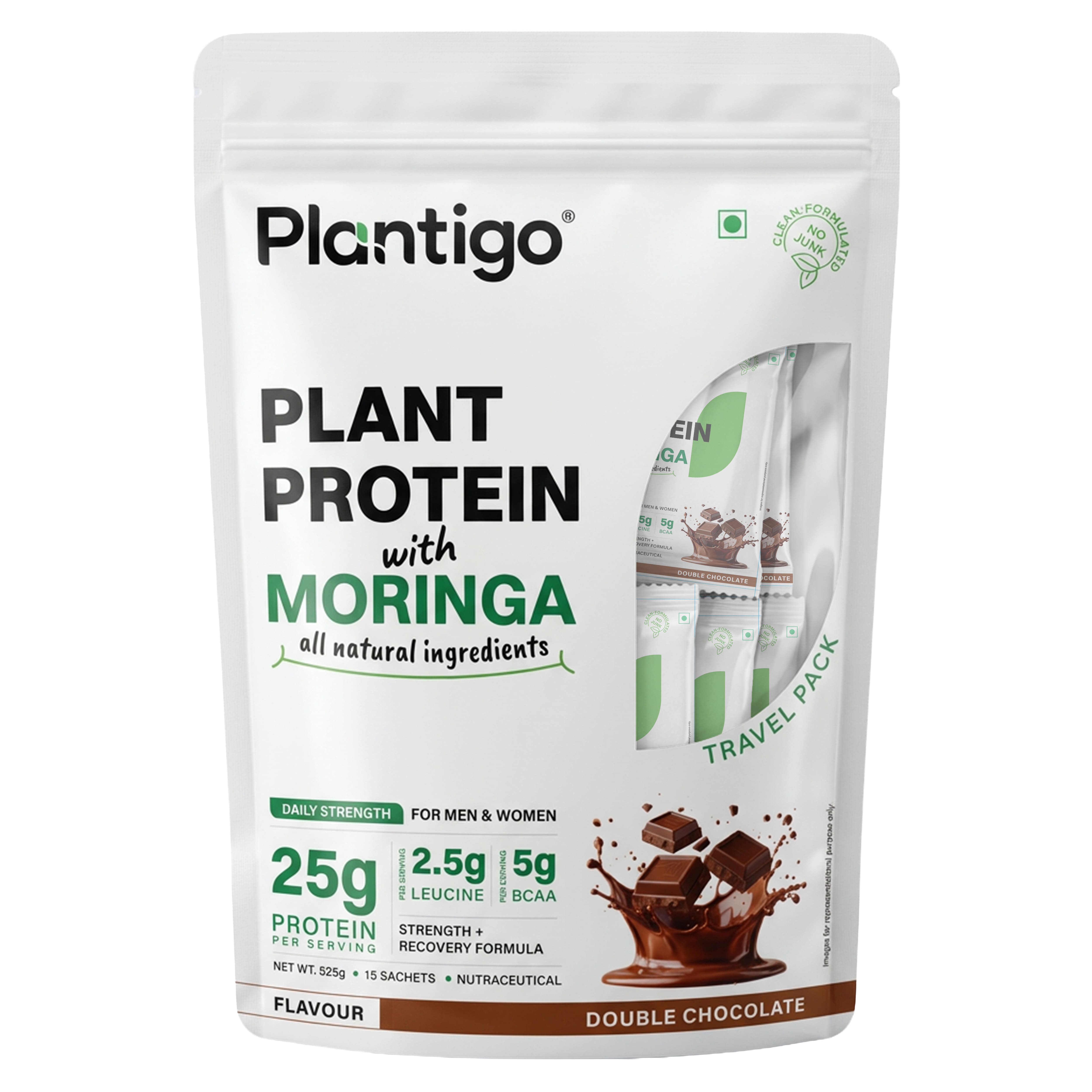
If your poha breakfast isn't closing the daily protein gap, Plantigo bridges it with a complete plant-based blend of Canadian Pea Isolate, Brown Rice, Pumpkin Seed, and Flaxseed — all 9 essential amino acids, zero Class 2 preservatives, Eurofins-tested, with a 30-day taste guarantee.View Plantigo Plant Protein
Benefits of Poha for Indians

1. Iron for Anaemia Prevention
Poha contains ~20mg iron per 100g raw — one of the highest of any Indian breakfast food due to iron fortification mandated by FSSAI.
-
75g dry poha covers ~100% of the 15mg daily iron requirement for women
-
Iron fortification through manufacturing makes poha a practical anaemia intervention for 57% of Indian women who are deficient
-
Pair with vitamin C (lemon juice squeezed on poha) to improve non-haem iron absorption by 2–3x
2. Easy Digestion
Flattened rice is pre-gelatinised during manufacturing — easier to digest than cooked whole rice.
-
Suitable for people with weak digestion, post-illness recovery, and elderly Indians
-
Absorbs water and swells — creates volume satiety without heavy starch load
-
Gluten-free — safe for Indians with wheat sensitivity or coeliac disease
3. Low Calorie Density
At 270–300 kcal per standard plate, poha is one of the lowest-calorie complete Indian breakfasts.
-
Significantly fewer calories than paratha (350–500 kcal) or bread-butter (300–400 kcal)
-
Volume per calorie is high — a full plate from 75g dry poha creates strong visual satiety
-
Adding vegetables (peas, carrots, capsicum) adds micronutrients with minimal calorie increase
4. Quick Preparation
Poha soaks in 5 minutes and cooks in 5 — the fastest hot breakfast option in an Indian kitchen.
-
No grinding, no fermentation, no advance preparation required
-
One-pot cooking reduces cleanup — practical for working Indian adults
-
Can be made in bulk and portioned across a family of 4 in under 15 minutes
How to Make Poha High Protein — 4 Methods
Method 1 — Add peanuts (easiest): 15–20g roasted peanuts stirred into kanda poha adds 4–5g protein and healthy fats. Standard in Maharashtra-style poha — the most protein-efficient addition that requires no modification to the recipe. See ourgroundnut protein guide for why peanuts are the highest-protein nut addition per rupee.
Method 2 — Add plant protein powder (highest impact): Stir 1 scoop (25g) unflavoured plant protein into the soaked, drained poha before cooking. The protein blends invisibly — no taste change, no texture change. Total protein rises from 5g to 24–26g per plate. This single addition transforms poha from a carbohydrate breakfast to a protein-adequate meal.
Method 3 — Add sprouted moong (traditional + high protein): 50g sprouted moong mixed into kanda poha adds 3–4g protein and fibre. Traditional in some Gujarati households. See oursprouts protein guide for why sprouted moong is the best whole-food protein addition to poha.
Method 4 — Serve with high-protein accompaniment: Pair poha with 100g curd (3–4g protein) + 1 boiled egg or 30g roasted chana (5–6g protein). Total breakfast protein: 14–16g without modifying the poha itself. For the full chana protein case, see ourchana protein guide.
Poha vs Other Indian Protein Sources
1. Poha vs Oats
Oats deliver 13g protein per 100g raw and 10g fibre — significantly more than poha's 6.6g protein and 1.2g fibre. Oats also have a GI of ~55 vs poha's ~70–80. For pure breakfast nutrition, oats outperform poha on almost every metric. Poha wins on iron and Indian cultural fit. See ouroats protein guide for the full comparison.
Poha advantage: Higher iron, faster to make, more culturally embedded in Indian breakfast habits.
2. Poha vs Besan Chilla
Besan chilla delivers 7–9g protein per piece at 120–140 kcal — better protein density and lower GI (~28) than poha at similar calorie counts. For Indians prioritising protein and blood sugar management at breakfast, besan chilla is nutritionally superior. See ourbesan protein guide for why besan is the most protein-dense flour in an Indian kitchen.
Poha advantage: Higher iron, faster preparation, lighter on the stomach.
3. Poha vs Plant Protein Supplement
A 25g serving of plant protein delivers 20–22g protein — equivalent to eating nearly 330g of dry poha (over 4 standard plates) for the same protein. Poha is a carbohydrate breakfast; a supplement is a precision protein delivery tool. Adding one scoop to poha combines the cultural comfort of the breakfast with the protein numbers of a supplement.
Supplement advantage: 4x more protein per gram consumed, complete amino acids, zero GI impact.
The Bottom Line
One plate of kanda poha has 270–300 kcal and 5–6g protein — low calorie, high iron, easy to digest, and fast to make. As a daily Indian breakfast, it earns its place on every metric except protein. Without peanuts, sprouted moong, or a plant protein addition, poha is a carbohydrate breakfast that creates mid-morning hunger and contributes minimally to daily protein targets. The fix is simple: stir 1 scoop of unflavoured plant protein into the soaked poha before cooking. Total protein goes from 5g to 24–26g — the same breakfast, a completely different nutritional profile.
Frequently Asked Questions
1. Is poha ok for weight loss?
Yes — a standard plate of kanda poha is 270–300 kcal, making it one of the lowest-calorie complete Indian breakfasts. Add peanuts or plant protein to increase satiety and prevent mid-morning hunger.
2. Is poha lighter than rice?
Yes — 75g dry poha (one plate) delivers 260 kcal vs a 150g rice katori at 195 kcal, but poha's larger cooked volume creates more satiety per calorie. Poha also has a slightly lower GI than white rice.
3. Which is better, oats or poha?
Oats lead on protein (13g vs 6.6g per 100g raw), fibre (10g vs 1.2g), and GI (~55 vs ~70–80). Poha leads on iron and Indian cultural fit. For weight loss and blood sugar management, oats are the stronger breakfast — but poha with added protein competes closely.
4. Is poha a carb or protein?
Poha is primarily a carbohydrate — 77.3g carbs per 100g raw vs 6.6g protein. It is not a protein breakfast. Add peanuts, sprouted moong, or plant protein to make it protein-adequate.
5. Which is better, puffed rice or poha?
Poha is nutritionally superior — more protein (6.6g vs 4g per 100g), more iron, and lower GI than puffed rice. Puffed rice is almost entirely refined starch with negligible nutritional value beyond calories.
External Sources
-
PMC —rice GI review
-
PMC —India anaemia burden
Disclaimer: This article is for educational purposes only. If you have diabetes, iron overload conditions, or kidney disease, consult your doctor or dietitian before making major dietary changes.