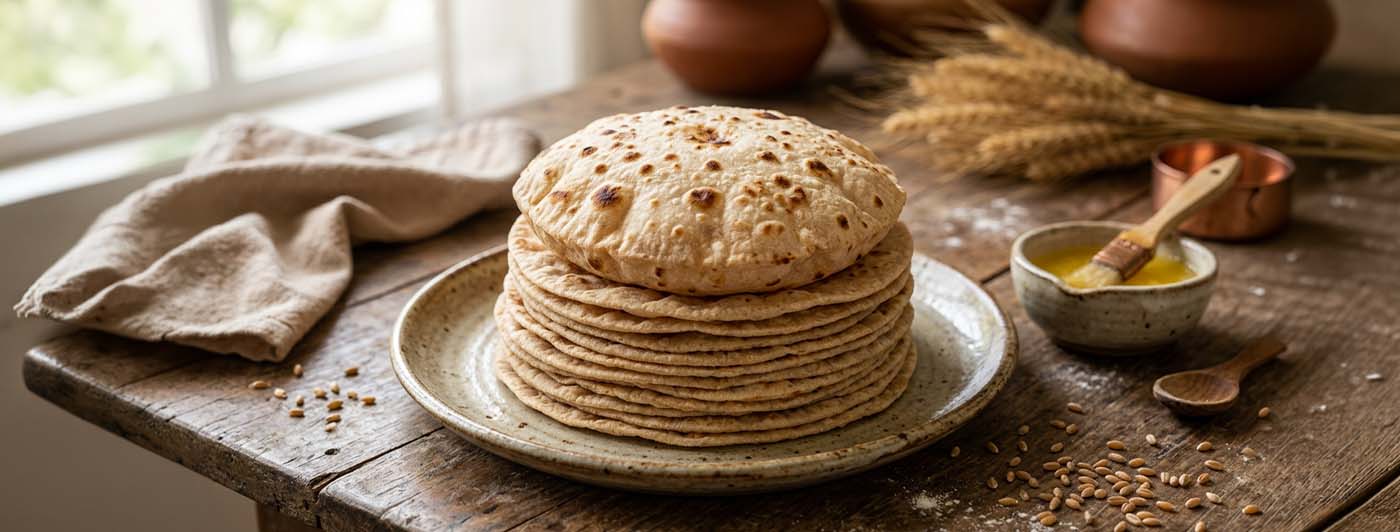
Chapati is the foundation of the North Indian diet — eaten at every meal, in every household, at every age. Most Indians know roughly that one roti is "not too many calories" but have no precise number, no protein figure, and no understanding of how flour type, size, oil, and preparation change the nutritional profile significantly. Chapati calories range from 70 kcal for a small plain roti to over 150 kcal for a large ghee-applied one — and the protein gap between a plain wheat roti and a besan roti is 3x. For Indians trying to manage weight or increase daily protein, getting the chapati numbers right is the starting point. And for days when roti alone isn't enough to meet protein targets, a cleanplant protein can bridge the gap without changing your food culture.
How Many Calories Does One Chapati Have?
One medium plain chapati (30g atta, no oil, 6-inch diameter) contains approximately 70–80 kcal, 2.5–3g protein, 15g carbohydrates, and 2g fibre — based onICMR-NIN Indian food composition data. Size, flour type, and oil application change these numbers meaningfully: a large roti (40g atta) delivers 95–105 kcal before oil, and 1 tsp ghee adds 45 kcal on top. The GI of a plain whole wheat chapati ranges from 45–72 depending on flour fineness and preparation method — lower than white bread (GI 63–93) and white rice (GI 64–72), as confirmed in achapati GI review.
Complete Nutritional Breakdown: Chapati Calories by Type
1. Calories by Size and Preparation
|
Chapati Type |
Atta Used |
Calories |
Protein |
Carbs |
Fat |
|
Small plain roti (5 inch) |
20g |
50–55 kcal |
1.8g |
10g |
0.4g |
|
Medium plain roti (6 inch) |
30g |
70–80 kcal |
2.5–3g |
15g |
0.6g |
|
Large plain roti (8 inch) |
40g |
95–105 kcal |
3.5–4g |
20g |
0.8g |
|
Medium roti + ½ tsp ghee |
30g + ghee |
93–103 kcal |
2.5–3g |
15g |
3g |
|
Medium roti + 1 tsp ghee |
30g + ghee |
115–125 kcal |
2.5–3g |
15g |
5.6g |
|
Tandoori roti (restaurant) |
50–60g |
130–160 kcal |
4–5g |
26–32g |
1–3g |
|
Paratha (plain, no stuffing) |
40g + oil |
180–220 kcal |
3.5g |
22g |
8–10g |
Source: ICMR-NIN Indian Food Composition Tables 2017
2. Calories and Protein by Flour Type — This Changes Everything
|
Flour Type |
Protein per 100g flour |
Calories per medium roti |
GI |
Best For |
|
Whole wheat atta |
10–12g |
70–80 kcal |
45–72 |
Daily use — balanced |
|
Besan (gram flour) |
22g |
90–100 kcal |
~28 |
Highest protein, lowest GI |
|
Ragi flour |
7.3g |
75–85 kcal |
~55 |
Calcium, diabetics |
|
Multigrain atta |
12–14g |
75–85 kcal |
40–55 |
Weight management |
|
Maida (refined flour) |
9–10g |
80–90 kcal |
70–85 |
Lowest nutrition, highest GI |
|
Jowar flour |
10g |
70–80 kcal |
~55 |
Gluten-free, diabetics |
|
Bajra flour |
11.6g |
75–85 kcal |
~55 |
Highest protein among millets |
The choice of flour changes both the calorie impact and the protein contribution significantly. A besan roti delivers 2x the protein of a plain wheat roti at marginally more calories — and a GI of ~28 vs 45–72. For Indians managing weight or blood sugar, the flour choice matters more than the quantity of rotis. For the full besan nutrition case, see ourbesan protein guide.
3. Chapati Calories vs Other Indian Staples
|
Food |
Serving |
Calories |
Protein |
GI |
Fibre |
|
Plain chapati |
1 medium (30g atta) |
70–80 kcal |
2.5–3g |
45–72 |
2g |
|
White rice (cooked) |
1 katori (150g) |
195 kcal |
4g |
64–72 |
0.6g |
|
Brown rice (cooked) |
1 katori (150g) |
165 kcal |
3.5g |
55 |
1.8g |
|
White bread |
1 slice (30g) |
80 kcal |
2.5g |
63–93 |
0.7g |
|
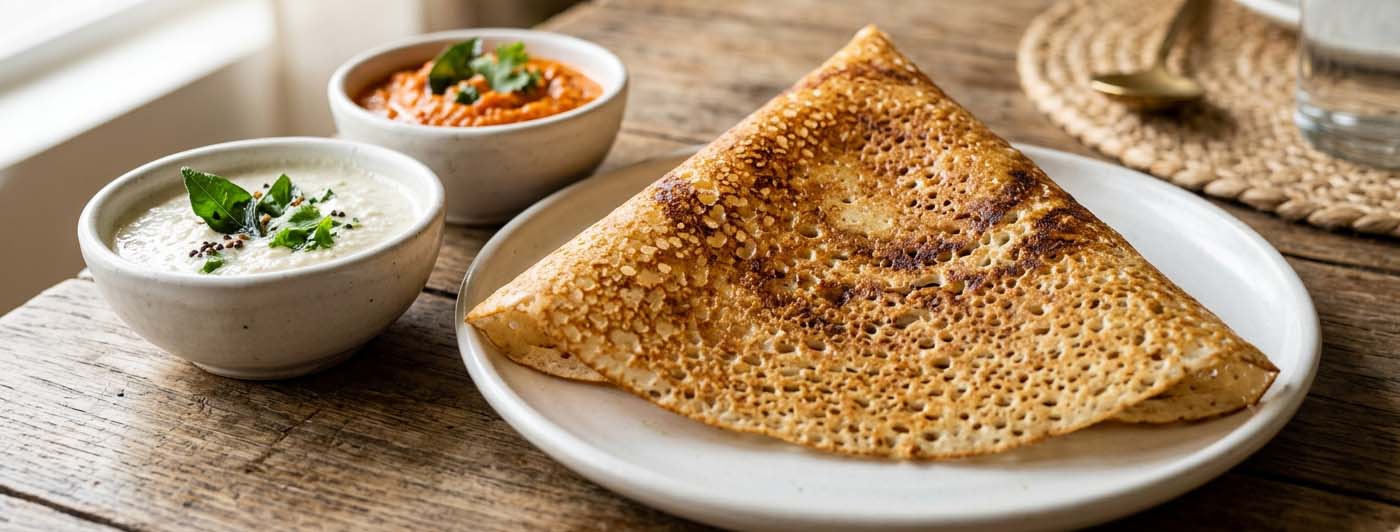
Idli |
2 pieces (80g) |
85 kcal |
3–4g |
65–70 |
0.8g |
|
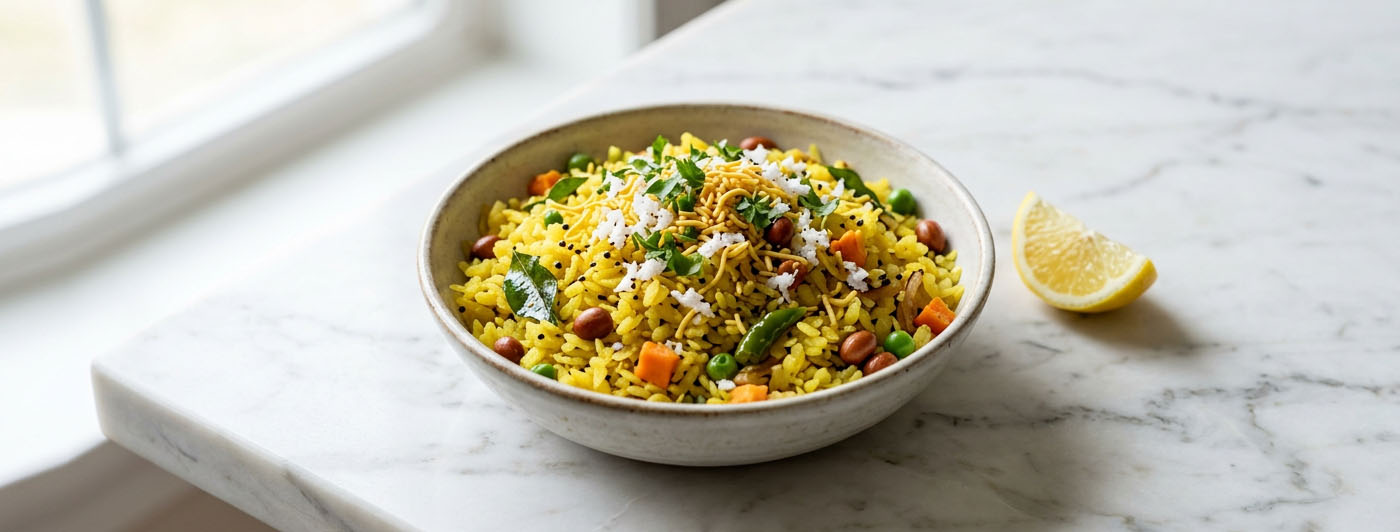
Poha |
1 bowl (150g cooked) |
180 kcal |
3g |
72 |
1g |
Chapati is lower in calories than a rice katori for the same carbohydrate contribution, has a lower GI than white bread, and is meaningfully higher in fibre than both rice and bread. For weight management specifically, roti is a better daily staple than either rice or bread on most nutritional metrics.
Chapati vs Rice vs Bread: Which Is Better?
|
# |
Parameter |
Chapati |
White Rice |
White Bread |
Winner |
|
1 |
Calories per serving |
70–80 kcal |
195 kcal (1 katori) |
80 kcal (1 slice) |
Chapati / Bread |
|
2 |
Protein per serving |
2.5–3g |
4g |
2.5g |
Rice (marginally) |
|
3 |
GI |
45–72 |
64–72 |
63–93 |
Chapati |
|
4 |
Fibre |
2g |
0.6g |
0.7g |
Chapati |
|
5 |
Iron |
0.7mg |
0.2mg |
0.9mg |
Bread (marginally) |
|
6 |
Gluten-free |
No |
Yes |
No |
Rice |
|
7 |
Satiety per kcal |
High (fibre) |
Low |
Low |
Chapati |
|
8 |
Blood sugar management |
Better (lower GI) |
Worse |
Worst |
Chapati |
|
9 |
Daily Indian versatility |
Highest |
Highest |
Moderate |
Draw |
One-line verdict: Chapati is the best daily staple for Indians managing weight or blood sugar — lower GI than rice, more fibre than bread, and significantly fewer calories per equivalent carbohydrate portion than a rice katori. For the full rice vs roti comparison, read ourrice vs roti guide.

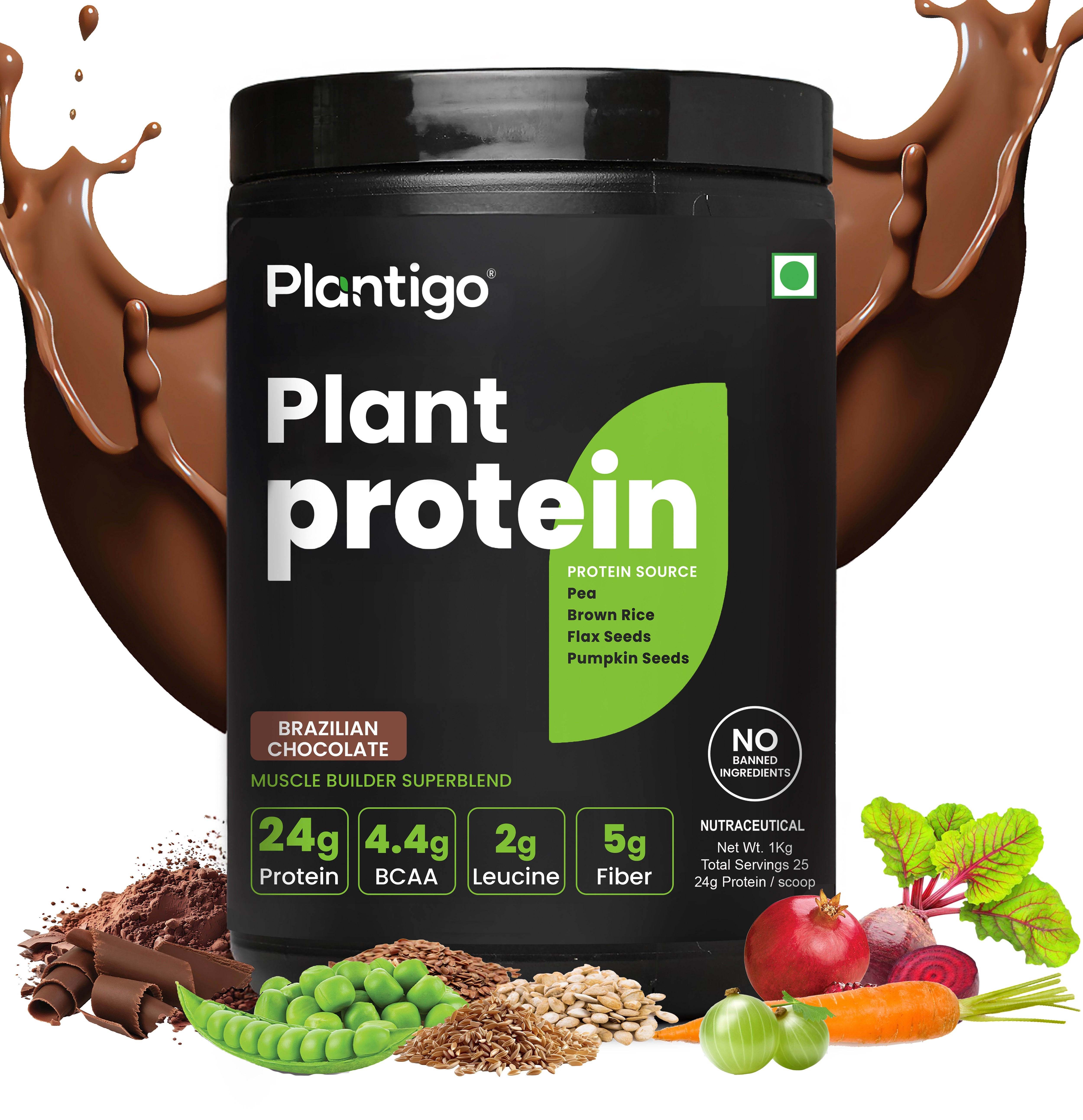
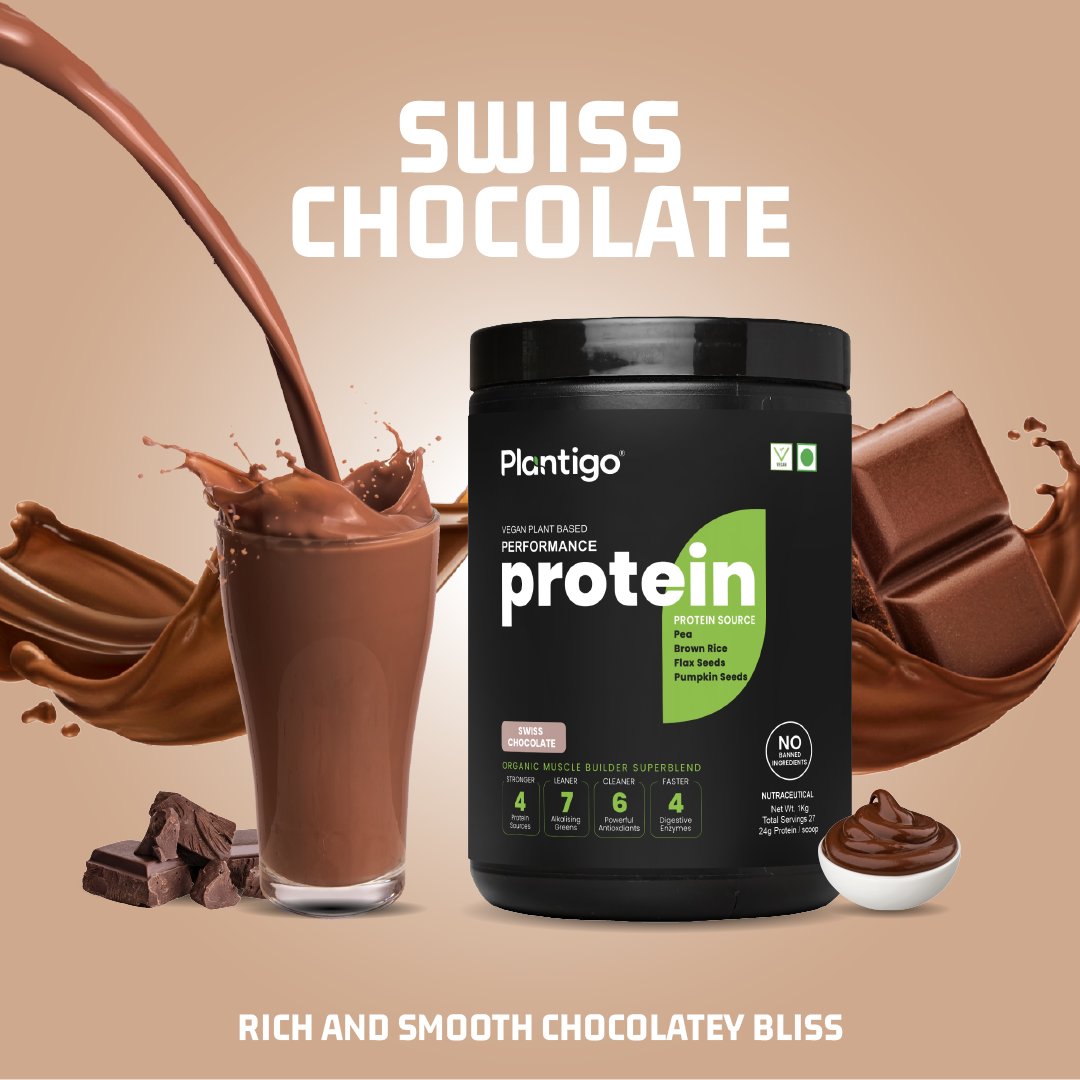
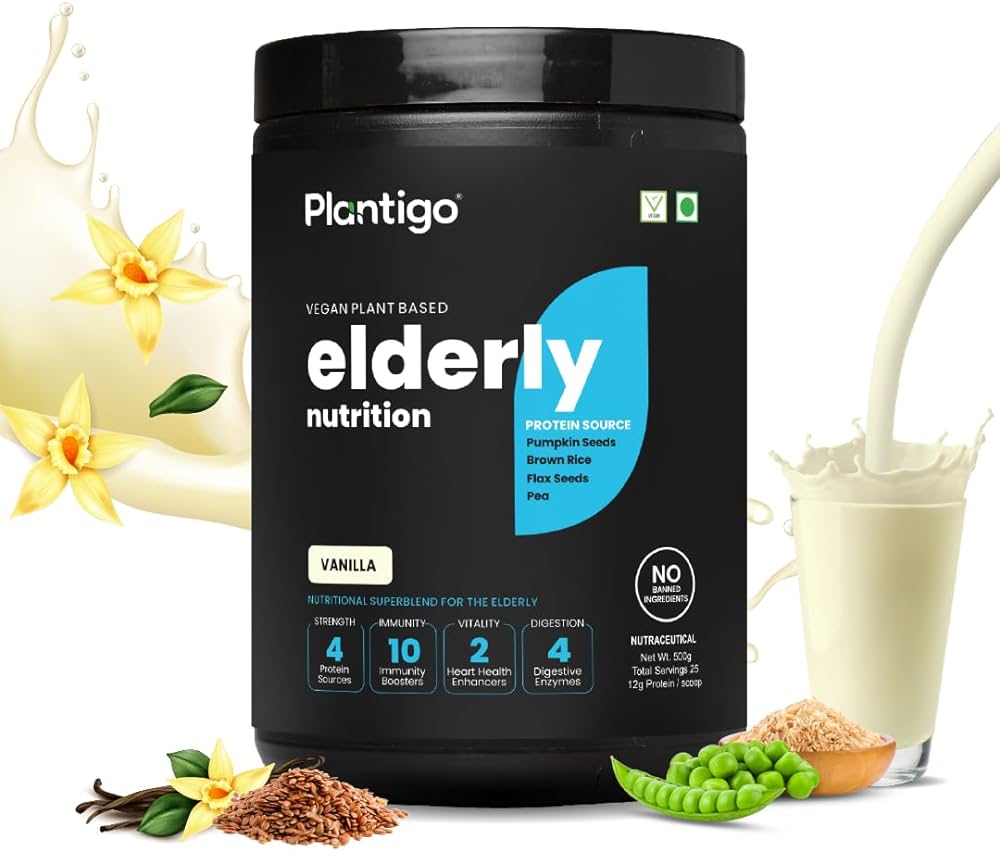
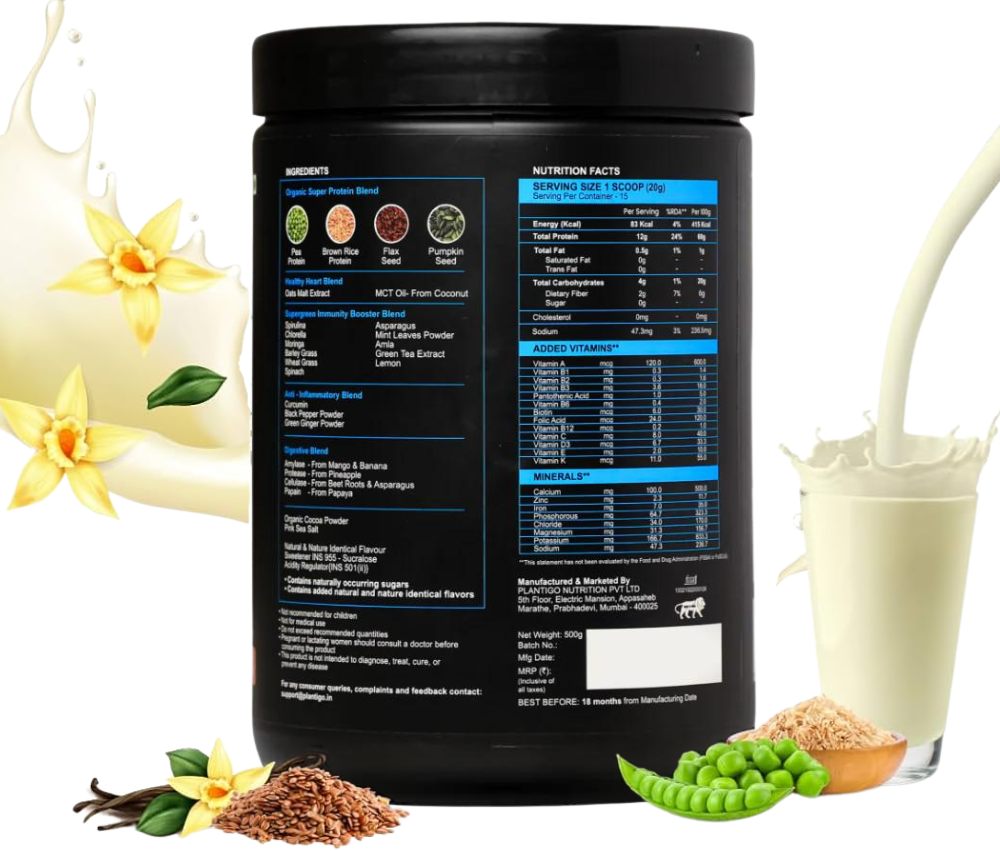
If your chapati-based diet isn't closing the daily protein gap, Plantigo bridges it with a complete plant-based blend of Canadian Pea Isolate, Brown Rice, Pumpkin Seed, and Flaxseed — all 9 essential amino acids, zero Class 2 preservatives, Eurofins-tested, with a 30-day taste guarantee.View Plantigo Plant Protein
Benefits of Chapati for Indians

1. Weight Management
At 70–80 kcal per medium roti, chapati is one of the lowest-calorie Indian staple foods per serving.
-
Higher satiety than rice at equivalent calories due to 2g fibre per roti
-
GI of 45–72 — meaningful blood sugar advantage over rice and white bread
-
Replacing 1 rice katori with 2 chapatis saves ~35–55 kcal while increasing fibre 3x
2. Blood Sugar Control
Whole wheat chapati has a GI of 45–72 — lower than white rice (64–72) and significantly lower than white bread (63–93), per amultigrain roti GI study.
-
Fibre slows glucose absorption — reducing post-meal insulin spike
-
Multigrain atta (with besan, ragi, bajra) further reduces GI to 40–55
-
Pairing with dal or curd lowers the overall meal GI by 15–20%
3. Digestive Health
2g fibre per medium chapati — 10x more than white rice per equivalent serving.
-
Insoluble fibre improves gut motility and reduces constipation
-
Prebiotic effect supports Lactobacillus growth in the gut microbiome
-
Whole wheat bran contains phenolic compounds with anti-inflammatory activity
4. Micronutrient Contribution
Chapati contributes iron, magnesium, phosphorus, and B vitamins that white rice loses during milling.
-
0.7mg iron per roti — 3.5x more than white rice per equivalent serving
-
B vitamins (B1, B3, B6) support energy metabolism and neural function
-
Magnesium in whole wheat supports muscle contraction and blood pressure regulation
How to Boost Chapati Calories and Protein — Practical Methods
1. Besan addition (30% substitution): Replace 30% of atta with besan. Protein per roti rises from 3g to ~5–6g. GI drops from ~62 to ~45. No significant taste change. See ourbesan protein breakdown for why this is the single best flour modification for Indian weight loss.
2. Plant protein powder in dough: Add ½ scoop (12g) unflavoured plant protein to 250g atta before kneading. Each roti gains 2–3g extra protein with no taste change. This raises protein per roti to 4.5–6g — doubling the contribution from chapati alone.
3. Ragi or multigrain atta: Ragi adds 344mg calcium per 100g flour and lowers GI to ~55. Multigrain atta blends (wheat + bajra + jowar + ragi) raise protein to 12–14g per 100g flour and fibre by 30–40%. See ourragi protein guide for the full calcium and protein case.
4. Dal or paneer stuffing: A dal paratha (30g atta + 30g cooked dal filling) delivers 6–7g protein per piece — more than doubling the plain chapati's contribution. Paneer paratha (30g atta + 30g paneer) delivers 9–10g protein per piece at 180–200 kcal.
5. Pair with high-protein sabzi or dal: Chapati + 1 katori dal = ~10–11g protein per meal. Chapati + 50g paneer sabzi = ~13g protein. The roti is the carbohydrate vehicle — the protein comes from what is eaten with it. See ourchana protein guide for the highest-protein dal to pair with roti.
Chapati vs Other Indian Protein Sources
1. Plain Chapati vs Besan Roti
A besan roti delivers 7–9g protein per piece vs plain roti's 2.5–3g — at similar calories. For weight loss and blood sugar management, besan roti is a straightforward upgrade. For the full protein case for besan, see ourbesan protein guide.
Besan advantage: 3x more protein, GI ~28 vs ~62, more satiety per kcal.
2. Chapati vs Bread
White bread has a GI of 63–93 — higher than chapati's 45–72. Chapati has 2g fibre per piece vs 0.7g in white bread. At equivalent calories, chapati is unambiguously the better daily choice for blood sugar, satiety, and micronutrient density. See ourprotein-rich Indian foods guide for the full staple comparison.
Chapati advantage: Lower GI, 3x more fibre, higher micronutrient density, no additives.
3. Chapati vs Plant Protein Supplement
A plain chapati delivers 2.5–3g protein — a 25g scoop of plant protein delivers 20–22g. Chapati is a carbohydrate staple, not a protein source. For Indians trying to hit 56g+ of daily protein, roti is the caloric foundation and a plant protein supplement is the protein delivery mechanism — they serve different functions and work best together.
Supplement advantage: 7–8x more protein per equivalent serving, complete amino acids, zero carbohydrate load.
The Bottom Line
One medium plain chapati has 70–80 kcal and 2.5–3g protein — low calorie, moderate GI, high fibre relative to rice or bread, making it India's best daily staple for weight management. The protein contribution is modest; pairing with dal, paneer, or besan in the dough meaningfully improves it. For Indians eating 3–4 rotis daily, chapati provides the carbohydrate foundation but cannot anchor daily protein targets. A clean plant protein supplement closes the protein gap that even the best roti preparation leaves open.
Frequently Asked Questions
1. Is chapati ok for weight loss?
Yes — one medium chapati is 70–80 kcal with 2g fibre and GI of 45–72. Replacing rice with 2 chapatis saves 35–55 kcal while tripling fibre and lowering blood sugar response.
2. How many calories are in 2 chapatis?
2 medium plain chapatis (30g atta each, no oil) contain 140–160 kcal. Adding ½ tsp ghee per roti raises this to 185–215 kcal for 2 rotis.
3. How many chapatis are 500 calories?
Approximately 6–7 medium plain chapatis with no oil equal ~500 kcal. With ½ tsp ghee per roti, 4–5 chapatis reach ~500 kcal.
4. Is chapati a carb or fibre?
Chapati is primarily a carbohydrate (15g per medium roti) with meaningful fibre (2g per roti). It is not a protein or fat source in any significant quantity — its nutritional value is as a complex carbohydrate with better fibre and GI than rice or bread.
5. Is chapati healthier than bread?
Yes — lower GI (45–72 vs 63–93), 3x more fibre, more iron and B vitamins, and no preservatives. Most commercial white bread uses maida with added sugar and preservatives.
External Sources
Disclaimer: This article is for educational purposes only. If you have diabetes, celiac disease, gluten sensitivity, or kidney disease, consult your doctor or dietitian before making major dietary changes.
{ "@context": "https://schema.org", "@type": "FAQPage", "mainEntity": [ { "@type": "Question", "name": "Is chapati ok for weight loss?", "acceptedAnswer": { "@type": "Answer", "text": "Yes — one medium chapati is 70–80 kcal with 2g fibre and GI of 45–72. Replacing rice with 2 chapatis saves 35–55 kcal while tripling fibre and lowering blood sugar response." } }, { "@type": "Question", "name": "How many calories are in 2 chapatis?", "acceptedAnswer": { "@type": "Answer", "text": "2 medium plain chapatis (30g atta each, no oil) contain 140–160 kcal. Adding ½ tsp ghee per roti raises this to 185–215 kcal for 2 rotis." } }, { "@type": "Question", "name": "How many chapatis are 500 calories?", "acceptedAnswer": { "@type": "Answer", "text": "Approximately 6–7 medium plain chapatis with no oil equal ~500 kcal. With ½ tsp ghee per roti, 4–5 chapatis reach ~500 kcal." } }, { "@type": "Question", "name": "Is chapati a carb or fibre?", "acceptedAnswer": { "@type": "Answer", "text": "Chapati is primarily a carbohydrate (15g per roti) with meaningful fibre (2g). Its value is as a complex carbohydrate with better fibre and GI than rice or bread." } }, { "@type": "Question", "name": "Is chapati healthier than bread?", "acceptedAnswer": { "@type": "Answer", "text": "Yes — lower GI (45–72 vs 63–93), 3x more fibre, more iron and B vitamins, and no preservatives. Most commercial white bread uses maida with added sugar and preservatives." } } ] }