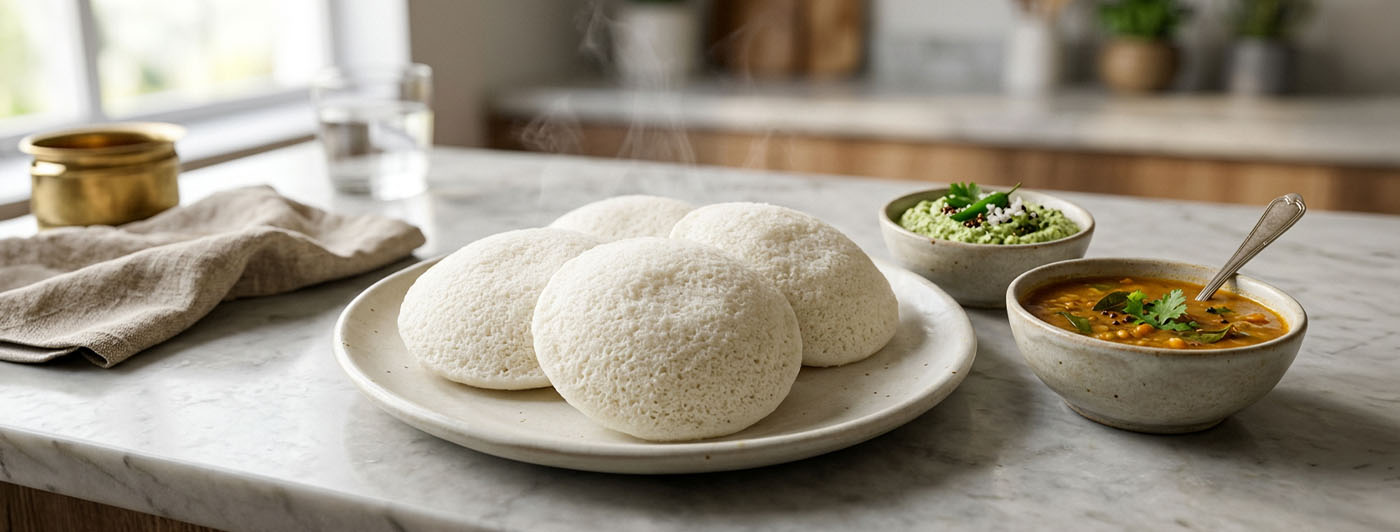
Idli is South India's most trusted breakfast — soft, steamed, and eaten in every home from Tamil Nadu to Karnataka. Most Indians know idli calories are low, but the exact number is surprisingly debated: estimates range from 25 kcal to 80 kcal per piece depending on size, batter ratio, and fermentation. The protein number is even less understood — and it is the one that matters most for Indians asking whether idli actually sustains them until lunch. For Indians eating 4–6 idlis at breakfast and wondering why they are hungry by 10am, the answer lies in the idli calories and protein data. Adding a cleanplant protein to your idli routine is the most practical way to close that gap without abandoning a breakfast you love.
How Many Calories Does One Idli Have?
One medium plain idli (40–45g steamed, made from standard 3:1 rice-urad batter) contains approximately 39–45 kcal and 1.5–2g protein — placing idli calories among the lowest of any Indian breakfast food per piece — based on ICMR-NIN food composition data and confirmed in aPMC study on idli glucose response. Idli calories vary by size: a mini idli (20–25g) has 20–25 kcal, a standard idli (40–45g) has 39–45 kcal, and a large restaurant idli (60–80g) can reach 60–80 kcal per piece. The protein per idli is 1.5–2g — very low — which explains why idli calories alone do not provide sustained satiety without sambar and chutney.
Idli Calories: Complete Breakdown
1. Idli Calories by Size and Type
|
Idli Type |
Weight per Piece |
Idli Calories |
Protein |
Carbs |
Fat |
|
Mini idli |
20–25g |
20–25 kcal |
0.8–1g |
4–5g |
0.1g |
|
Standard home idli |
40–45g |
39–45 kcal |
1.5–2g |
8–9g |
0.2g |
|
Large home idli |
55–65g |
55–65 kcal |
2–2.5g |
11–13g |
0.3g |
|
Restaurant idli |
65–80g |
65–80 kcal |
2.5–3g |
13–16g |
0.3g |
|
Rava idli (1 piece) |
50–60g |
80–100 kcal |
2–3g |
14–18g |
3–4g |
|
Ragi idli (1 piece) |
45–50g |
50–60 kcal |
2–2.5g |
10–12g |
0.3g |
|
Oats idli (1 piece) |
45–50g |
55–65 kcal |
2.5–3g |
10–12g |
1g |
|
Protein idli (plant protein added) |
45–50g |
50–65 kcal |
4–6g |
8–10g |
0.5g |
Source: ICMR-NIN Indian Food Composition Tables 2017;idli fermentation nutrition study
2. Idli Calories with Accompaniments — The Full Breakfast Picture
|
Combination |
Idli Calories |
Total Protein |
Total Calories |
|
2 idlis, plain |
78–90 kcal |
3–4g |
78–90 kcal |
|
2 idlis + sambar (200ml) |
78–90 + 60–80 kcal |
3–4g + 6–8g = 9–12g |
138–170 kcal |
|
4 idlis + sambar + coconut chutney |
156–180 + 60–80 + 50 kcal |
6–8g + 6–8g = 12–16g |
266–310 kcal |
|
4 idlis + sambar + 1 scoop plant protein |
~170 + 80 + 120 kcal |
~8g + 8g + 20g = 36g |
~370 kcal |
|
4 idlis, plain (no accompaniment) |
156–180 kcal |
6–8g |
156–180 kcal |
Idli calories in isolation are deceptively low — 4 idlis are just 156–180 kcal. The full breakfast picture including sambar and chutney is 260–310 kcal — still one of the lowest complete South Indian breakfasts available. The protein gap remains the issue: 12–16g from a 4-idli-sambar breakfast covers only 21–29% of daily protein needs.
3. Idli Calories vs Other South Indian Breakfasts
|
Breakfast |
Serving |
Idli Calories / Kcal |
Protein |
GI |
Fibre |
|
2 plain idlis |
80–90g |
78–90 kcal |
3–4g |
65–70 |
0.8g |
|
1 plain dosa |
50g batter |
90–110 kcal |
2.5–3g |
65–77 |
0.5g |
|
Poha (1 plate) |
75g dry |
270–300 kcal |
5–6g |
70–80 |
1.2g |
|
Upma (1 bowl) |
150g |
200–220 kcal |
4–5g |
65–70 |
1g |
|
Oats (1 bowl cooked) |
40g dry |
150 kcal |
5–6g |
~55 |
4g |
|
Besan chilla (2 pcs) |
80g |
240–280 kcal |
16–18g |
~28 |
4g |
Idli calories are the lowest of any complete South Indian breakfast — 2 idlis at 78–90 kcal is lighter than even a plain dosa. The trade-off is the lowest protein among all these options.
Idli vs Other Indian Staples for Weight Loss
|
# |
Parameter |
Idli (2 pieces) |
Chapati (1 piece) |
White Rice (1 katori) |
Dosa (1 plain) |
Winner |
|
1 |
Idli calories / kcal |
78–90 kcal |
70–80 kcal |
195 kcal |
90–110 kcal |
Idli / Chapati |
|
2 |
Protein |
3–4g |
2.5–3g |
4g |
2.5–3g |
Idli (marginally) |
|
3 |
GI |
65–70 |
45–72 |
64–72 |
65–77 |
Chapati |
|
4 |
Fibre |
0.8g |
2g |
0.6g |
0.5g |
Chapati |
|
5 |
Zero added fat |
Yes (steamed) |
No (tawa) |
No |
No |
Idli |
|
6 |
Fermentation benefit |
Yes |
No |
No |
Yes |
Idli / Dosa |
|
7 |
Satiety (2–3 hrs) |
Low |
Moderate |
Low |
Low |
Chapati |
|
8 |
Digestibility |
Very high |
Moderate |
Moderate |
High |
Idli |
One-line verdict: Idli calories are among the lowest of any Indian staple — but idli loses on fibre, GI, and satiety compared to chapati. For weight loss, idli is an excellent calorie choice when paired with sambar; without protein augmentation it will not sustain you past 10am. For the full chapati comparison, see ourchapati calories guide.

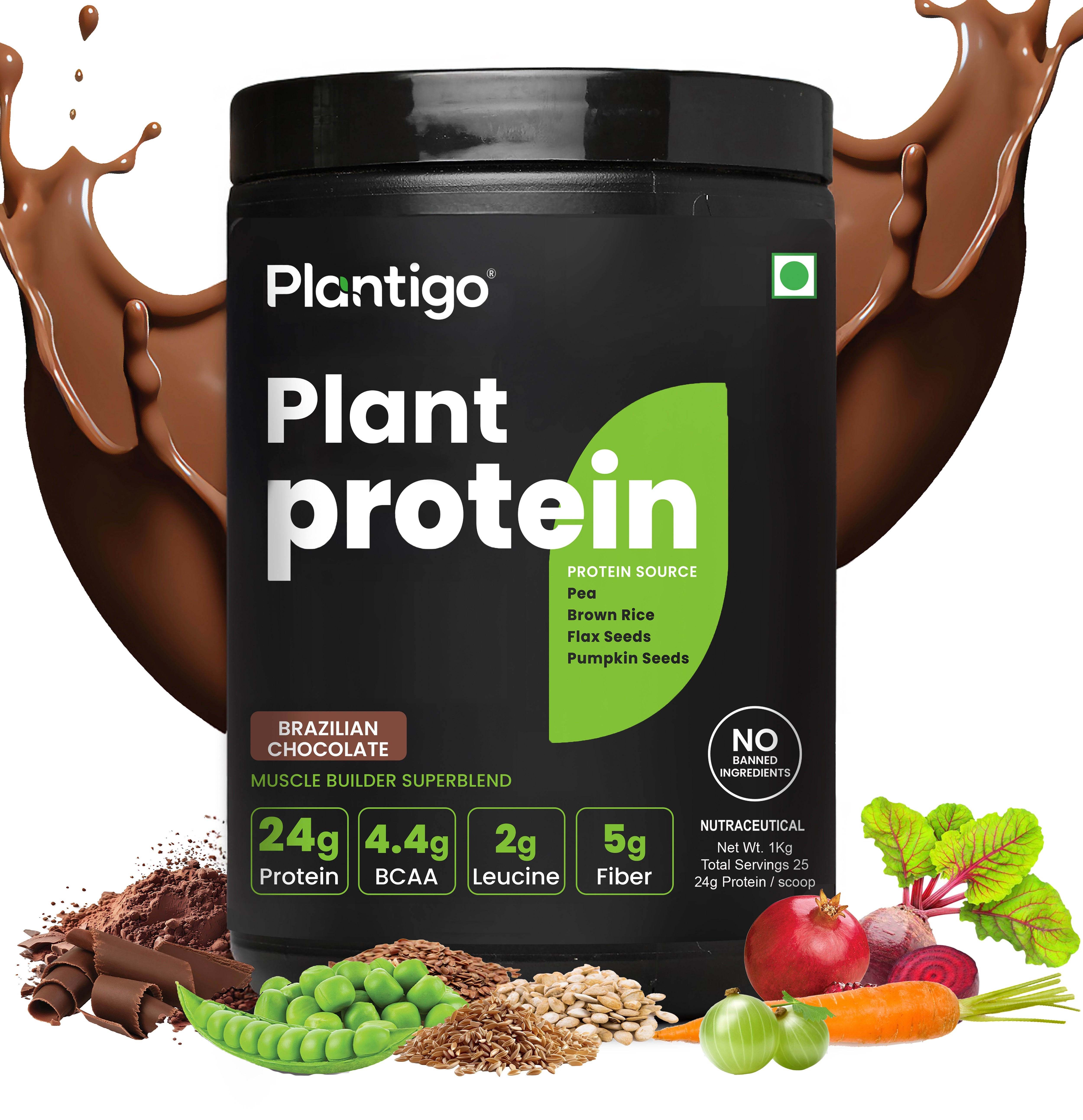
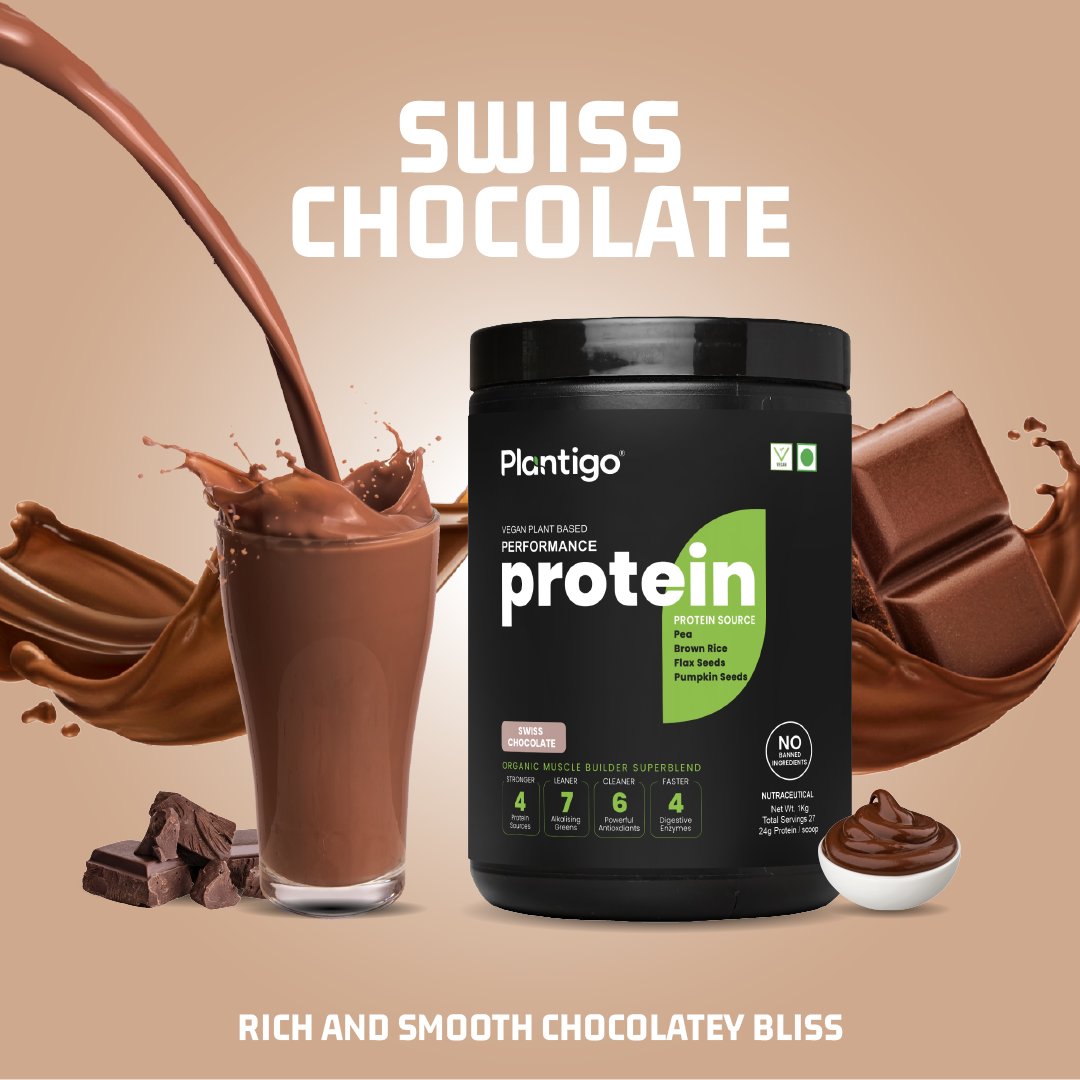
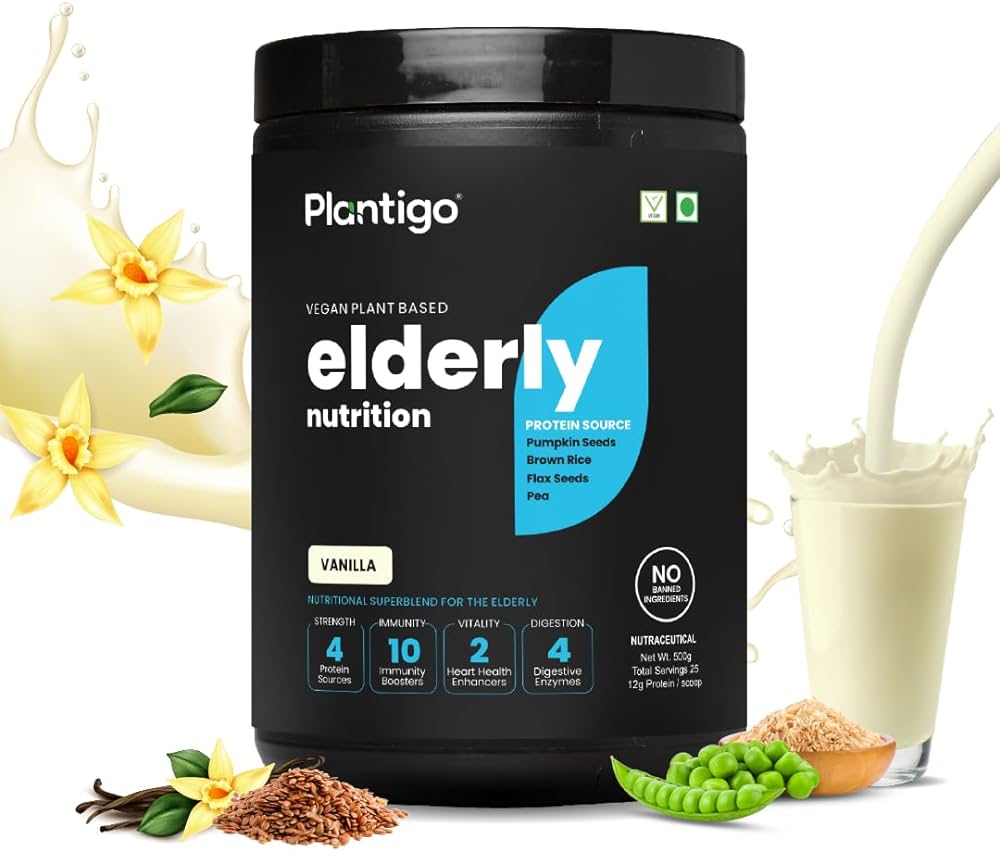
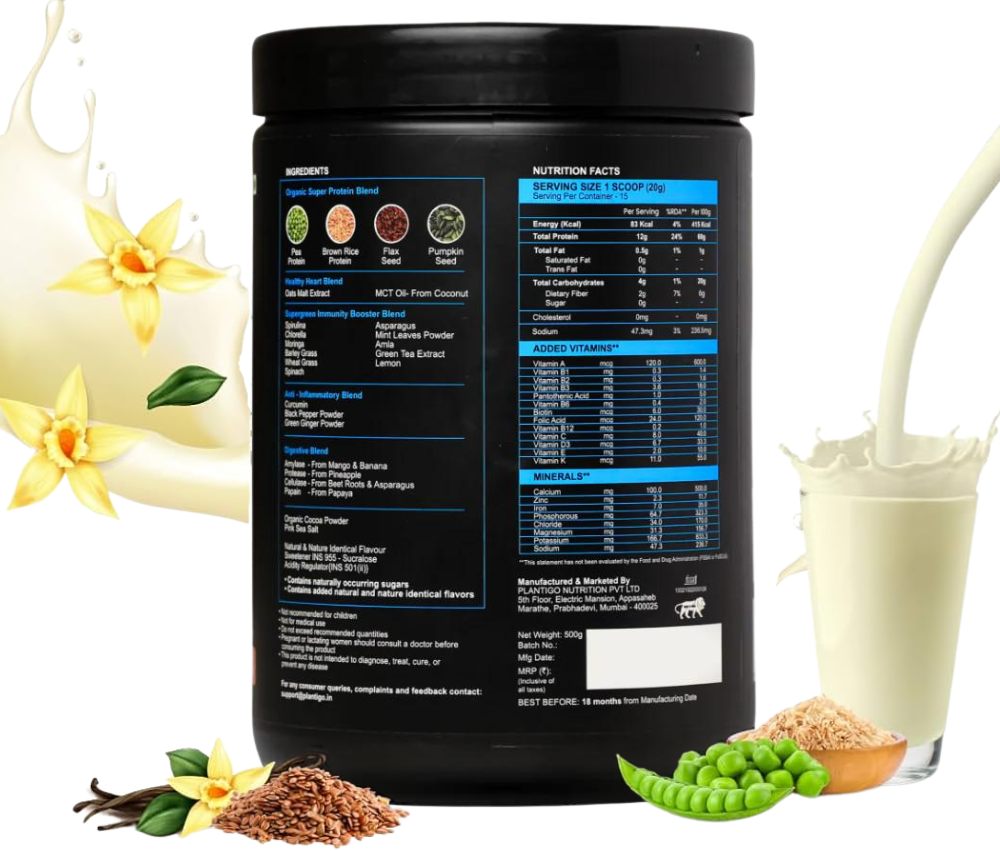
If your idli breakfast isn't closing the daily protein gap, Plantigo bridges it with a complete plant-based blend of Canadian Pea Isolate, Brown Rice, Pumpkin Seed, and Flaxseed — all 9 essential amino acids, zero Class 2 preservatives, Eurofins-tested, with a 30-day taste guarantee.View Plantigo Plant Protein
Benefits of Idli for Indians

1. Lowest Idli Calories Among Indian Breakfasts
At 39–45 kcal per piece, idli is the lightest steamed breakfast food in Indian cuisine.
-
4 idlis = 156–180 kcal — well within any weight loss calorie budget
-
Zero added fat in standard preparation — steaming requires no oil whatsoever
-
Volume satiety from steamed rice-urad batter is higher than the calorie count suggests
2. Fermentation Benefit
Fermented idli batter improves B vitamin content and reduces antinutrients — confirmed in aidli fermentation study.
-
Fermentation produces riboflavin (0.76mg/100g) and thiamine (0.73mg/100g) — not present in raw batter
-
Antinutrient reduction improves absorption of iron and calcium from the batter
-
Lactic acid bacteria from fermentation support gut microbiome health
3. Easy Digestion
Idli is among the most easily digested Indian foods — relevant for elderly Indians, post-illness recovery, and children.
-
Fermentation pre-digests some starch and protein, reducing digestive load
-
Steaming retains all nutrients without creating acrylamides (common in fried or toasted foods)
-
Suitable for Indians with IBS, weak digestion, or recovery from gastroenteritis
4. Gluten-Free
Standard idli batter is rice and urad dal — naturally gluten-free with no wheat component.
-
Safe for Indians with coeliac disease or wheat sensitivity
-
No maida, no refined flour — a whole grain and legume combination
-
Rava idli is the exception — semolina contains gluten
5. The Protein Gap
At 1.5–2g protein per piece, idli's protein contribution is the lowest of any Indian breakfast food.
-
4 idlis deliver 6–8g protein — 11–14% of a 70kg adult's 56g daily requirement
-
Sambar adds 6–8g, raising a 4-idli-sambar breakfast to 12–16g — still 40–44g short daily
-
Adding ragi flour or plant protein to idli batter is the most practical fix
How to Boost Idli Protein Without Changing the Taste
Method 1 — Ragi idli batter: Replace 20% of rice in the batter with ragi flour. Each idli gains calcium (344mg per 100g ragi) and slightly more protein at near-identical idli calories. See ourragi protein guide for why ragi is the best flour addition to idli batter.
Method 2 — Plant protein in batter: Add 1 scoop (25g) unflavoured plant protein to 500ml idli batter before fermentation. Each idli from this batch gains 2–3g extra protein with no taste or texture change. Total protein per 4 idlis rises from 6–8g to 14–20g.
Method 3 — Urad dal ratio increase: Standard ratio is 3:1 (rice:urad). Increasing urad dal to a 2:1 ratio raises protein naturally — urad dal has 25g protein per 100g. Fermentation time may need adjustment.
Method 4 — Sambar with more dal: Use toor dal + chana dal blend in sambar (1:1 ratio). Protein per 200ml sambar rises from 6–8g to 10–12g. See ourchana protein guide for why chana dal is the highest-protein dal for sambar.
Method 5 — Post-idli protein shake: 4 idlis with sambar (14–16g protein) + 1 scoop plant protein in water or milk post-breakfast (20–22g protein) = 34–38g total morning protein at ~490 kcal. This is a complete protein morning without changing the idli breakfast at all.
Idli Calories vs Other Indian Protein Sources
1. Idli vs Dosa
Dosa has slightly higher idli calories (90–110 kcal vs 39–45 kcal per piece) but similar protein (2.5–3g vs 1.5–2g). Both are fermented, both are low-protein without augmentation. Dosa has a slight protein advantage from the thicker batter; idli has a calorie advantage and zero fat in preparation. For the full dosa calorie data, see ourdosa calories guide.
Idli advantage: Lower idli calories, zero added fat, steamed preparation, higher digestibility.
2. Idli vs Oats
Oats deliver 13g protein per 100g raw and 10g fibre — significantly more than idli on both counts. A 40g oat porridge (150 kcal) delivers 5–6g protein vs 4 idlis (156–180 idli calories) delivering 6–8g. Similar calorie range, but oats win on protein, fibre, and GI (~55 vs 65–70). See ouroats protein guide.
Idli advantage: Fermentation benefit, gut health, zero fat, South Indian cultural fit.
3. Idli vs Plant Protein Supplement
A 25g scoop of plant protein delivers 20–22g protein at 120 kcal — equivalent to eating 10–15 idlis for the same protein. Idli and plant protein serve different purposes: idli provides carbohydrates and fermentation benefits; plant protein provides the protein precision that idli calories cannot deliver alone.
Supplement advantage: 10x more protein per equivalent serving, complete amino acids, zero carbohydrate load.
The Bottom Line
Idli calories range from 39–45 kcal per standard piece — the lowest of any Indian breakfast food per serving. Four idlis with sambar deliver 12–16g protein at 260–310 kcal — nutritionally sound but insufficient to sustain an Indian adult's protein needs for the morning. The fix is simple and doesn't require changing the breakfast: add ragi flour or plant protein to the batter, increase the urad dal ratio, or stir plant protein into sambar. Idli calories stay the same; protein doubles. That is the difference between a breakfast that feels light and a breakfast that actually carries you through the day.
Frequently Asked Questions
1. Is idli ok for weight loss?
Yes — one standard idli is just 39–45 kcal with zero added fat. 4 idlis with sambar deliver a complete breakfast at 260–310 kcal, making idli one of the best low-calorie South Indian breakfast options for weight loss.
2. How many calories do 2 idlis have?
2 standard home idlis (40–45g each) contain 78–90 kcal total with no oil. 2 restaurant idlis (65–80g each) can reach 130–160 kcal due to larger size.
3. Is idli healthier than rice?
Yes — idli calories are far lower than a rice katori (195 kcal), idli is fermented for better digestibility, and steaming adds zero fat. Idli also has a slightly lower GI than cooked white rice for better blood sugar response.
4. Is idli healthier than roti?
Both are comparable in calories (39–45 vs 70–80 kcal per piece) — roti leads on fibre and GI, idli leads on zero fat and fermentation benefit. Neither is clearly superior; both fit a healthy Indian diet.
5. Can I eat 10 idlis a day?
10 standard idlis deliver 390–450 kcal and 15–20g protein — nutritionally low for a full day's eating and protein-deficient. Eating 10 idlis without sambar or protein augmentation is a high-carbohydrate, low-protein diet that will accelerate muscle loss over time.
External Sources
Disclaimer: This article is for educational purposes only. If you have diabetes, coeliac disease, kidney disease, or digestive conditions, consult your doctor or dietitian before making major dietary changes.