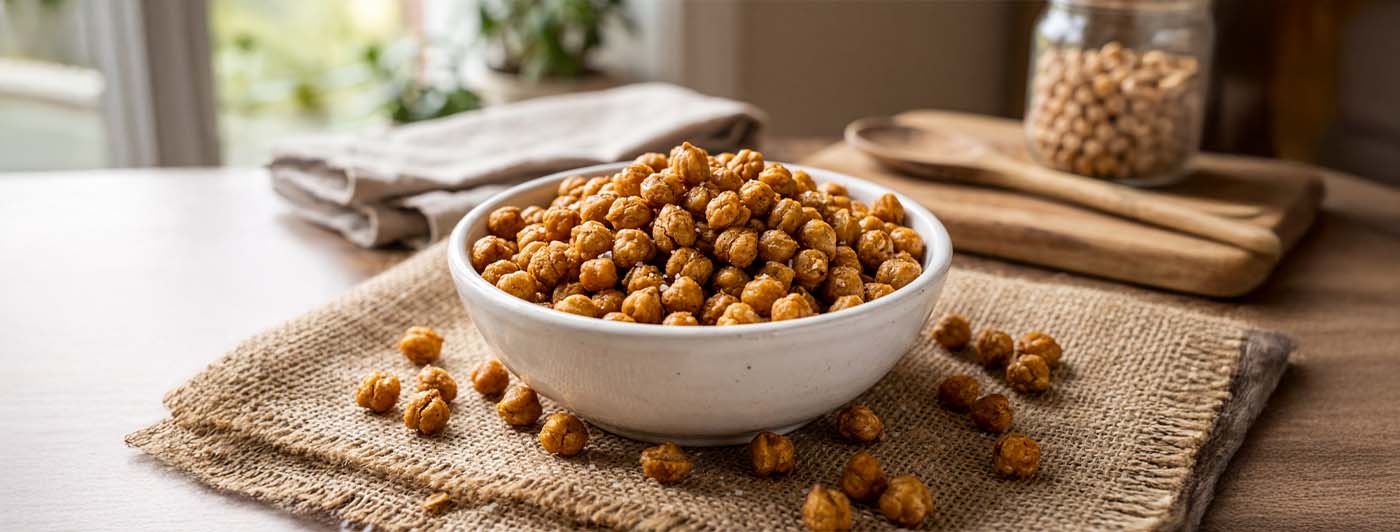
Roasted chana is the most underrated protein snack in the Indian diet. A handful at a tea stall or from a paper cone at a railway station — most people eating it have no idea they are consuming one of the densest plant protein sources available per rupee. Unlike cooked legumes where water absorption dilutes the per-100g protein figure, roasting removes moisture and concentrates nutrients. The result is a protein number that surprises most people and a snack that fits naturally into Indian daily life without any preparation, refrigeration, or meal planning.
How Much Protein Is in Roasted Chana per 100g?
Roasted chana contains approximately 25g of protein per 100g — higher than cooked chickpeas (19g), eggs (13g per 100g), and paneer (18–20g per 100g) — according to theICMR-NIN IFCT 2017. The higher figure compared to cooked chana is not a different food — it is the same chickpea with moisture removed through dry-roasting. When chana is boiled, it absorbs water and its weight increases; when roasted, water evaporates and protein concentration per 100g rises. This makes roasted chana the most protein-dense ready-to-eat snack food in the Indian diet.
Complete Data Breakdown: Roasted Chana Protein per 100g
1. Roasted Chana vs Other Chana Forms — Protein Comparison
|
Form |
Protein per 100g |
Why the Difference |
|
Roasted chana (whole, dry-roasted) |
~25g |
Moisture removed — protein concentrated |
|
Raw/dry chana (uncooked) |
25–26g |
Same as roasted — both are dry |
|
Cooked chana (boiled) |
18–19g |
Water absorbed — weight increases, dilutes per-100g |
|
Sprouted chana |
4–6g (fresh weight) |
High water content from germination |
|
Sattu (roasted + ground) |
20–22g |
Slightly lower — husk and fines affect density |
|
Chana dal (cooked) |
8–9g |
Split, cooked — maximum dilution |
Source: ICMR-NIN Indian Food Composition Tables 2017
The key insight: roasted chana and raw dry chana have virtually identical protein per 100g because both are in dry form. Roasting does not add protein — it removes water, which makes per-100g concentration rise compared to any cooked form. For the full cooked chana breakdown, see ourchana protein per 100g guide.
2. Full Nutritional Profile — Roasted Chana per 100g
|
Nutrient |
Roasted Chana (per 100g) |
|
Protein |
~25g |
|
Carbohydrates |
45–50g |
|
Fibre |
12–17g |
|
Fat |
4–6g |
|
Calories |
364–380 kcal |
|
Iron |
4–5mg |
|
Calcium |
100–120mg |
|
Folate |
480–540mcg |
|
Potassium |
850–900mg |
|
GI |
28–36 (low) |
Roasting preserves nutritional content more effectively than wet cooking — as a dry process, it does not cause nutrient leaching into cooking water. Aroasting effects on chickpeas (PMC) confirmed that roasting reduces oligosaccharides (which cause bloating) while preserving protein and mineral content, making roasted chana more digestible than cooked chana for many people.
3. Protein by Serving Size — Roasted Chana
|
Serving |
Weight |
Protein |
Calories |
|
Small handful (common snack) |
20g |
5g |
73–76 kcal |
|
1 standard serving |
30g |
7.5g |
109–114 kcal |
|
50g serving |
50g |
12.5g |
182–190 kcal |
|
100g (full analysis) |
100g |
~25g |
364–380 kcal |
|
Paper cone (railway/street) |
~40g |
10g |
145–152 kcal |
The most protein-efficient Indian snack comparison:
|
Snack |
30g serving |
Protein |
Calories |
|
Roasted chana |
30g |
7.5g |
110 kcal |
|
Roasted peanuts |
30g |
7.8g |
170 kcal |
|
Biscuits (Marie) |
30g |
2g |
130 kcal |
|
Namkeen/mixture |
30g |
3–4g |
145 kcal |
|
Oats (dry) |
30g |
4g |
111 kcal |
|
Almonds |
30g |
6g |
173 kcal |
Roasted chana delivers the best protein-to-calorie ratio of any common Indian snack food — more protein than oats at the same calories, and significantly more protein than any packaged namkeen or biscuit option.
4. Roasted Chana vs Sattu — What Is the Difference?
Many Indians confuse roasted chana and sattu. Both start with the same raw chana, but the end products differ meaningfully:
|
Parameter |
Roasted Chana |
Sattu |
|
Form |
Whole roasted grain |
Roasted + finely ground powder |
|
Protein per 100g |
~25g |
20–22g |
|
Preparation |
Ready to eat |
Mix with water, lemon, salt |
|
Fibre |
12–17g |
10–12g |
|
GI |
28–36 |
~40–45 |
|
Best use |
Snack, chaat |
Drink, sattu paratha, laddoo |
|
Digestibility |
Better (whole grain, less gas) |
Good |
Sattu's slightly lower protein per 100g is because grinding and processing changes the density and may include husk fractions at different ratios. For the full sattu profile, read oursattu protein per 100g guide.
Roasted Chana vs Other Indian Proteins: Scored Comparison
|
# |
Parameter |
Roasted Chana |
Verdict |
|
1 |
Protein per 100g |
~25g |
Matches raw legumes; beats cooked forms |
|
2 |
Protein per 30g snack serving |
7.5g |
Best protein-to-calorie ratio of any Indian snack |
|
3 |
Amino acid completeness |
Incomplete (low methionine) |
Pair with roti, rice, or peanuts |
|
4 |
GI |
28–36 |
Low — safe for diabetics |
|
5 |
Fibre |
12–17g per 100g |
Excellent — supports satiety and digestion |
|
6 |
Iron |
4–5mg per 100g |
Comparable to rajma and masoor dal |
|
7 |
Cost per gram of protein |
₹3–6 per gram |
Very affordable — cheaper than paneer, comparable to dal |
|
8 |
Convenience |
Zero preparation — ready to eat |
Unmatched — no cooking, no refrigeration |
|
9 |
Digestibility |
Better than cooked chana (lower oligosaccharides after roasting) |
Less bloating than cooked legumes |
|
10 |
Daily snack replacement |
Replaces namkeen, biscuits, mixture |
Best protein upgrade for any Indian snack habit |
One-line verdict: For protein per gram of snack food consumed without any preparation, roasted chana is the best value plant protein in India — convenient, affordable, digestible, and with a protein density that beats most cooked foods.

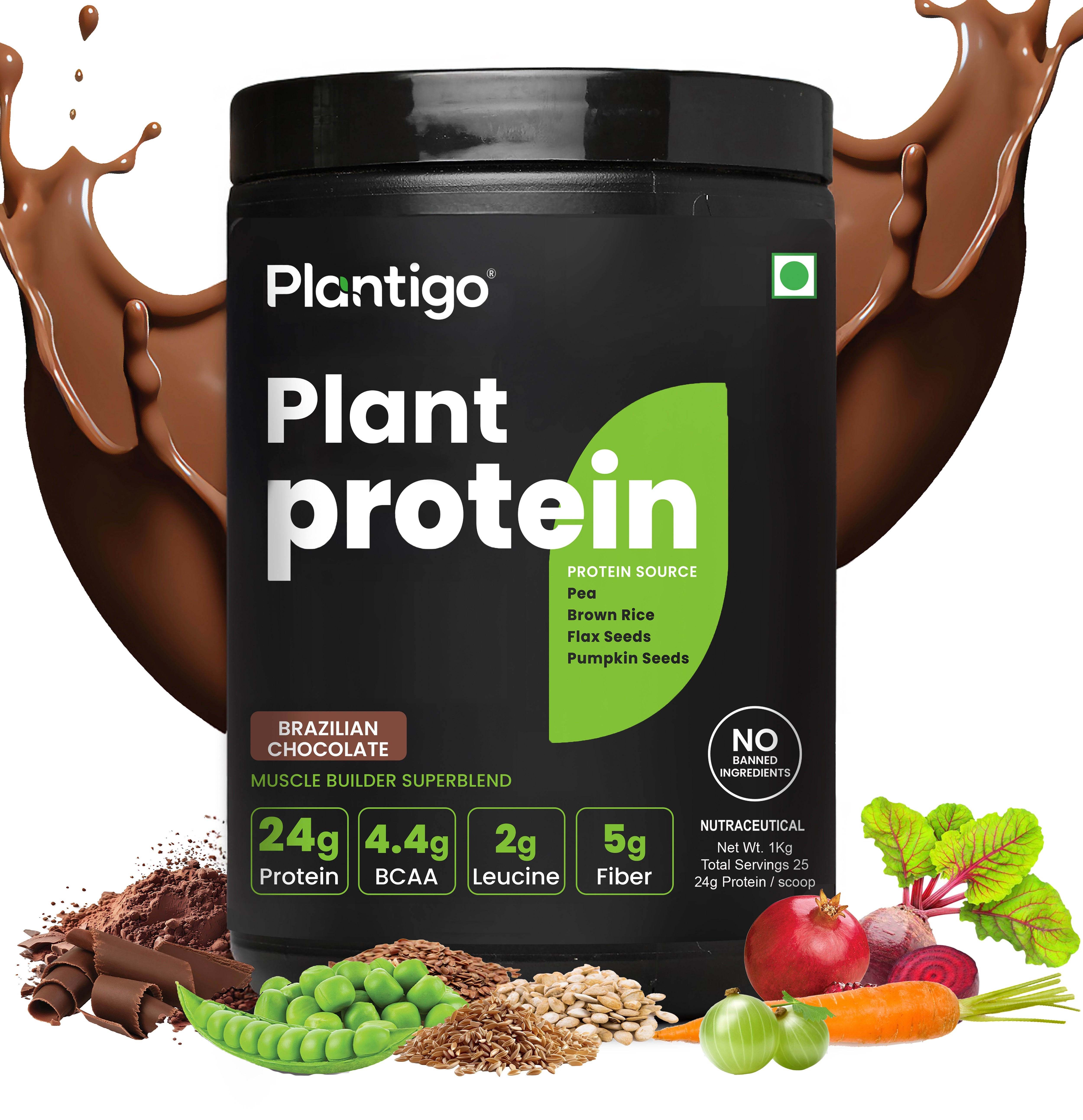
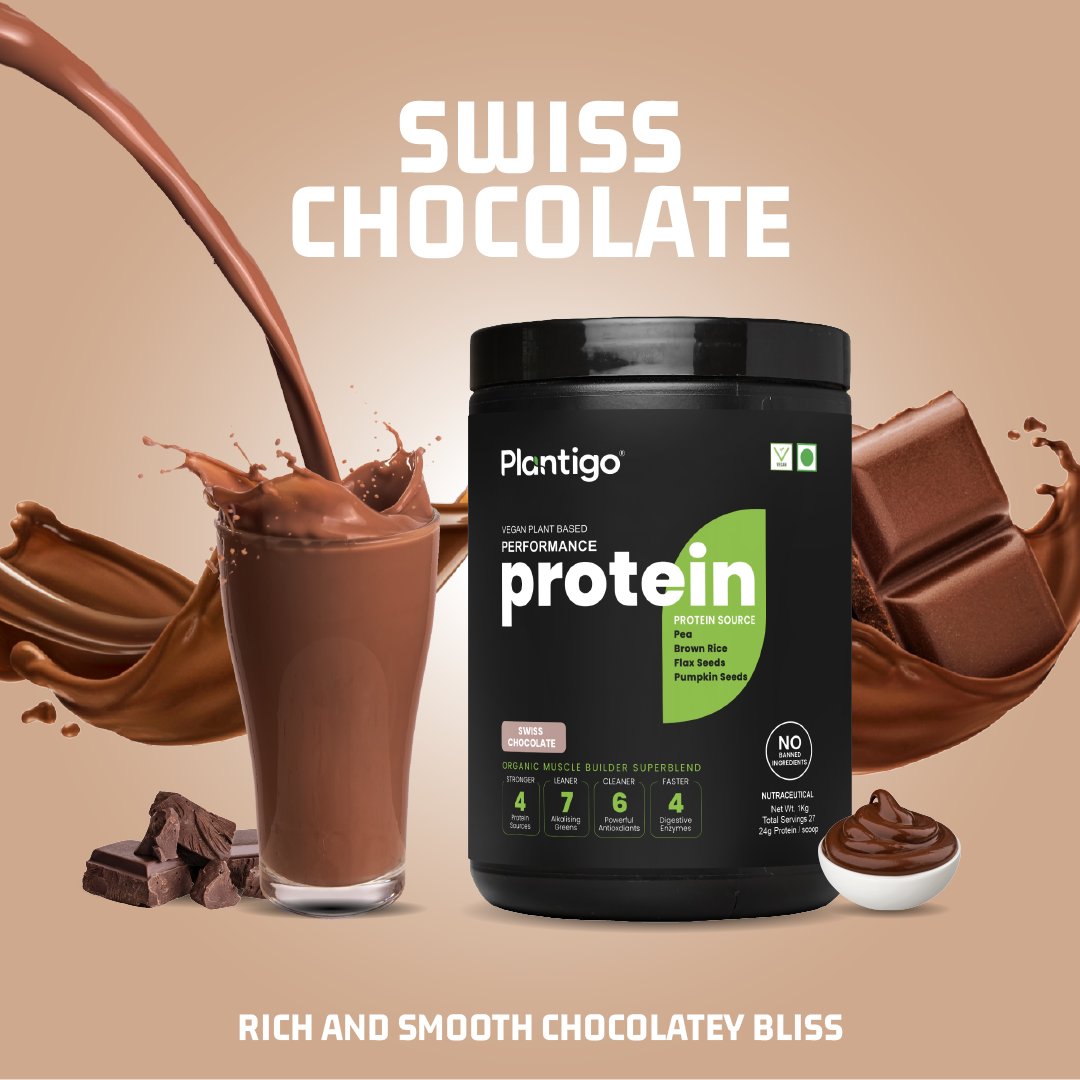
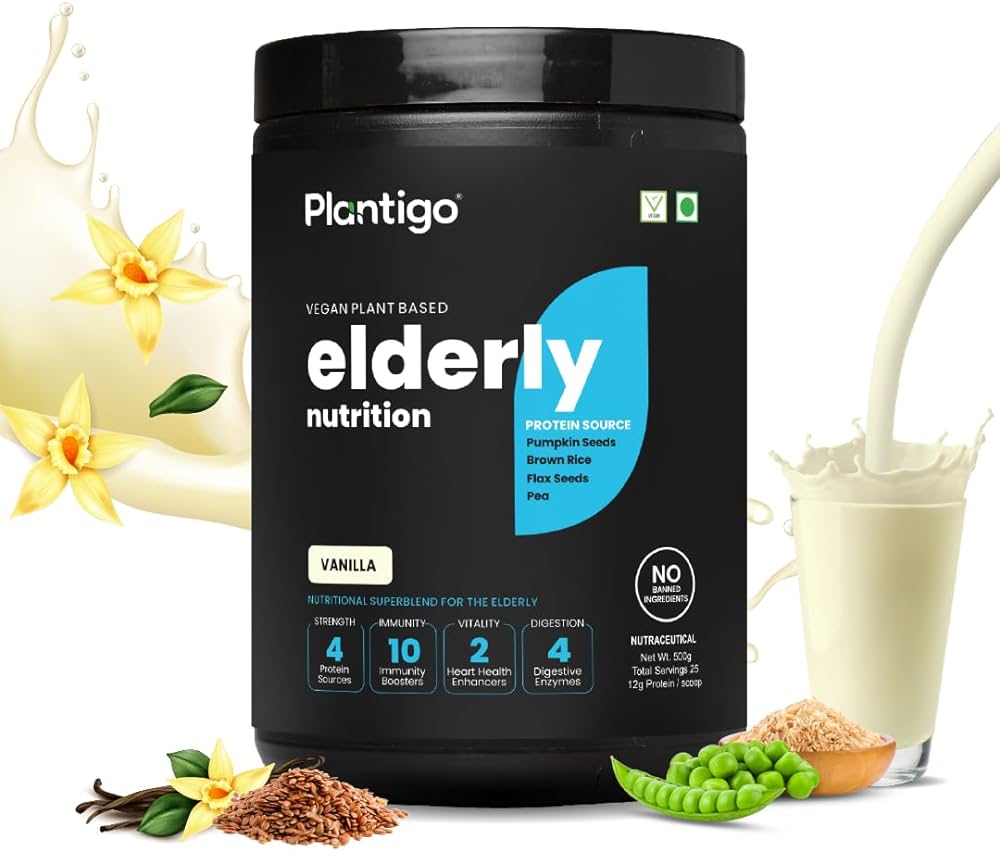
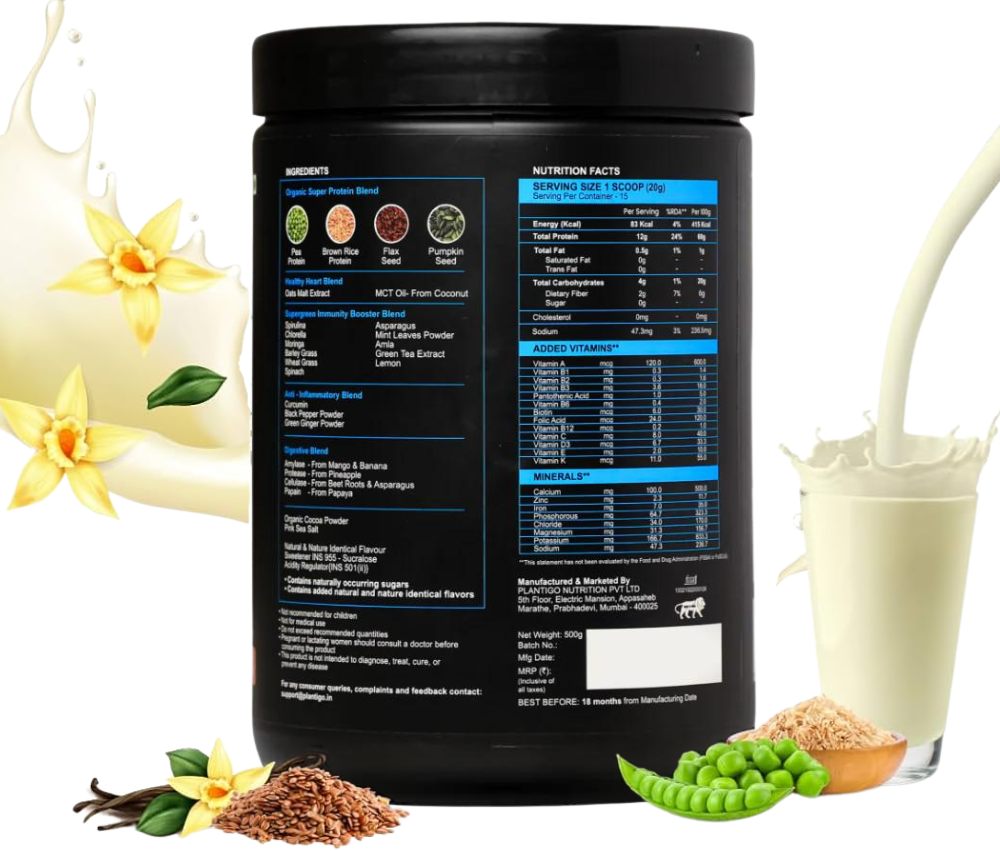
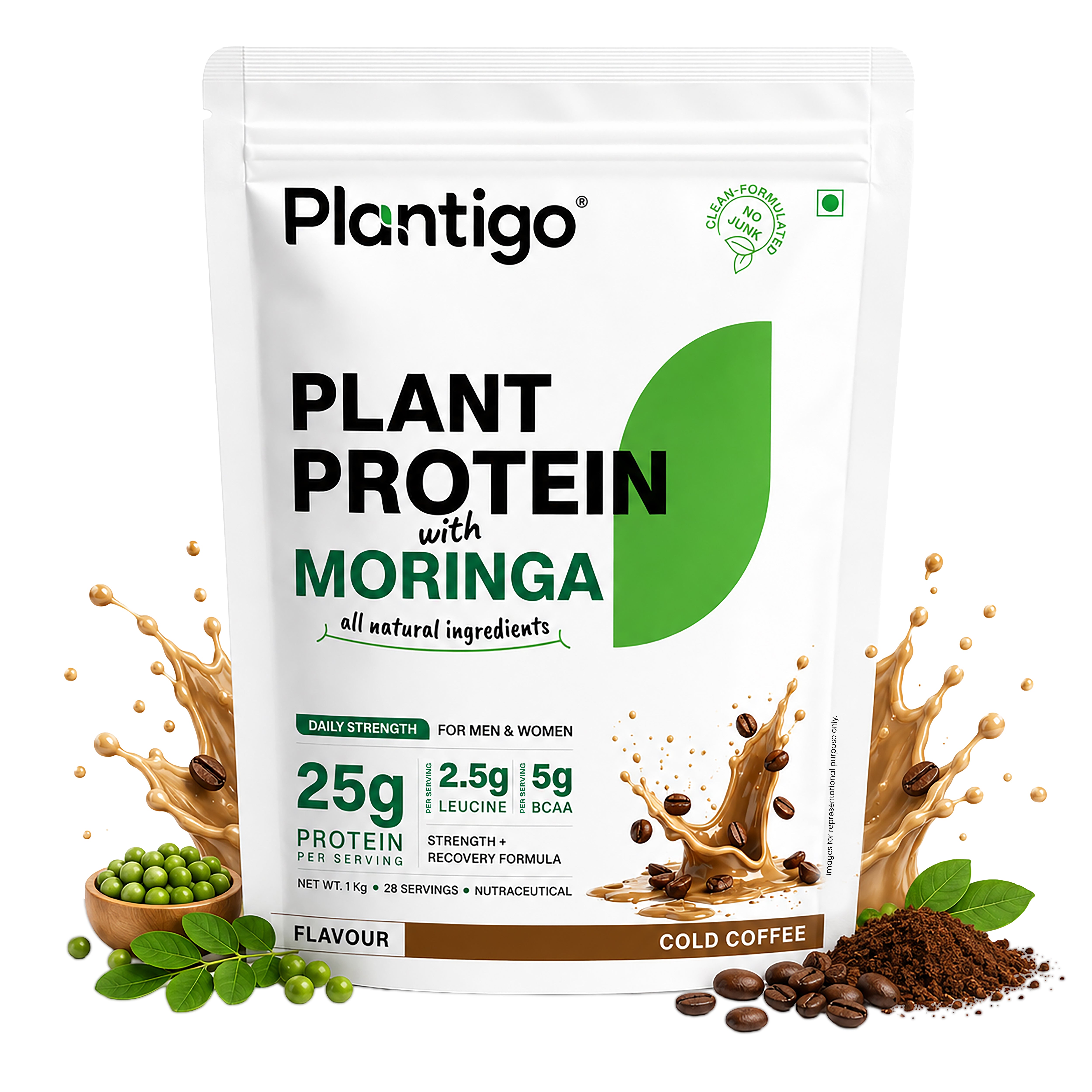
If roasted chana and dal aren't closing your daily protein gap, Plantigo bridges it — a complete pea, rice, pumpkin seed, and flaxseed blend with all 9 essential amino acids, zero Class 2 preservatives, Eurofins-tested, and a 30-day guarantee.View Plantigo Plant-Based Protein
Benefits of Roasted Chana for Indians

1. Highest Protein Snack, Zero Preparation
At 7.5g protein per 30g serving with no cooking required, roasted chana is the only high-protein Indian snack that requires nothing — no refrigeration, no preparation, no equipment.
-
Fits into any Indian routine: office desk, commute, between meals, post-workout
-
Replaces namkeen, biscuits, or mixture at 2–3x the protein and fewer empty calories
-
Shelf-stable for months — ideal for stock in office or home
2. Better Digestibility Than Cooked Chana
Roasting reduces oligosaccharides in chana — the compounds responsible for gas and bloating after eating legumes, confirmed by achickpea processing review (PMC 2023).
-
Less bloating than cooked rajma, chana curry, or dal for most people
-
Lower oligosaccharide content also makes it easier on sensitive digestive systems
-
The crunchy texture requires more chewing — slowing consumption and improving satiety signals
3. Safe for Diabetics
GI of 28–36 is among the lowest of any carbohydrate-containing snack food available in India.
-
Suitable as a mid-morning or evening snack for diabetics — no blood sugar spike
-
12–17g fibre per 100g slows glucose absorption further
-
Replacing high-GI packaged snacks with roasted chana is one of the simplest blood sugar management interventions available
4. Iron and Folate for Vegetarians
4–5mg iron and 480–540mcg folate per 100g make roasted chana nutritionally significant beyond its protein content.
-
Iron covers 25–30% of daily requirements per 100g — significant for vegetarian women
-
Folate at 480–540mcg is among the highest of any Indian snack food
-
Add lemon before eating — Vitamin C boosts non-haem iron absorption by up to 3x
5. Best Budget Protein Snack
At ₹20–40 per 100g for loose roasted chana from any kirana store or railway platform, the cost per gram of protein is ₹3–6 — among the lowest in the Indian food landscape.
-
Available everywhere in India at consistent quality
-
No supplement, refrigeration, or preparation cost
-
For women managing weight through protein-forward snacking, roasted chana integrates easily into a daily plan
How to Include Roasted Chana in Your Indian Diet
Roasted chana's greatest advantage is that it requires no recipe. But these combinations maximise its protein contribution:
1. Plain as a snack (anytime): 30–50g between meals. 7.5–12.5g protein at 110–190 kcal. The default use — and the most effective one.
2. Roasted chana chaat: 50g roasted chana + chopped onion, tomato, green chilli, lemon, chaat masala. 12.5g protein, ready in 5 minutes, no cooking. Best mid-morning or evening snack.
3. Add to trail mix: 30g roasted chana + 10g peanuts + 10g pumpkin seeds = 17–18g protein per 50g mix. The amino acid profile improves when combined with pumpkin seeds (methionine source).
4. Roasted chana + roti: Pair with 2 rotis at lunch — roasted chana provides lysine, roti provides methionine. Together they form a complete protein. See ourroti protein guide for the roti's protein contribution.
5. Pre-workout snack: 40g roasted chana 30–45 minutes before training delivers ~10g protein and slow-release carbohydrates — a practical pre-workout for Indians who do not use supplements.
6. Roasted chana laddoo: Mix with jaggery, ghee, and cardamom. Traditional Indian protein-dense sweet — still delivers 15–18g protein per 100g of laddoo, with the added calories from jaggery.
Roasted Chana vs Other Indian Protein Sources
1. Roasted Chana vs Oats
Oats at 30g deliver ~4g protein at 111 kcal. Roasted chana at the same weight delivers 7.5g protein at 110 kcal — nearly double the protein at identical calories. For a full comparison, see ouroats protein guide. Oats has beta-glucan fibre for cholesterol management; roasted chana leads on protein. Both are excellent — roasted chana wins as a snack, oats wins as a breakfast base.
Roasted chana advantage: 2x protein per gram at same calories, no cooking, shelf-stable.
2. Roasted Chana vs Peanuts
Peanuts deliver 7.8g protein per 30g — slightly more than roasted chana — but at 170 kcal vs 110 kcal. Peanuts have more fat (good fat, but more calories). Roasted chana wins on protein-to-calorie efficiency; peanuts win on healthy fat and total calorie density for those who need more energy.
Roasted chana advantage: Higher protein-to-calorie ratio, lower fat, lower calorie.
3. Roasted Chana vs Sprouted Chana
Sprouted chana has 4–6g protein per 100g fresh weight — significantly less than roasted chana's 25g — but higher bioavailability because sprouting reduces antinutrients. For the full sprouted breakdown, read ourprotein in sprouts guide. The comparison is not direct because one is eaten in large fresh volumes (100–150g) and the other in smaller concentrated amounts (30–50g).
Roasted chana advantage: Higher protein per 100g, no preparation, better convenience. Sprouted chana advantage: higher bioavailability, Vitamin C, probiotics from fermentation.
4. Roasted Chana vs Plant Protein Supplement
50g of roasted chana (a generous snack) delivers 12.5g protein. A single scoop of a quality plant protein supplement delivers 22–25g at 30g. For daily protein gap-closing, a supplement is more efficient per gram. But roasted chana fills the critical Indian snack slot — replacing empty-calorie snack foods with something that contributes meaningfully to the daily total. The two are not competing — they occupy different parts of the day.
The Bottom Line
Roasted chana protein per 100g is approximately 25g — the same concentration as raw dry chana, higher than cooked forms, and more than eggs or paneer per gram. It is the most protein-dense ready-to-eat snack food in India, available at every kirana store, railway platform, and roadside stall for ₹20–40 per 100g. For Indians who eat namkeen, biscuits, or mixture as daily snacks, replacing them with roasted chana is the simplest, most affordable protein upgrade available.
It is not a meal replacement. A 50g snack delivers 12.5g protein — significant but not sufficient on its own for a day's needs. Combined with dal, rotis, curd, and a clean supplement, roasted chana covers the snack-time protein gap that most Indians currently fill with foods delivering nothing useful nutritionally.
Frequently Asked Questions
1. How much protein is in 100g of roasted chana?
Approximately 25g per 100g — higher than cooked chana (19g) because roasting removes moisture and concentrates protein, per ICMR-NIN IFCT 2017.
2. How much protein is in 50g of roasted chana?
50g of roasted chana delivers approximately 12.5g protein at 182–190 kcal — a filling, protein-dense snack portion.
3. Can I eat 100g of roasted chana daily?
Yes — 100g daily is safe and nutritionally beneficial for most healthy adults, delivering 25g protein and 12–17g fibre. Those with kidney disease should moderate due to potassium content; those with gout should limit due to moderate purine content.
4. Can I eat roasted chana for protein?
Yes — at 25g protein per 100g, roasted chana is one of the highest-protein plant snack foods available in India. 50–100g daily as a snack delivers 12.5–25g protein at a cost of ₹10–40 — the most affordable protein snack in any Indian kitchen.
5. How to get 70g protein daily from an Indian vegetarian diet?
2 katoris dal (20–24g) + 50g roasted chana snack (12.5g) + 100g curd or paneer (18–20g) + 1 scoop Plantigo (25g) = 75–82g daily — achievable with existing Indian eating habits.
6. How much protein is in 2 rotis?
2 medium rotis (~60g) deliver approximately 6–8g protein. Paired with 50g roasted chana, the combination provides 18–20g protein and a complete amino acid profile — roti's methionine complements roasted chana's lysine.
External Sources
-
ICMR-NIN —Indian Food Composition Tables 2017
-
PMC —Chickpea Nutritional Composition and Health Benefits (2023)
-
PMC — Roasting Effects on Chickpea: Oligosaccharides and Nutrient Preservation
Disclaimer: This article is for educational purposes only. If you have diabetes, kidney disease, digestive issues, are pregnant, or are on medication, consult your doctor or dietitian before making major dietary changes.