Every Indian parent who has watched their child push dal away at dinner has wondered the same thing: is my child getting enough protein? School days are long, activity is high, and the gap between what children eat and what their growing bodies actually need is wider than most parents realise. The question about protein powder for kids follows naturally — but most parents are neither told when it is appropriate nor what to look for. The answer is specific, not a blanket yes or no, and it depends on age, diet gaps, and what is actually in the product.
Is Protein Powder Safe for Kids?
Protein powder is safe for children above 5 years when it is third-party tested, free of Class 2 preservatives and artificial sweeteners, and used to close a genuine dietary gap — not as a meal replacement — according toICMR-NIN dietary guidelines. Below age 5, protein requirements are better met through whole food sources such as dal, paneer, curd, and eggs; supplementation is not routinely recommended for toddlers unless specifically advised by a paediatrician. For school-age children with confirmed low dietary protein intake, a clean supplement with a short ingredient list is a practical bridge — not a replacement for food.
How Much Protein Do Indian Children Actually Need?
ICMR 2020 sets the following protein reference values for Indian children:
|
Age Group |
Daily Protein Requirement |
Key Growth Priority |
|
1–3 years |
12–14g per day |
Brain development, immunity |
|
4–6 years |
16–20g per day |
Muscle development, height |
|
7–9 years |
23–25g per day |
Bone density, cognition |
|
10–12 years (boys) |
32–34g per day |
Pre-pubertal growth spurt |
|
10–12 years (girls) |
30–32g per day |
Pre-pubertal growth, iron |
|
13–15 years (boys) |
45–54g per day |
Muscle mass, bone strength |
|
13–15 years (girls) |
43–52g per day |
Hormonal development |
Source: ICMR-NIN Recommended Dietary Allowances 2020
1. What a Typical Indian Child's Diet Actually Delivers
A standard school-day diet for a vegetarian Indian child aged 8–10 typically provides:
-
2 rotis at breakfast (besan/wheat): ~5–6g protein
-
Dal at lunch (1 katori): ~6–8g protein
-
Curd or paneer at dinner (small portion): ~4–5g protein
-
Snacks (biscuits, fruits, namkeen): ~1–2g protein
- per protein requirements in children
Total: ~16–21g against a requirement of 23–25g per day for a 7–9 year old — a gap of 4–9g daily. Over months, this compounds into stunted growth, low immunity, and poor concentration in class.
2. When the Gap Matters Most
-
Fussy eaters who consistently refuse dal, paneer, or eggs
-
Active children in sports, competitive swimming, or martial arts
-
Post-illness recovery when appetite is reduced for 1–2 weeks
-
Children on plant-based or vegan diets with no dairy
-
Underweight children with confirmed low muscle mass
Plant Protein vs Whey Protein for Kids: Which Is Better?
|
# |
Parameter |
Plant Protein |
Whey Protein |
Winner |
|
1 |
Digestibility |
High (with enzymes) |
High |
Draw |
|
2 |
Dairy-free |
Yes |
No |
Plant protein |
|
3 |
Lactose intolerance safe |
Yes |
No (unless isolate) |
Plant protein |
|
4 |
Allergen risk |
Lower (pea/rice blend) |
Higher (milk protein) |
Plant protein |
|
5 |
Complete amino acids |
Yes (multi-source blend) |
Yes |
Draw |
|
6 |
Preservatives / additives |
Clean options available |
Often added flavours |
Plant protein (cleaner options) |
|
7 |
Taste acceptance in kids |
Mild, mixes easily |
Sweeter, more palatable |
Whey |
|
8 |
Suitable for ages 5+ |
Yes |
Yes (if dairy-tolerant) |
Draw |
|
9 |
Long-term gut health |
Better (fibre-forming) |
Neutral |
Plant protein |
One-line verdict: For Indian children who are lactose intolerant, allergic to dairy, or on a plant-based diet, a multi-source plant protein blend — pea isolate, brown rice, and pumpkin seed — delivers complete amino acids without the allergen risk of whey. Plant protein is the safer default for a population where lactose intolerance affects an estimated 60–70% of adults, with early intolerance signs often beginning in childhood.

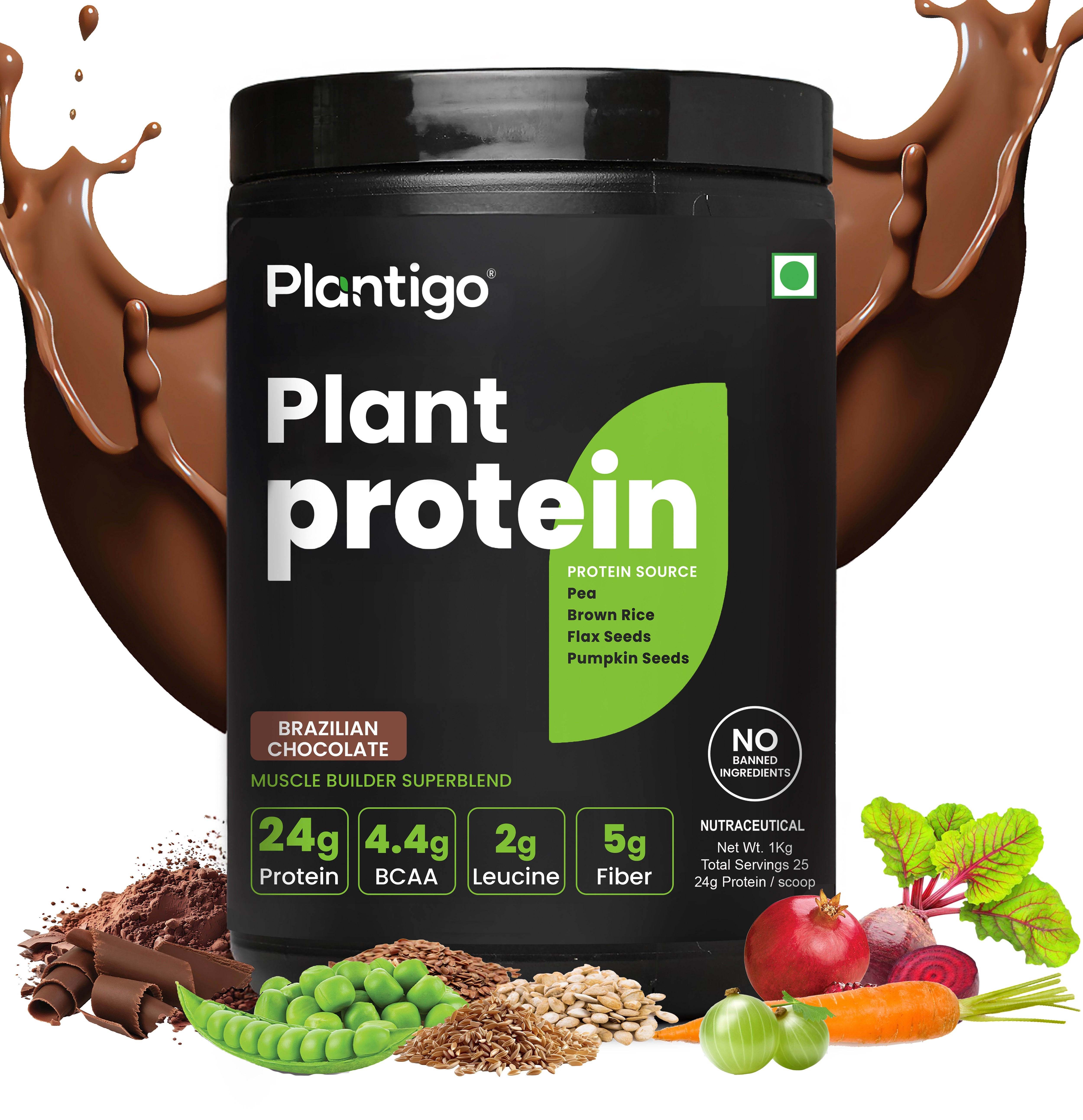
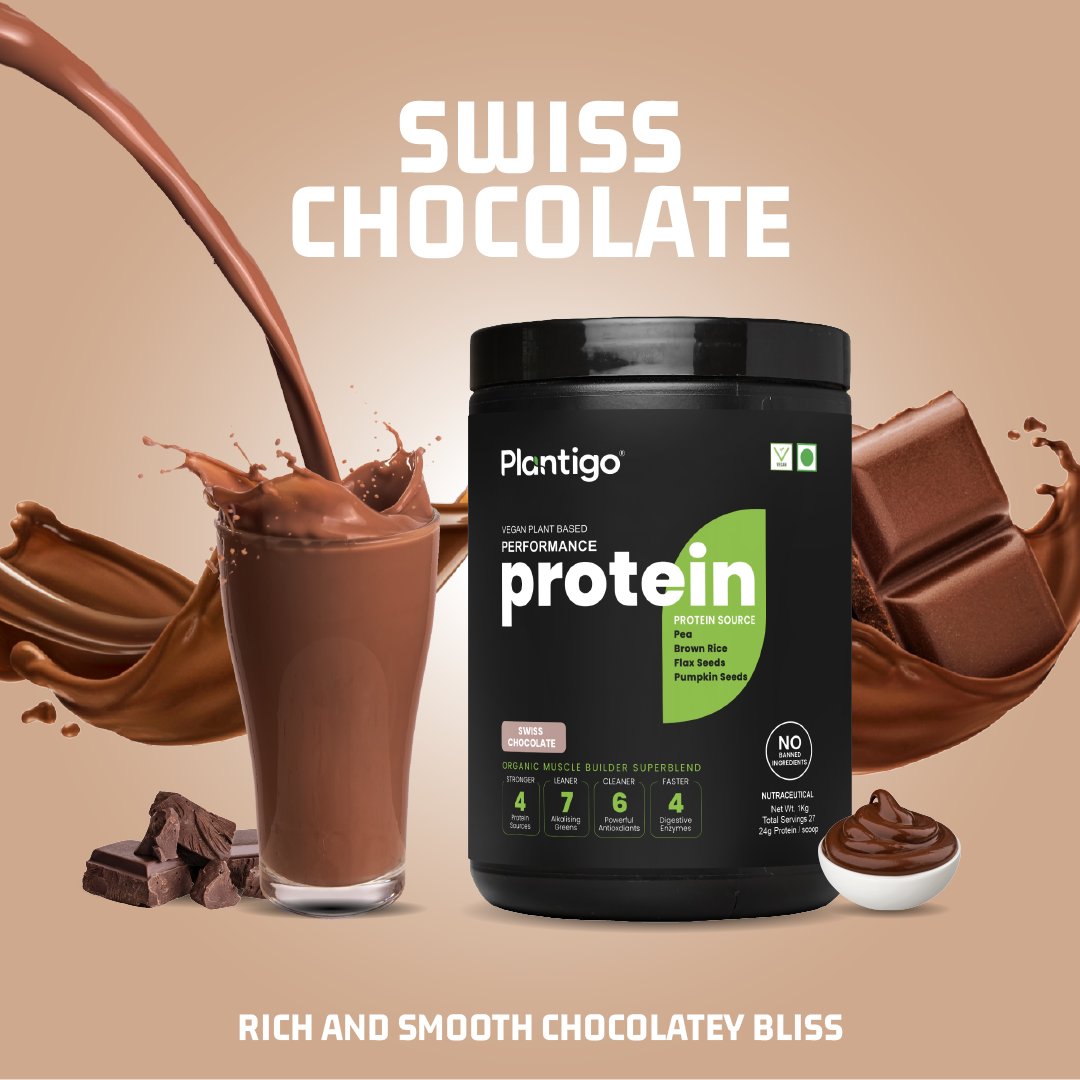
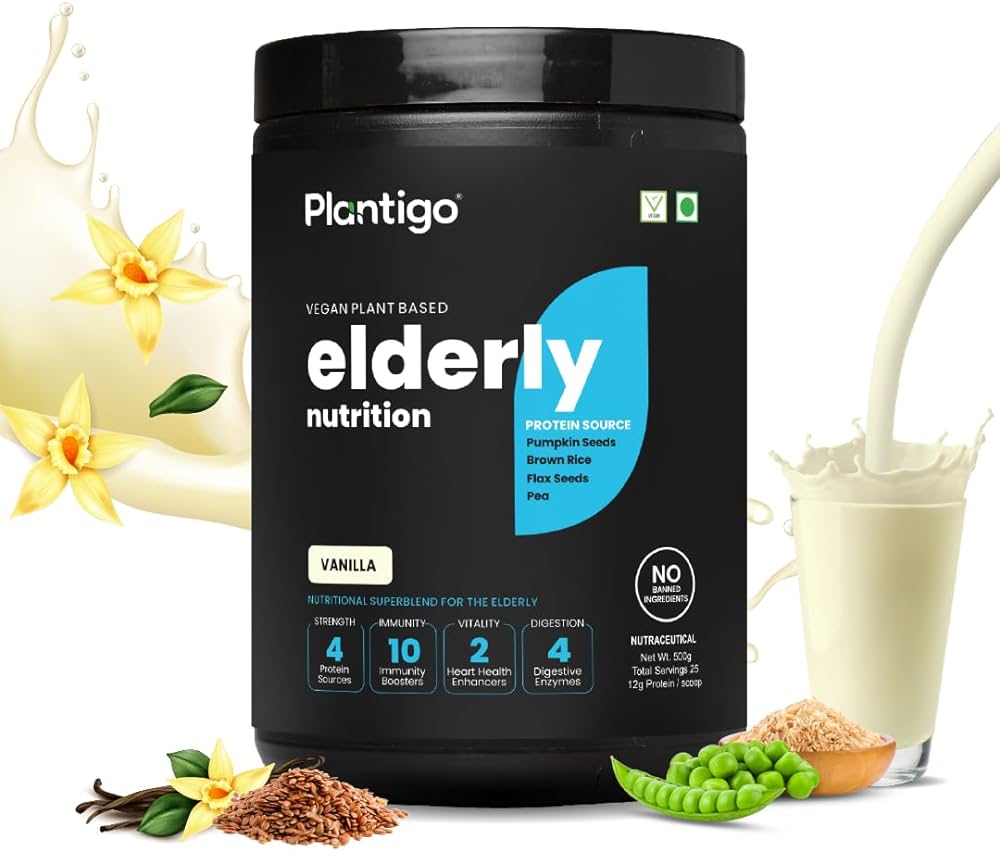
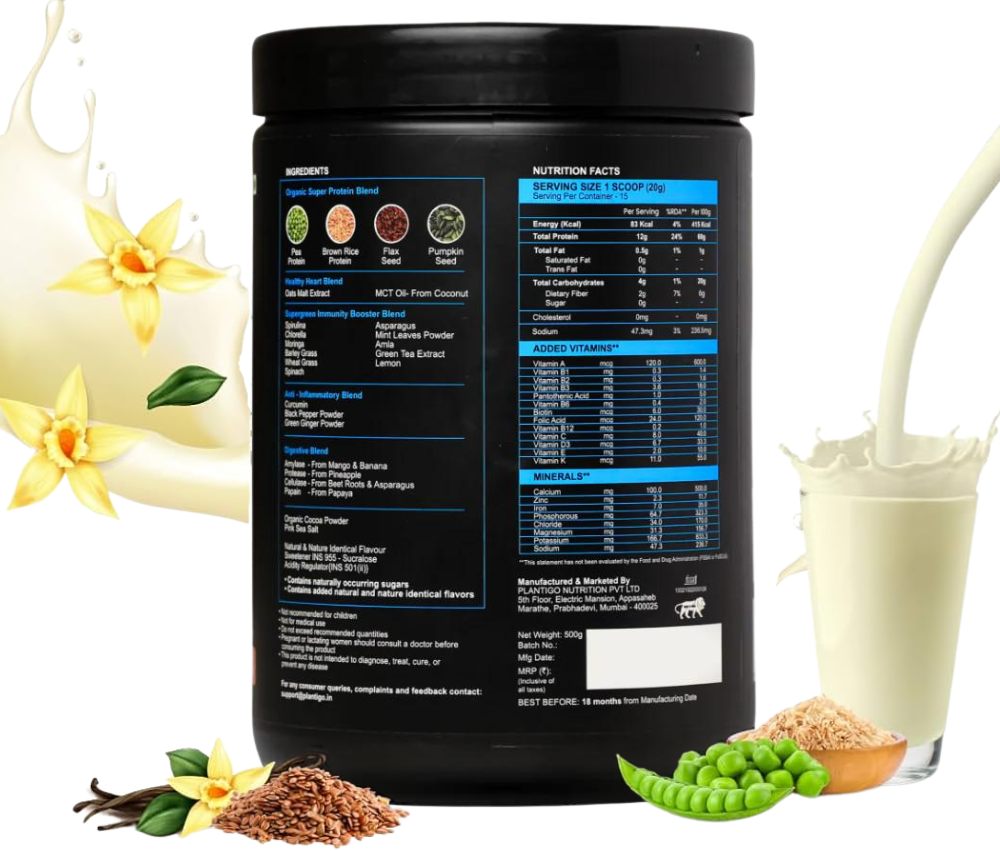
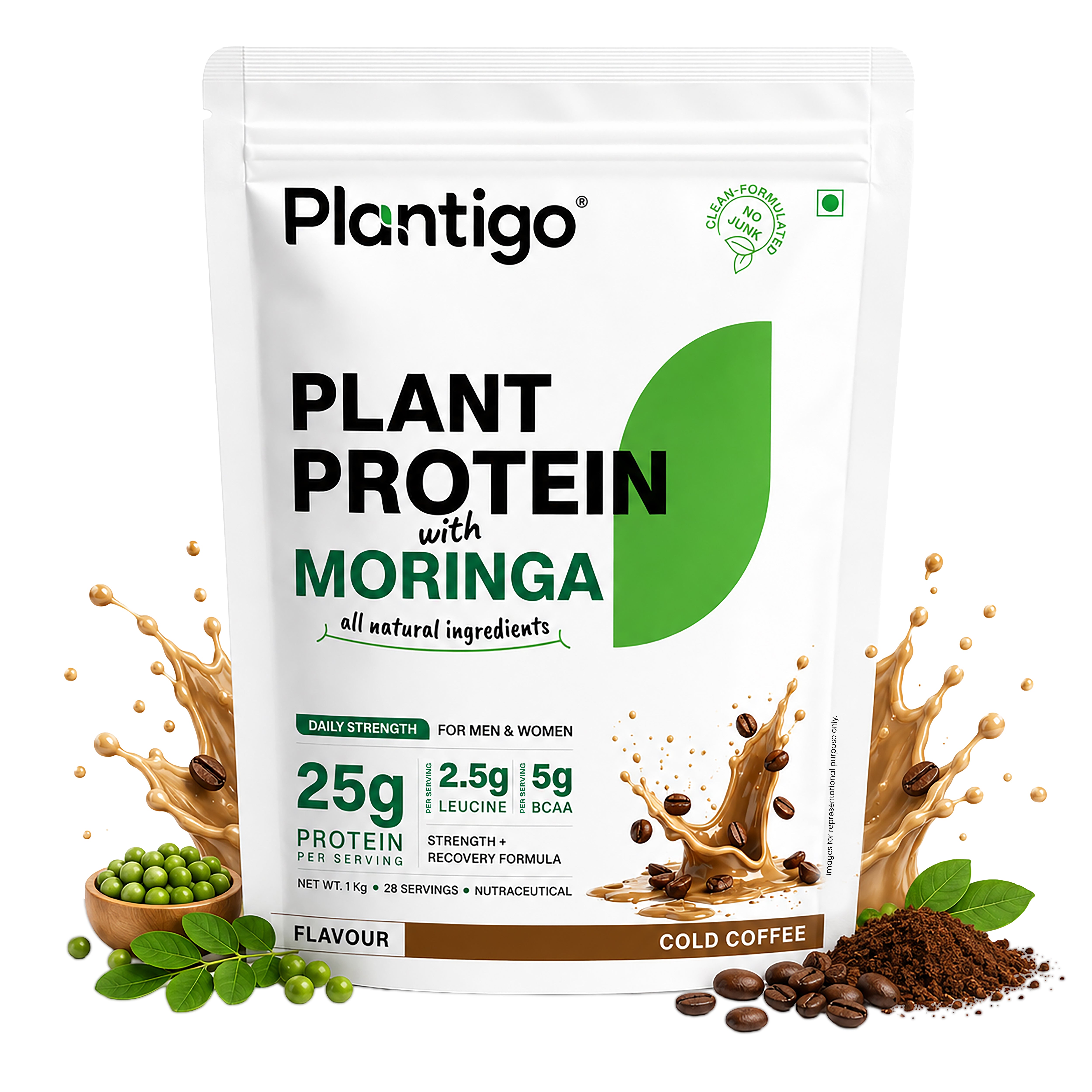
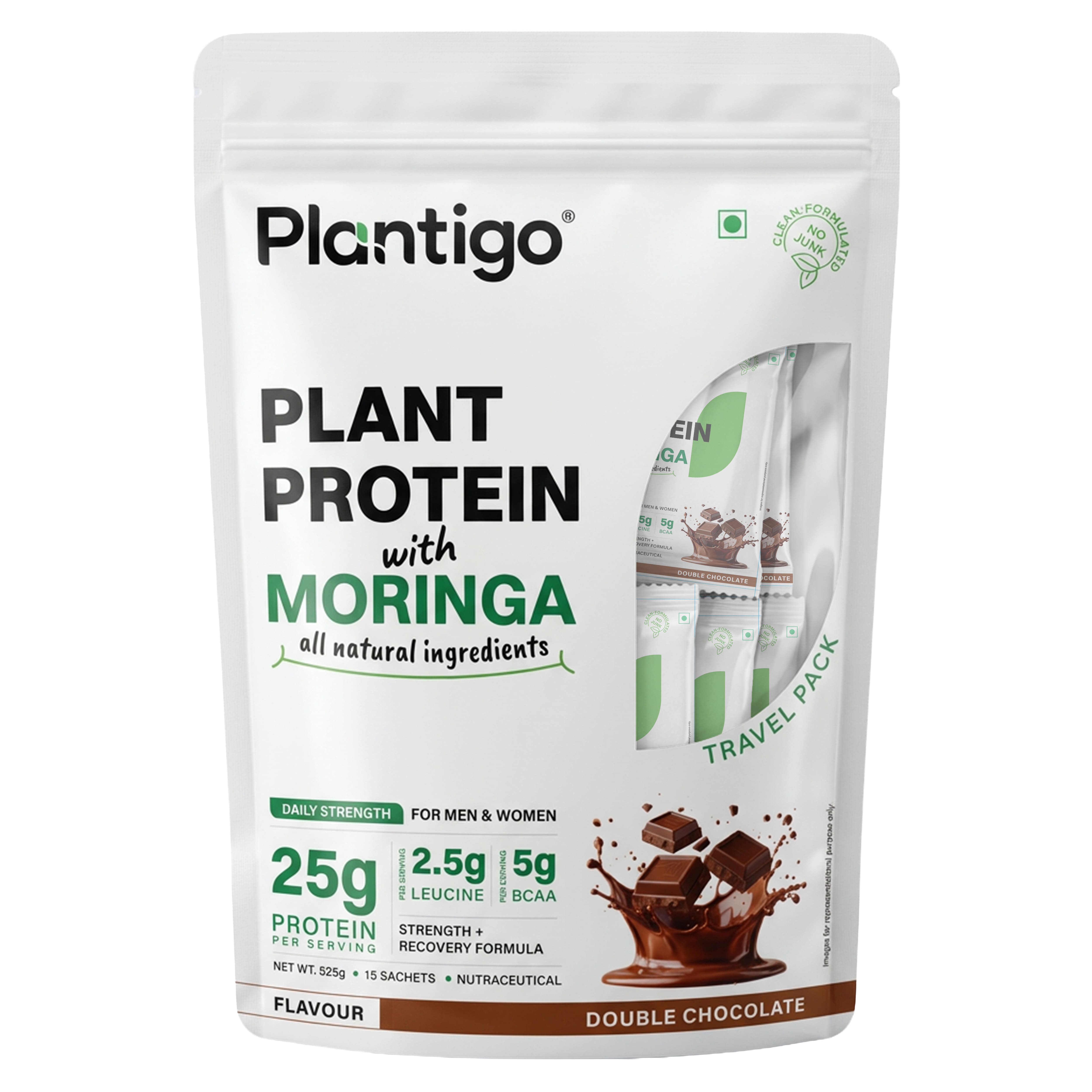
If your child's diet isn't closing the daily protein gap, Plantigo bridges it with a complete plant-based blend of Canadian Pea Isolate, Brown Rice, Pumpkin Seed, and Flaxseed — all 9 essential amino acids, zero Class 2 preservatives, Eurofins-tested, with a 30-day taste guarantee.View Plantigo Kids Protein
Benefits of Plant-Based Protein Powder for Growing Indian Kids

1. Closes the Daily Protein Gap
Most Indian children fall 4–9g short of their daily protein requirement — plant protein powder bridges that gap without replacing meals.
-
One serving (15–20g powder) delivers 10–14g protein
-
Covers 30–50% of the daily gap for a 7–12 year old
-
Adds up over weeks — consistent intake supports height and muscle development
-
Works as a morning addition to milk or smoothie, not a meal replacement
2. Supports Height and Bone Development
Protein is essential for bone matrix formation — collagen is a protein, and bones are approximately 35% collagen by dry weight.
-
ICMR 2020 links adequate protein intake in ages 6–12 to improved height-for-age outcomes
-
Pumpkin seed protein in multi-source blends adds zinc — a key mineral for growth hormone activity
-
Plant protein blends with brown rice contribute magnesium, supporting bone mineralisation
-
Consistent protein intake during ages 8–14 determines peak bone mass achieved by age 18
3. Improves Immunity
Antibodies are proteins. Children with low protein intake have measurably weaker immune response — confirmed in a review on children's immune function
-
Adequate protein supports immunoglobulin synthesis (antibody production)
-
Pea protein isolate is high in arginine — a semi-essential amino acid involved in immune cell activity
-
Plant protein blends support gut microbiome health, which modulates 70% of immune function
-
Post-illness: higher protein intake accelerates restoration of lean mass and immune cells
4. Better Concentration at School
Tryptophan — an essential amino acid — is the precursor to serotonin, which regulates mood and focus.
-
Protein deficiency correlates with reduced attention span and cognitive fatigue by midday
-
A morning protein supplement stabilises blood sugar, reducing the post-breakfast energy crash
-
Brown rice protein contributes B vitamins that support energy metabolism in neurons
-
Children who eat adequate protein at breakfast score consistently higher on memory tasks in school research
5. Muscle Repair After Physical Activity
Active school children — those playing cricket, swimming, or doing martial arts — have protein needs 20–30% above sedentary children of the same weight.
-
Leucine in pea isolate triggers muscle protein synthesis — the same mechanism active in adults
-
Post-sport: 10–15g protein within 60 minutes supports muscle repair
-
Multi-source plant blends provide all 9 essential amino acids, including the BCAA trio (leucine, isoleucine, valine)
-
Regular protein intake prevents muscle breakdown during periods of high activity and low appetite
How Much Protein Powder Should a Child Take? (Dosage and Safety)
Children aged 5–12 should not exceed 0.8–1.2g of protein per kg body weight per day from all sources combined (food + supplement) — per ICMR 2020 RDA. Protein powder should close the gap between dietary intake and requirement, not push beyond it.
1. Recommended Serving by Age
|
Age |
Protein Powder Serving |
When to Give |
Mixed With |
|
5–7 years |
10–12g powder (half serving) |
Post breakfast or post-school |
200ml warm milk or water |
|
8–12 years |
15–18g powder (one serving) |
Morning or post-sport |
Milk, smoothie, or water |
|
13–15 years |
20–25g powder (one serving) |
Post-school or post-sport |
Milk or water |
2. Who Benefits Most
-
Vegetarian children who eat minimal dal or paneer daily
-
Children in active sport (5+ hours/week) with elevated protein needs
-
Post-illness recovery — appetite is low but protein needs remain high
-
Lactose-intolerant children who cannot rely on dairy as a protein source
-
Underweight children aged 8–15 with confirmed low muscle mass
3. Who Should Be Cautious
-
Children under 5 — whole food should be the only protein source at this age
-
Children with kidney disease — high protein intake stresses the kidneys
-
Children already meeting protein needs through a complete diet — supplementation is unnecessary
-
Any child being given supplements without a paediatrician's review for a pre-existing condition
How to Give Protein Powder to Your Child — Indian Methods
Protein powder does not need to be a shake. Indian parents have more options than they think.
1. Morning milk: Stir one serving into 200ml warm full-fat milk. Mix well before serving. This is the easiest daily habit — milk adds calcium and protein on top of the supplement's contribution. For children who dislike plain milk, a small amount of natural cocoa powder masks the taste completely.
2. Roti dough: Add half a serving of unflavoured plant protein powder to atta before kneading. Each roti gains 3–4g extra protein with no taste change. See our guide onroti protein content for why this matters for Indian children's daily intake.
3. Dal or sabzi: Unflavoured plant protein blends dissolve into cooked dal, vegetable curries, or rajma without altering colour or taste. One serving added to a family-sized dal pot means every bowl contains hidden protein. For the full nutrition case for rajma, see ourrajma protein breakdown.
4. Post-sport smoothie: Blend one serving with a banana, 200ml milk or plant milk, and a small handful of soaked almonds. Total protein: ~18–22g. Ideal for children who play competitive sport 4+ times a week.
5. Idli or dosa batter: Add half a serving to fermented batter before cooking. The fermentation process continues normally. Each idli gains ~1.5–2g extra protein. For a South Indian protein context, see ourragi protein guide.
Protein Powder vs Whole Food Protein Sources for Kids
1. Protein Powder vs Dal
Dal is the gold standard — 20–25g protein per 100g raw, complete amino acids when paired with rice or roti, and fibre for gut health. The challenge is that most children eat one small katori of dal, delivering 6–8g. Protein powder does not replace dal — it fills the remaining gap on the days dal intake is low.
Supplement advantage: Consistent dose, zero preparation, no palatability fight with a fussy eater.
2. Protein Powder vs Paneer
Paneer delivers 18–20g protein per 100g and is well-accepted by most Indian children. For children who eat 50g of paneer daily, they cover 9–10g of their requirement from this source alone. But paneer contains saturated fat and is a dairy source — not suitable for lactose-intolerant or vegan children.
Supplement advantage: Dairy-free, lower saturated fat, no refrigeration constraint.
3. Protein Powder vs Eggs
Eggs deliver 6g protein each with a complete amino acid profile. For non-vegetarian families, two eggs a day solve 12g of the child's requirement cleanly. For vegetarian families — a large proportion of India — eggs are not an option.
Supplement advantage: Vegetarian-friendly, consistent protein quality, no cooking required.
No supplement replaces the full nutritional matrix of whole food. The right approach for Indian children is food-first — dal, paneer or curd, roti, and vegetables — with plant protein powder filling the documented gap on days when intake falls short. For a broader look atprotein deficiency in children and why it compounds over time, read our dedicated guide.
The Bottom Line
Protein powder for kids is safe and beneficial when it is clean, age-appropriate, and used to close a real dietary gap — not replace meals. For Indian children aged 5–15 on vegetarian diets, the gap between what they eat and what ICMR recommends is 4–9g daily, and it compounds into measurable consequences over time: slower height gain, weaker immunity, and poor concentration. Plantigo's plant-based blend — pea isolate, brown rice, pumpkin seed, flaxseed — provides complete amino acids without dairy, Class 2 preservatives, or artificial sweeteners, making it the most practical daily protein bridge for Indian children. Whole food remains the foundation; the supplement is the precision tool for the days that foundation falls short.
Frequently Asked Questions
1. Is protein powder safe for kids?
Yes — for children above 5 years, if the product is third-party tested, free of Class 2 preservatives, and used to close a genuine dietary gap. Children under 5 should meet protein needs through whole food sources only.
2. Can a 10-year-old drink protein shakes?
Yes — a 10-year-old can have one serving of a clean plant protein shake daily, ideally mixed in milk. The recommended amount is 15–18g powder, which closes the 4–9g gap most Indian children in this age group carry.
3. What is the right age to start protein powder?
5 years is the earliest appropriate age for a clean, food-based protein supplement. Between ages 5–7, use a half serving (10–12g); full serving starts from age 8, scaled to body weight and activity level.
4. What kind of protein is good for kids?
A multi-source plant protein blend — Canadian Pea Isolate, Brown Rice, and Pumpkin Seed — is ideal for Indian children as it delivers all 9 essential amino acids without dairy.Plantigo's kids protein is Eurofins-tested with zero Class 2 preservatives.
5. How can I give protein to my kids without supplements?
The most protein-dense Indian foods are dal (20–25g/100g raw), paneer (18–20g/100g), curd (3–4g/100g), chana (17–19g/100g), and soya chunks (52g/100g dry). Pairing dal with roti at every main meal covers 50–60% of daily protein needs from food alone.
6. What is the 3-3-3 rule for kids?
The 3-3-3 rule suggests children eat 3 meals a day with 3 food groups at each meal and a 3-hour gap between meals. It is not a protein-specific guideline but supports balanced macronutrient intake across the day.
7. What is the best age to start using protein powder?
5 years is the earliest appropriate age — and only when dietary protein is confirmed consistently below ICMR recommendations. Between ages 8–15, plant protein powder is most useful for active, vegetarian, or lactose-intolerant children.
8. What protein do children need?
Children need all 9 essential amino acids — no single plant food provides all nine in adequate quantities. A multi-source blend (pea + rice + pumpkin seed) or traditional combinations like dal with rice are necessary to meet this.
External Sources
1. ICMR-NIN — nutrient requirements brief note
2. PMC — dietary protein requirements in children
3. PMC — immune system in children with malnutrition
Disclaimer: This article is for educational purposes only. If your child has kidney disease, digestive issues, allergies, or a pre-existing condition, consult your paediatrician or a registered dietitian before introducing any supplement.