

How much protein is in 100g besan?
100gm besan protein content is 22g per 100g — significantly higher than wheat flour (13g/100g) and rice flour (6g/100g). Besan also delivers 10g of fiber, 6g of fat, 58g of carbohydrates, and meaningful quantities of iron, folate, and magnesium per 100g. It is one of the most nutritionally complete staple flours available in India and a reliable daily protein source for vegetarians.
Introduction
Here's something most people using besan daily never stop to think about: the flour they're making pakoras and chillas with is quietly one of the best plant protein sources in their kitchen.
Besan — chickpea flour — has been a staple of Indian cooking for thousands of years. It shows up in breakfast, snacks, main courses, and sweets. It's cheap, widely available, and extraordinarily versatile. Yet most people think of it purely as a cooking ingredient — not as a protein source worth tracking.
That framing is costing them nutrition they're already paying for.
At 22g of protein per 100g, besan outperforms most dals on a dry-weight basis and competes directly with many animal protein sources. Understanding its full nutritional profile — not just protein, but amino acids, fiber, minerals, and glycemic behaviour — transforms how you think about every besan-based dish you already eat.
This article delivers that complete picture. By the end, you'll know exactly what besan is doing for your nutrition — and how to use it more strategically.
Key Points Summary
-
100gm besan protein content is 22g — higher than wheat flour (13g) and rice flour (6g) — making it one of the most protein-dense staple flours available
-
Besan is rich in lysine — the essential amino acid most commonly deficient in grain-heavy Indian diets
-
Its low glycemic index (44) makes it one of the most blood-sugar-friendly flours available
-
Besan delivers 10g of fiber per 100g — supporting supporting dietary fiber benefits [1] including gut health, satiety, and cholesterol management simultaneously
-
Iron (4.9mg/100g), folate (437mcg/100g), and magnesium (166mg/100g) make besan a genuine micronutrient source alongside its protein contribution
-
Besan is naturally gluten-free — making it the most nutritionally complete flour alternative for gluten-intolerant individuals
When combined with complementary protein sources, besan's amino acid profile covers all nine essential amino acids
What Makes Besan Nutritionally Unique
Most flours are starch delivery systems with modest protein content and limited micronutrient value. Besan is structurally different.
Made from ground chickpeas — one of the most nutritionally complete legumes available — besan carries the full nutritional architecture of its source ingredient into powder form. The milling process concentrates its protein, fiber, and mineral content while preserving its amino acid profile almost entirely.
This is why 100gm besan protein at 22g is not just a number — it's a reflection of chickpea's genuine status as a high-protein legume, delivered in a format that integrates into dozens of cooking applications without requiring soaking, pressure cooking, or long preparation times.
No other commonly used Indian flour comes close to this nutritional profile. Understanding 100gm besan protein in full context — not just as a number but as a nutritional benchmark — is what separates informed plant-based eating from guesswork.
And yet besan remains chronically underestimated as a protein source — treated as a batter ingredient rather than a dietary asset.
Full Nutritional Breakdown: 100g Besan
Here is everything the 100gm besan protein story is built on — the complete nutritional breakdown:
|
Nutrient |
Amount per 100g |
% Daily Value (approx.) |
|
Calories |
387 kcal |
19% |
|
Protein |
22g |
44% |
|
Carbohydrates |
58g |
19% |
|
Dietary Fiber |
10g |
36% |
|
Total Fat |
6g |
8% |
|
Saturated Fat |
0.6g |
3% |
|
Iron |
4.9mg |
27% |
|
Folate |
437mcg |
109% |
|
Magnesium |
166mg |
39% |
|
Potassium |
846mg |
18% |
|
Phosphorus |
318mg |
45% |
|
Zinc |
2.8mg |
25% |
|
Glycemic Index |
44 (low) |
— |
Besan Protein vs. Other Common Indian Protein Sources
Here's where besan's protein content becomes genuinely impressive — in context. Most people are surprised to discover that 100gm besan protein at 22g sits comfortably alongside dedicated protein foods — not just flours.
|
Food |
Protein per 100g (dry) |
|
Besan (chickpea flour) |
22g |
|
Wheat flour (atta) |
13g |
|
Rice flour |
6g |
|
Moong dal |
24g |
|
Urad dal |
25g |
|
24g |
|
|
Whole egg (per 100g) |
13g |
|
Paneer |
18g |
|
Oats |
13–17g |
Besan sits comfortably alongside moong dal and rajma — two foods Indians explicitly eat for protein — while delivering that protein in a flour format that integrates into everyday cooking without any additional preparation. That's the competitive advantage most people are completely overlooking.
Besan's Amino Acid Profile — Why It Matters
Protein quantity is one number. Protein quality — the amino acid composition — is the number that actually determines how useful that protein is to your body. With 100gm besan protein delivering 22g alongside a strong lysine profile, the quality case for besan is as compelling as the quantity case.
Besan is particularly rich in lysine — the essential amino acid most commonly deficient in grain-heavy Indian diets. Wheat roti, rice, and most Indian staple grains are low in lysine. Besan compensates for this gap directly — which is why besan-based foods eaten alongside grain-based staples create a more complete amino acid profile than either food achieves alone.
Besan is lower in methionine — the sulphur-containing essential amino acid — which is characteristic of most legume-derived proteins. Pairing besan with sesame seeds, sunflower seeds, or any methionine-rich grain closes this gap effectively.
The practical takeaway: besan chilla with sesame seeds, or besan roti eaten with rice, creates a complementary amino acid pairing that covers all nine essential amino acids. This is plant protein nutrition working exactly as it should — through strategic combination rather than reliance on any single food.
How Does Besan Compare to Oats for Protein?
A question worth addressing directly — because oats and besan are both popular breakfast choices, but 100gm besan protein at 22g outperforms oats on protein density at every comparable serving size.
50 gm oats protein content is approximately 6.5–8.5g depending on variety — making a standard 50g breakfast serving of oats a moderate protein contributor. Besan at the same 50g serving delivers approximately 11g of protein — meaningfully higher, with a stronger lysine profile and lower glycemic index.
This doesn't make oats a poor choice — their beta-glucan fiber, cholesterol-lowering properties, and sustained energy release make them genuinely valuable. But for pure protein delivery at breakfast, besan-based options — chilla, besan paratha, besan pancakes — outperform standard oats servings gram for gram.
The smartest breakfast strategy combines both: besan chilla served with a small oats-based side delivers complementary amino acids, sustained energy, and a protein total that approaches 20g from breakfast alone.
Besan's Glycemic Index — The Blood Sugar Advantage
-
At a glycemic index of approximately 44, besan is classified as a low-GI food [2] — meaning it causes a slower, more gradual rise in blood sugar than wheat flour (GI ~70) or rice flour (GI ~95).
-
This matters for several reasons beyond diabetes management:
-
Sustained energy — low-GI foods release glucose gradually, supporting steady energy across a morning or afternoon without the sharp peak-and-crash pattern of high-GI foods.
-
Satiety — slower digestion means longer-lasting fullness, which directly supports caloric management and reduces between-meal snacking.
-
Insulin sensitivity — consistent low-GI eating patterns are associated with improved insulin sensitivity over time — a metabolic benefit that compounds across years of dietary choices.
For anyone building a 150 gm protein diet on plant-based foods, besan's combination of high protein and low GI makes it one of the most metabolically intelligent flour choices available.
Besan's Micronutrient Profile — Beyond the Protein Number
The protein story of besan is compelling. The micronutrient story is equally impressive — and almost entirely overlooked.
-
Folate — 437mcg per 100g (109% daily value) Besan is one of the richest plant sources of folate available in the Indian kitchen. Folate is essential for DNA synthesis, red blood cell formation, and neural tube development — making besan particularly valuable for women of reproductive age and anyone with elevated homocysteine levels.
-
Iron — 4.9mg per 100g (27% daily value) Iron from besan is non-haem iron — less bioavailable than haem iron from animal sources, but significantly enhanced by vitamin C consumption alongside it. Besan chilla with tomato chutney or amla pickle is not just delicious — it's a smart iron absorption strategy.
-
Magnesium — 166mg per 100g (39% daily value) Magnesium regulates muscle contraction, sleep quality, and over 300 enzymatic processes involved in energy production. At 166mg per 100g, besan is one of the most magnesium-dense everyday foods in the Indian kitchen.
-
Zinc — 2.8mg per 100g (25% daily value) Zinc supports testosterone synthesis, immune function, and protein metabolism. For plant-based eaters — where zinc is frequently under-consumed due to phytate interference — besan's zinc content is a meaningful contribution.
Besan and Creatine — What You Need to Know
A question that comes up in fitness and nutrition discussions: does besan contain creatine?
Creatine rich foods are almost exclusively animal-based — red meat and fish contain the highest natural creatine concentrations. Plant foods, including besan, contain negligible to zero dietary creatine. This is a genuine nutritional gap in plant-based diets that whole foods cannot bridge.
For plant-based eaters seeking creatine's well-documented benefits for strength, power output, and muscle recovery — creatine monohydrate supplementation is the only evidence-backed option. Besan's protein and amino acid profile supports muscle building through different mechanisms — leucine and lysine for muscle protein synthesis — but cannot substitute for creatine's specific ergogenic effects.
Practical Ways to Use Besan for Maximum Protein
Every preparation below is built around one foundational fact: 100gm besan protein delivers 22g — and the goal is to integrate that into meals you're already cooking.

-
Besan Chilla — The High-Protein Breakfast Two besan chillas made from 100g of besan deliver approximately 22g of protein before any fillings are added. Add paneer, tofu, or vegetables for an additional 8–15g. A besan chilla breakfast is one of the fastest routes to 30g of morning protein in Indian cooking.
-
Besan Roti — Protein-Upgraded Flatbread Replacing wheat atta with besan in roti increases protein content from approximately 3–4g per roti to approximately 6–7g per roti. Mix besan with atta in a 50:50 ratio for a more pliable dough that retains most of the protein upgrade while improving workability.
-
Besan in Dal — Double Protein Adding 2 tablespoons of besan to dal during cooking thickens the texture while adding approximately 5g of additional protein per serving. The flavour integrates seamlessly — besan is made from the same legume family as most Indian dals.
-
Besan Ladoo — Protein-Dense Mithai Traditional besan ladoo made with ghee and jaggery delivers approximately 5–6g of protein per ladoo — making it one of the most protein-dense traditional Indian sweets available. Not a health food in the conventional sense, but nutritionally superior to most refined-flour mithai.
-
Besan Pancakes — International Application Besan functions as an excellent gluten-free pancake base — mixed with water, spices, and vegetables, it creates protein-dense pancakes that work across Indian and international flavour profiles equally well.
How Much Besan Should You Eat Daily?
There's no single correct answer — it depends on your total protein target, dietary variety, and individual health context. But here's a practical framework:
For someone targeting 100g of daily protein on a plant-based diet, besan can realistically contribute 20–30g of that target across breakfast and snacks — approximately 100–130g of besan daily across different preparations.
Use a protein intake calculator to establish your precise daily protein target based on body weight and activity level, then factor 100gm besan protein at 22g into your daily food tracking to understand exactly how much of your target it's covering.
Besan vs. Protein Supplements — An Honest Comparison
A question increasingly relevant in India's growing fitness culture: is besan a viable alternative to protein supplements?
Can I take protein powder without workout? Yes — protein is a macronutrient required for daily bodily function regardless of exercise. Muscle maintenance, immune function, enzyme production, and hormonal regulation all require consistent protein intake whether you train or not. The difference is quantity — active individuals need more, sedentary individuals need less, but nobody's protein requirement drops to zero without exercise.

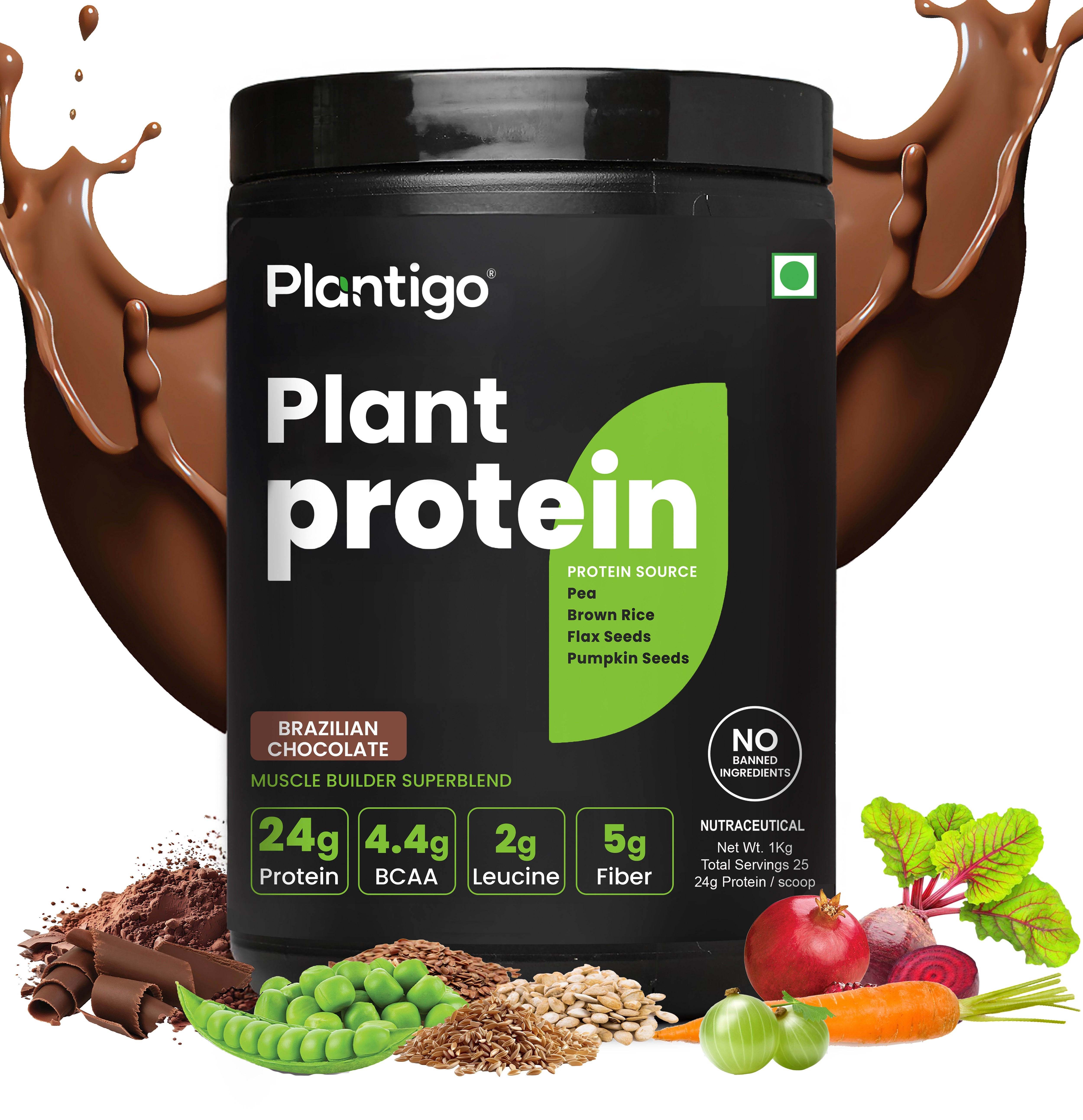
Besan delivers protein in a whole-food format with fiber, micronutrients, and phytonutrients that isolated protein supplements cannot replicate. Plant based protein powder from pea sources concentrates protein in a convenient, fast-absorbing format — useful for post-workout recovery or when whole food intake falls short. But besan, consumed consistently across daily meals, delivers comparable protein totals alongside a nutritional breadth that no supplement can match.
The honest answer: besan and protein supplements serve different purposes and work best together rather than in competition.
Building a High-Protein Day Around Besan
Here's how besan fits into a complete daily protein framework:
|
Meal |
Besan Application |
Protein from Besan |
Total Meal Protein |
|
Breakfast |
2 besan chillas (100g besan) |
22g |
~28g with vegetables |
|
Lunch |
Besan added to dal (30g) |
6.6g |
~32g with dal + rice |
|
Snack |
Besan chilla (50g besan) |
11g |
~15g with chutney |
|
Dinner |
Besan roti x2 (60g besan) |
13g |
~28g with sabzi + dal |
|
Daily Besan Total |
240g besan |
~52g |
~103g total |
This framework demonstrates what 100gm besan protein at 22g looks like in practice — across standard Indian meal preparations, besan alone contributes over 50g of daily protein. Combined with dal, vegetables, and seeds, a 100g+ daily protein target becomes structurally achievable entirely from whole plant foods.
Connecting Besan to Your Broader Nutrition Strategy
100gm besan protein at 22g is the headline number — but besan's real value is in how it integrates into an existing Indian dietary framework without requiring any new habits or unfamiliar ingredients.
You're likely already eating besan. The upgrade is understanding what it's delivering — and then using it more deliberately. More chilla, less plain atta roti. Besan added to dal for thickness and protein. Besan pancakes instead of maida-based snacks.
For anyone building a serious plant-based protein strategy — whether targeting athletic performance, weight management, or simply better daily nutrition — besan deserves a central role that most Indian diets are currently not giving it.
Conclusion
Besan has been in Indian kitchens for thousands of years. The nutrition science that explains why it belongs there is relatively recent — and the data is unambiguous.
With 100gm besan protein firmly established at 22g, a low glycemic index of 44, 10g of fiber, and micronutrient density that rivals dedicated supplements, besan is one of the most complete functional foods available in India. It's already in your kitchen. It's already in your cooking. The only thing missing was knowing exactly what it was doing for you.
Now you do. Use it accordingly.
FAQ
Q1: How much protein is in 100g of besan?
100gm besan protein content is 22g per 100g — higher than wheat flour (13g/100g), rice flour (6g/100g), and whole eggs (13g/100g). It is one of the highest protein flours available in any Indian kitchen.
Q2: Is besan a complete protein?
Besan is not a complete protein independently — it is high in lysine but lower in methionine. Pairing besan with sesame seeds, rice, or any methionine-rich grain creates a complete amino acid profile.
Q3: Can besan replace dal as a protein source?
Besan delivers comparable protein to most dals — 22g/100g versus moong dal's 24g and rajma's 24g. It cannot fully replace dal's broader amino acid and micronutrient diversity but functions as a strong complementary protein source alongside it.
Q4: Is besan good for weight loss?
Yes. Besan's low glycemic index (44), high fiber content (10g/100g), and high protein content (22g/100g) collectively support satiety, blood sugar stability, and caloric management — three mechanisms directly relevant to sustainable weight management.
Q5: How much besan should I eat daily for protein?
100–150g of besan daily across meals contributes 22–33g of protein. Use a protein intake calculator to establish your precise target and factor 100gm besan protein at 22g per 100g accordingly.
References:
%20and%20rice%20flour%20(6g/100g).%20Besan%20also%20delivers%2010g%20of%20fiber,%206g%20of%20f...)