
By Aaryan | Last updated: September 2026
The best protein powder for old age in India should deliver 12–25g of complete protein per serving, be easy to digest (no bloating or lactose), gentle on kidneys, and support bone, joint, and immune health alongside muscle. According toICMR-NIN, adults over 60 need 1.0–1.2g of protein per kg body weight daily — yet most Indian seniors consume barely half that. Aplant protein blend of pea and rice is the safest fit for India's largely vegetarian elderly population — lactose-free, easy to digest, and gentle on aging kidneys.
Quick Comparison: Best Protein Powder for Seniors in India (2026)
|
Brand |
Protein/Serving |
Source |
Sugar |
Price |
Best For |
|
Plantigo Elderly |
12g |
Pea + brown rice + flaxseed + pumpkin seed + 11 superfoods |
No added sugar |
₹849/500g |
Daily nutrition, immunity, heart health (50+) |
|
Ensure (Abbott) |
9g |
Milk protein + soy |
Contains sugar |
₹850/400g |
Complete nutrition for underweight seniors |
|
Prohance HP |
25g |
Whey + casein |
Low sugar |
₹750/400g |
Clinical recovery, sarcopenia-focused |
|
Celevida (Dr. Reddy's) |
11g |
Whey + soy |
Sugar-free |
₹600/400g |
Diabetic seniors |
|
Resource High Protein (Nestlé) |
11g |
Whey + casein |
Contains sugar |
₹900/400g |
Hospital recovery, post-surgery |
|
Saffola Fittify Seniors |
24g |
Whey protein |
Low sugar |
₹1,200/400g |
Active seniors wanting high protein |
|
Threptin (Indchemie) |
6g per 2 diskettes |
Casein + whey |
Contains sugar |
₹200/275g |
Seniors who refuse shakes |
Prices approximate as of September 2026. Specs verified from brand websites, Amazon.in, and 1mg listings.
Why Seniors Need More Protein
After 60, muscle loss (sarcopenia) accelerates — older adults lose3–8% of muscle mass per decade without adequate protein. This isn't just about strength — reduced muscle mass directly impacts balance, mobility, fracture recovery, and independence.
Reduced absorption: Aging slows protein digestion. APMC, 2020 review found that older adults experience anabolic resistance — their bodies need more protein per meal to trigger the same muscle protein synthesis response as younger adults.
Reduced appetite: Smaller portions, dental issues, and medication side effects mean most Indian seniors eat far less protein than they need.ICMR-NIN surveys consistently find widespread protein inadequacy among elderly Indians, particularly women.
Higher requirements: While the general RDA is 0.8g/kg, thePROT-AGE study group recommends 1.0–1.2g/kg for healthy seniors and up to 1.5g/kg for those with acute or chronic illness. For a 65kg adult, that means 65–78g of protein daily — a typical Indian senior eating dal, roti, and vegetables rarely crosses 35–40g.
How to Choose Protein Powder for Seniors
Protein per serving: 10–25g per serving. Seniors with poor appetite do better with lower-protein, nutrient-dense formulas (like Plantigo Elderly at 12g) that supplement meals rather than replace them. Active seniors may want 20–25g.
Digestibility: Plant proteins (pea + rice) are lactose-free and gentler on aging digestive systems. Whey can cause bloating in lactose-sensitive seniors. Look for added digestive enzymes.
Kidney safety: High-protein supplements (30g+) may strain kidneys in seniors with pre-existing renal issues. Moderate-protein formulas (10–15g) with added micronutrients are safer for daily unsupervised use.
Bone and joint support: Look for added calcium, vitamin D, and magnesium. Forcalcium-rich food options to pair alongside, see our guide.
Sugar content: Many elderly nutrition drinks contain added sugar. For diabetic seniors, choose sugar-free formulas like Celevida or no-added-sugar options like Plantigo Elderly.
Ease of mixing: The powder should dissolve easily in warm water or milk without a blender or shaker.
7 Best Protein Powders for Elderly in India
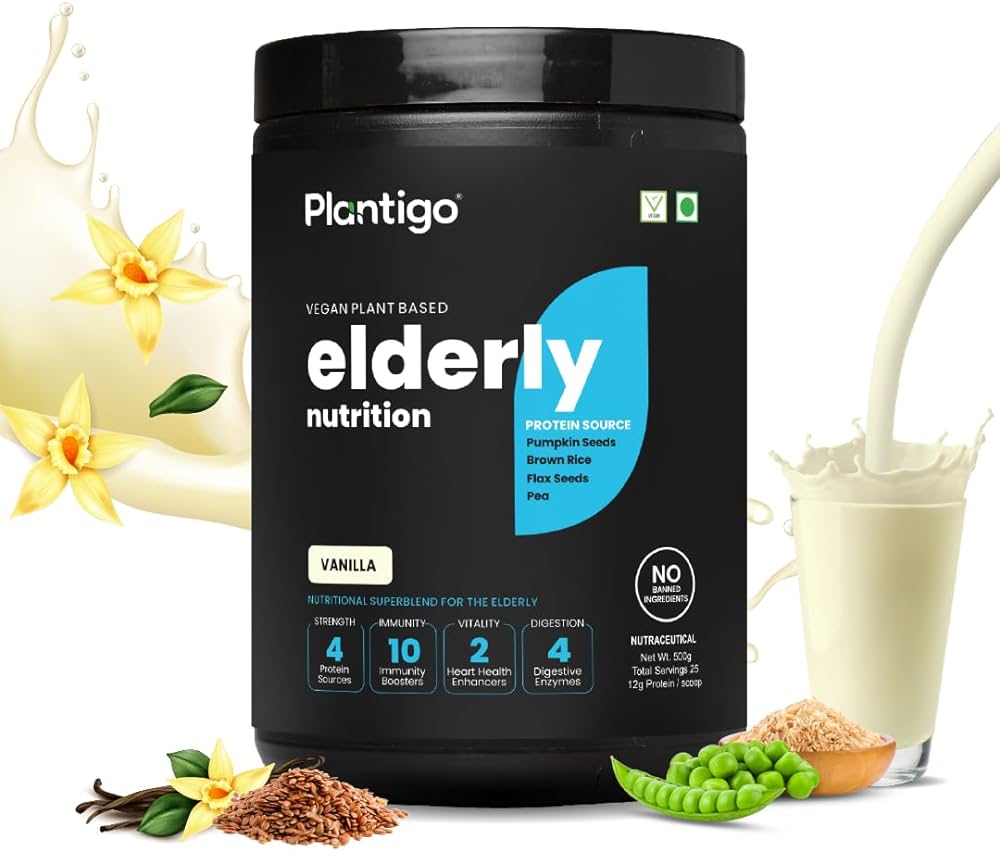
1. Plantigo Plant Protein for Elderly
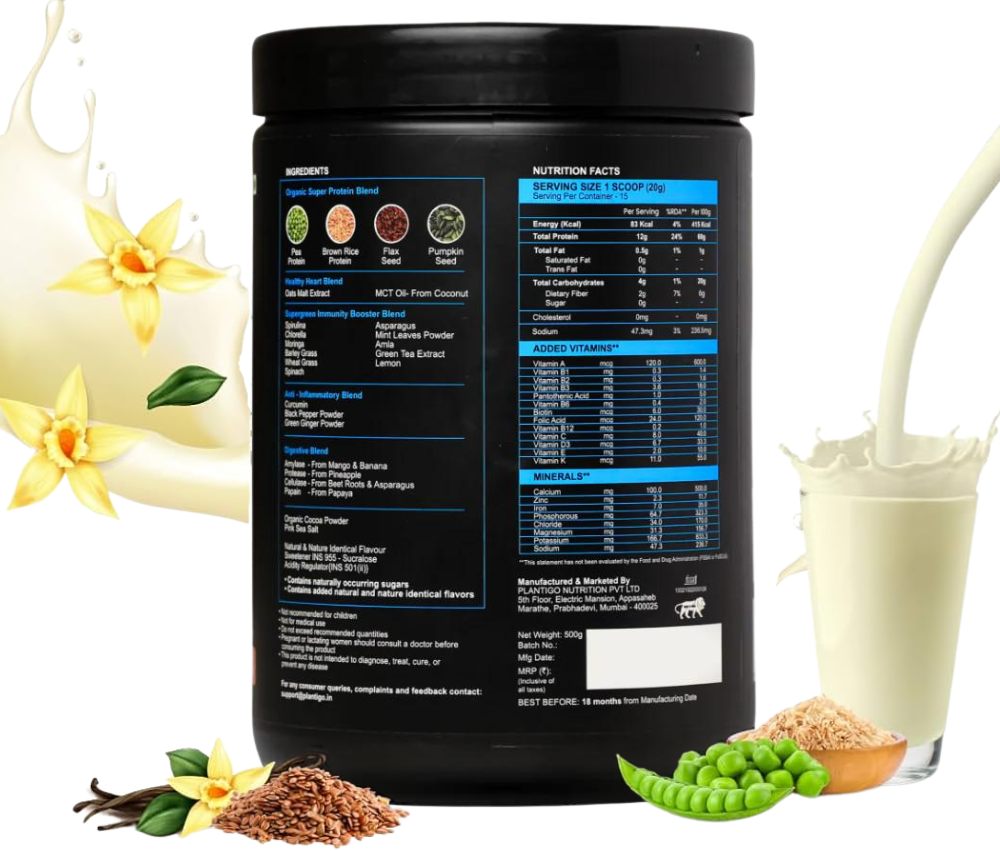
Protein: 12g/serving | Source: Canadian pea + brown rice + flaxseed + pumpkin seed | Price: ₹849/500g
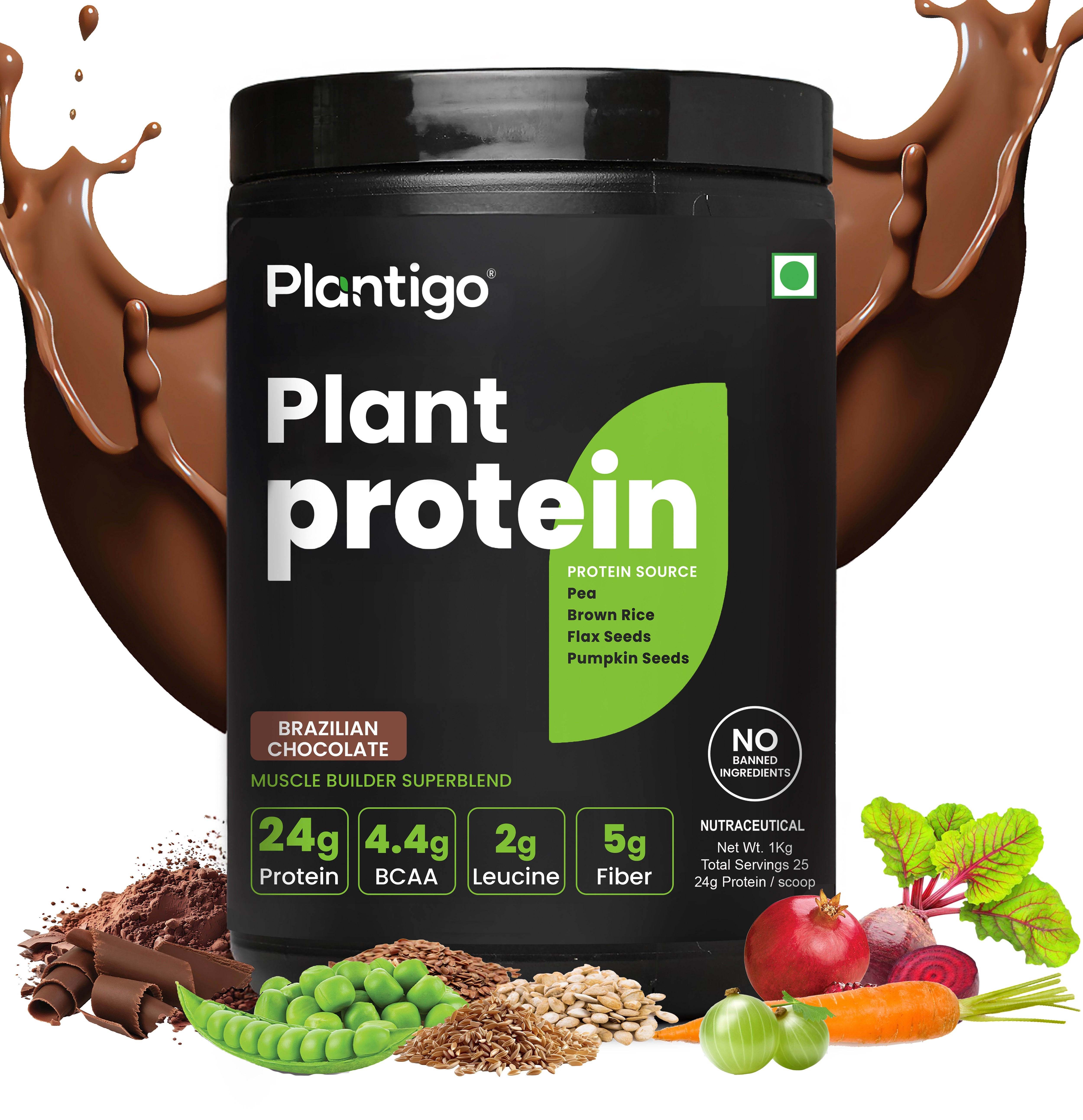
Built specifically for adults 50+ with four plant protein sources and 11 immunity-boosting superfoods including oats for heart health and MCT for sustained energy. No added sugar, no artificial flavours, no synthetic fillers. The lower protein per serving (12g) is intentional — it provides meaningful protein without overwhelming appetite or kidney function, and pairs with daily meals rather than replacing them. Certified Non-GMO and Gluten-Free.

For elderly women, theiron and magnesium from pumpkin seed protein, combined with flaxseed's omega-3s, address the most common nutritional gaps in post-menopausal health.
2. Ensure (Abbott)
Protein: 9g/serving | Source: Milk protein + soy protein isolate | Price: ~₹850/400g
India's most prescribed senior supplement. Provides complete balanced nutrition including 28 vitamins and minerals. Best for underweight seniors or those recovering from illness. Contains sugar and dairy — not suitable for lactose-intolerant or diabetic seniors.
3. Prohance HP
Protein: 25g/serving | Source: Whey + casein | Price: ~₹750/400g
Highest protein per serving — designed for sarcopenia-focused supplementation under medical supervision. Not for unsupervised daily use in seniors with kidney concerns.
4. Celevida (Dr. Reddy's)
Protein: 11g/serving | Source: Whey + soy | Price: ~₹600/400g
Designed for Indian diabetics — low glycaemic load with meaningful protein. Kesar Elaichi flavour helps daily adherence. Most affordable option on this list.
5. Resource High Protein (Nestlé)
Protein: 11g/serving | Source: Whey + casein | Price: ~₹900/400g
Nestlé's clinical-nutrition formula used on hospital recovery wards. Contains sugar. Best for short-term recovery, not long-term daily use.
6. Saffola Fittify Protein for Seniors
Protein: 24g/serving | Source: Whey protein | Price: ~₹1,200/400g
High protein for active seniors who exercise regularly. Whey-based — not suitable for lactose-intolerant or plant-based seniors.
7. Threptin (Indchemie)
Protein: 6g per 2 diskettes | Source: Casein + whey | Price: ~₹200/275g
Protein biscuits, not a shake — useful for seniors who refuse drinks but will take two diskettes with evening tea. Supplementary snack, not a primary protein source.
Plant Protein vs Whey for Seniors: Which Is Safer?
|
Factor |
Plant Protein (Pea + Rice) |
Whey Protein |
|
Lactose |
None |
Present (even in isolate traces) |
|
Digestive comfort |
Gentle, rarely causes bloating |
Can cause bloating in 60%+ of Indian seniors |
|
Kidney load |
Moderate |
Higher nitrogen load |
|
Allergens |
Hypoallergenic |
Dairy allergen |
|
Micronutrients |
Iron, magnesium, zinc naturally present |
Limited unless fortified |
|
Cholesterol |
Zero |
Contains some |
|
Vegetarian-friendly |
Yes |
No (for strict vegetarians) |
AAJCN, 2024 study found that pea protein stimulated identical muscle protein synthesis rates to whey protein in older adults — both at 1.59%/day. For a deeper comparison, see ourplant protein vs whey guide.
How Seniors Should Take Protein Powder
Best time: Between meals (10 AM or 4 PM) — not as a meal replacement. This adds to daily intake without suppressing appetite.
How to prepare: Mix with warm water or warm milk. Add half a banana or honey if taste is an issue.
Daily target: Use aprotein calculator to find your requirement. Most seniors need 1.0–1.2g per kg body weight from all sources combined.
Pair with whole foods: Combine withprotein-rich Indian foods — dal, paneer, sprouts, chana — across meals. For a structured approach, see our7-day meal plan for elderly nutrition.
When to consult a doctor: If you have kidney disease, are on dialysis, or take blood thinners, consult your physician before starting any protein supplement.
Signs Your Elderly Parent Needs More Protein
Many families don't recogniseprotein deficiency in seniors until it's advanced. Watch for:

-
Unexplained weight loss or muscle wasting
-
Fatigue and low energy throughout the day
-
Slow wound healing
-
Frequent infections or slow recovery from illness
-
Brittle nails and thinning hair
-
Difficulty standing from a chair without arm support
-
Increased falls or balance issues
If you notice 3 or more of these, increasing protein intake should be a priority — alongside a medical check-up. For more on how protein supports energy and wellness in seniors, see our guide onprotein for old age and energy levels.
Conclusion
The right protein powder for seniors isn't the one with the highest protein per serving — it's the one they'll actually take daily, that's gentle on their digestion and kidneys, and that fills nutritional gaps beyond just protein. For most Indian seniors over 50, a plant-based formula with moderate protein (10–15g), no added sugar, and added micronutrients is the safest daily choice. Pair it withplant protein, consistent meal timing, and light activity for the best results.
Frequently Asked Questions
1. Which protein powder is best for old age in India?
A plant-based formula with 10–15g protein per serving, no added sugar, and added micronutrients is safest for daily use.Plantigo Elderly fits this with 12g protein from four plant sources plus 11 superfoods.
2. Is protein powder safe for 60 year olds?
Yes, when chosen correctly. Avoid 30g+ formulas if kidney health is uncertain. Plant-based, moderate-protein formulas (10–15g) with no added sugar are safest for unsupervised daily use.
3. How much protein does a 70 year old need daily?
ThePROT-AGE group recommends 1.0–1.2g per kg body weight for healthy seniors over 65. For a 65kg adult, that's 65–78g daily from all food and supplement sources combined.
4. Can diabetic seniors take protein powder?
Yes — choose sugar-free formulas. Celevida is designed for diabetics. Plantigo Elderly has no added sugar. Avoid Ensure and Resource which contain added sugar.
5. Plant protein or whey — which is better for seniors?
Plant protein is gentler on digestion, lactose-free, and produces identical muscle synthesis rates to whey in older adults (AJCN, 2024). Whey causes bloating in many Indian seniors.
6. When should seniors drink protein powder?
Between meals — 10 AM or 4 PM — not as a meal replacement. Mix with warm water or milk. This adds to daily protein intake without suppressing appetite for regular meals.
External links used:
-
ICMR-NIN — Indian dietary recommendations
-
PMC, 2020 — anabolic resistance in aging
-
PROT-AGE, 2013 — protein requirements for older adults
-
PMC, 2014 — sarcopenia in older adults
-
AJCN, 2024 — pea vs whey MPS in older adults

,%20gentle%20on%20ki...)