

Quick Answer:
-
1 medium whole wheat roti (30–35g) contains 3–4g protein, along with fiber and complex carbs.
-
Protein content varies based on flour type, size, and preparation — and can go up to 6–8g per roti with high-protein flours like soy or besan.
-
Pairing roti with dal or paneer significantly improves protein quality and absorption
Key Takeaways
-
Protein in 1 roti averages 3–4g for a standard medium whole wheat roti
-
Flour type dramatically changes the protein content — some flours deliver nearly double
-
Pairing roti with the right accompaniments significantly improves protein bioavailability
-
Roti is a fibre rich Indian food that supports digestion and blood sugar regulation simultaneously
-
Most Indians are significantly underestimating their roti's nutritional contribution
-
The right roti, prepared correctly, fits powerfully into a fat loss or muscle-building diet
Introduction
Roti is eaten at almost every meal across India. It's so familiar that most people never stop to question what's actually inside it nutritionally.
But here's the thing — protein in 1 roti is a question with a surprisingly complex answer. It's not just about the flour. It's about the type of wheat, the thickness of the roti, the cooking temperature, and critically — what you eat alongside it.
Most people eating 3–4 rotis a day are getting anywhere between 9–20g of protein from roti alone — depending on choices they don't even realise they're making.
For those looking to go further, combining roti with a clean plant protein source is one of the most effective ways to bridge the gap between what roti provides and what your body actually needs
This guide breaks down every variable that determines protein in 1 roti — and shows you exactly how to maximise the nutritional return from India's most eaten food.
Stay with this — because the flour comparison in section 4 will permanently change how you think about roti.
How Much Protein Is in 1 Roti?
The baseline first — then the variables.
A standard medium roti made from whole wheat atta (approximately 30–35g of flour) contains:
-
Protein: 3–4g
-
Carbohydrates: 15–18g
-
Fiber: 1.5–2g
-
Fat: 0.5–1g (without ghee)
-
Calories: 70–90
This is the nutritional profile most people are working with daily — without realising it.
Protein in 1 roti varies based on:
-
Flour type and quality
-
Roti size and thickness
-
Addition of ghee or oil
-
Cooking method and temperature
Each variable shifts the numbers meaningfully. Let's break them all down.
Protein in 1 Roti: The Full Breakdown
1. Whole Wheat vs Other Flours
This is where protein in 1 roti gets genuinely interesting.
Most Indian households use standard whole wheat atta. But the protein content varies significantly across flour types:
|
Flour Type |
Protein per Roti (approx.) |
Notes |
|
Whole Wheat Atta |
3–4g |
Standard, widely used |
|
Multigrain Atta |
4–5g |
Higher protein, more fiber |
|
Besan (Chickpea) |
5–6g |
Highest protein, gluten-free |
|
Jowar Flour |
2.5–3g |
Lower protein, high fiber |
|
Bajra Flour |
3–3.5g |
Good iron and magnesium |
|
Ragi Flour |
2.5–3g |
Excellent calcium content |
|
Soy-Enriched Atta |
6–8g |
Significantly higher protein |
The difference between standard whole wheat and soy-enriched atta is remarkable — nearly double the protein in 1 roti from a simple flour swap.
Most people don't know this option exists. Those who do, rarely use it consistently.
2. Size and Thickness Matter More Than You Think
A thin 25g roti and a thick 45g roti are nutritionally completely different foods — despite being called the same thing.
-
Small roti (25g): ~2.5g protein, ~60 calories
-
Medium roti (35g): ~3.5g protein, ~80 calories
-
Large roti (45g): ~4.5g protein, ~105 calories
-
Thick paratha (60g): ~6g protein, ~150+ calories
Most restaurant rotis are significantly larger than home rotis — which means people eating out are often consuming 5–6g of protein in 1 roti without realising it.
Tracking size alongside count gives a far more accurate picture of daily protein intake from roti.
3. Does Cooking Method Change the Protein?
Yes — and most people don't account for this at all.
Direct tawa cooking at high temperature can denature some surface proteins in the roti. This doesn't eliminate protein — but it can slightly reduce digestibility of the outermost layer.
The more significant cooking variable is ghee addition:
Ghee adds fat that slows gastric emptying
Slower digestion improves amino acid absorption efficiency
A small amount of ghee (½ tsp) marginally improves the nutritional return from protein in 1 roti
This is why traditional Indian nutrition always paired roti with ghee — intuitively, before the science existed to explain why.
4. Protein Quality — Not Just Quantity
Here's what most roti nutrition articles miss entirely.
Wheat protein is incomplete [1] - it's deficient in lysine, an essential amino acid critical for muscle repair, collagen synthesis, and calcium absorption. This means the protein in 1 roti is only partially usable for muscle building without complementary foods.
The solution is food combining — and Indian cuisine has been doing this instinctively for centuries.
Dal + roti creates a complete protein. Dal is rich in lysine, roti provides methionine — together they cover the full essential amino acid spectrum. This is not coincidence. It's centuries of nutritional wisdom encoded into a food culture.
Protein in 1 roti consumed with dal is nutritionally superior to roti consumed alone — by a meaningful margin.
5. Protein in 1 Roti vs Rice, Oats, and Other Indian Foods
How does protein in 1 roti compare to other common Indian staples?
|
Food |
Serving |
Protein |
Fiber |
GI |
|
Whole Wheat Roti |
1 medium |
3–4g |
1.5g |
62 |
|
Steamed Rice |
1 cup cooked |
4g |
0.6g |
73 |
|
Idli |
2 pieces |
3g |
1g |
35 |
|
Dosa |
1 medium |
3.5g |
1.2g |
57 |
|
Brown Rice |
1 cup cooked |
5g |
3.5g |
50 |
|
Oats (50g) |
1 serving |
8.5g |
5g |
55 |
For context — protein in 50g oats at 8.5g significantly outperforms roti on a per-serving protein basis. This doesn't make roti inferior — it makes the case for combining both strategically across the day rather than relying on one staple exclusively.
6. How Roti Fits Into Weight Loss
Roti has an unfair reputation in weight loss conversations. The reality is more nuanced.
Protein in 1 roti combined with fiber creates a satiety effect that supports caloric control — when portion size is managed. The glycemic index of whole wheat roti [2] (~62) is moderate — lower than white rice (~73) and significantly lower than refined bread.
The fiber content makes roti one of the better fibre rich Indian food options available — supporting digestion, feeding gut bacteria, and moderating glucose absorption simultaneously.
For women specifically managing weight, roti fits well into a structured approach. Many are also exploring weight loss powder for female options to supplement protein intake — and combining such supplements with a roti-based diet is more effective than replacing roti entirely, since the fiber and micronutrient content of whole wheat supports the metabolic environment that fat loss requires.
7. How to Increase Protein in 1 Roti
This is the practical section — small changes, meaningful results.
Flour upgrades:
-
Switch to multigrain atta — immediate +1g protein per roti
-
Add 2 tablespoons of besan to regular atta — adds ~0.5g protein per roti
-
Use soy-enriched atta — nearly doubles protein content
Dough additions:
-
Add 1 tablespoon of ground flaxseed to dough — adds omega-3s and fiber
-
Mix in fenugreek powder — adds minerals and blood sugar benefits
-
Add spinach puree — micronutrient density without caloric cost
Stuffed rotis:
-
Paneer stuffing adds 4–5g protein per roti
-
Moong dal stuffing adds 3–4g protein
-
Egg stuffing (for non-vegetarians) adds 6g protein
A stuffed multigrain roti with paneer delivers 9–10g of protein in 1 roti — the same as a medium egg white omelette.
8. Roti and Pre-Workout Nutrition
Most people don't think of roti as a pre-workout food. They should.
A morning pre workout meal built around 2 whole wheat rotis with dal or paneer delivers:
-
6–8g protein from roti
-
8–12g additional protein from accompaniment
-
Complex carbohydrates for sustained workout energy
-
Fiber for steady glucose release during training
This combination provides workout fuel without the blood sugar spike-and-crash that simple carbohydrate pre-workout meals cause.
Eaten 60–90 minutes before training, roti-based meals support endurance, strength output, and recovery — making them a genuinely effective pre-workout nutrition choice that most gym-focused nutrition advice overlooks entirely.
9. Plant Protein Strategy With Roti
Roti fits naturally into a broader plant protein strategy when combined intelligently across the day.
A complete plant-based protein day built around roti:
-
Breakfast: Multigrain roti + besan chilla + curd
-
Lunch: 2 whole wheat rotis + moong dal + sabzi
-
Dinner: Roti + rajma or chana + salad
This combination covers the full essential amino acid spectrum across the day — with protein in 1 roti contributing meaningfully to each meal's protein total.

For those tracking daily intake, running numbers through a protein intake calculator often reveals that a roti-based diet, when combined correctly, comes closer to adequate protein than most people expect — particularly when flour quality and accompaniments are optimised.
10. When Roti Alone Isn't Enough
Here's the honest truth about protein in 1 roti — 3–4g per roti means most people eating 3 rotis per meal are getting 9–12g of protein from roti alone.
For an average adult requiring 50–60g of protein daily — that's 15–20% of requirements from roti. Meaningful, but not sufficient alone.
This is where strategic supplementation makes sense. For plant-based eaters specifically, adding a scoop of plant based protein powder to a morning smoothie or lassi alongside a roti-based breakfast efficiently bridges the protein gap — without disrupting the cultural food patterns that make the diet sustainable long-term.
The goal isn't to replace roti. It's to optimise around it.
11. Roti for Different Health Goals
Protein in 1 roti serves different goals depending on preparation and pairing:

For fat loss:
-
2 medium whole wheat rotis + dal + sabzi
-
High fiber, moderate protein, calorie-controlled
-
Avoid ghee excess — each tsp adds ~45 calories
For muscle gain:
-
3 multigrain rotis + paneer bhurji + curd
-
Target 25–30g protein per meal
-
Add besan to dough for protein boost
For blood sugar management:
-
Bajra or jowar roti — lower GI than wheat
-
Pair with non-starchy sabzi
-
Avoid refined atta entirely
For general health:
-
Whole wheat roti + seasonal dal + salad
-
Simple, balanced, sustainable daily habit
Quick Comparison: Protein in 1 Roti by Flour Type
|
Flour |
Protein per Roti |
Fiber |
GI |
Best For |
|
Whole Wheat |
3–4g |
1.5g |
62 |
General health |
|
Multigrain |
4–5g |
2g |
58 |
Weight management |
|
Besan |
5–6g |
2.5g |
28 |
Protein boost, diabetics |
|
Soy-Enriched |
6–8g |
1.5g |
52 |
Muscle building |
|
Bajra |
3–3.5g |
2g |
54 |
Blood sugar control |
|
Ragi |
2.5–3g |
2.5g |
68 |
Calcium, bone health |
|
Jowar |
2.5–3g |
2g |
62 |
Gluten sensitivity |
Conclusion
The question of protein in 1 roti doesn't have a single answer — it has a spectrum. From 2.5g in a small jowar roti to 8g in a thick soy-enriched paratha, the choices you make around flour, size, and accompaniments determine whether roti is a modest protein contributor or a meaningful one.
Most people are eating roti every day without optimising it. A flour upgrade, a smarter accompaniment, a stuffing addition — these are small changes that compound into significantly better nutrition over weeks and months.
Roti is not the enemy of good nutrition. Uninformed roti choices are.
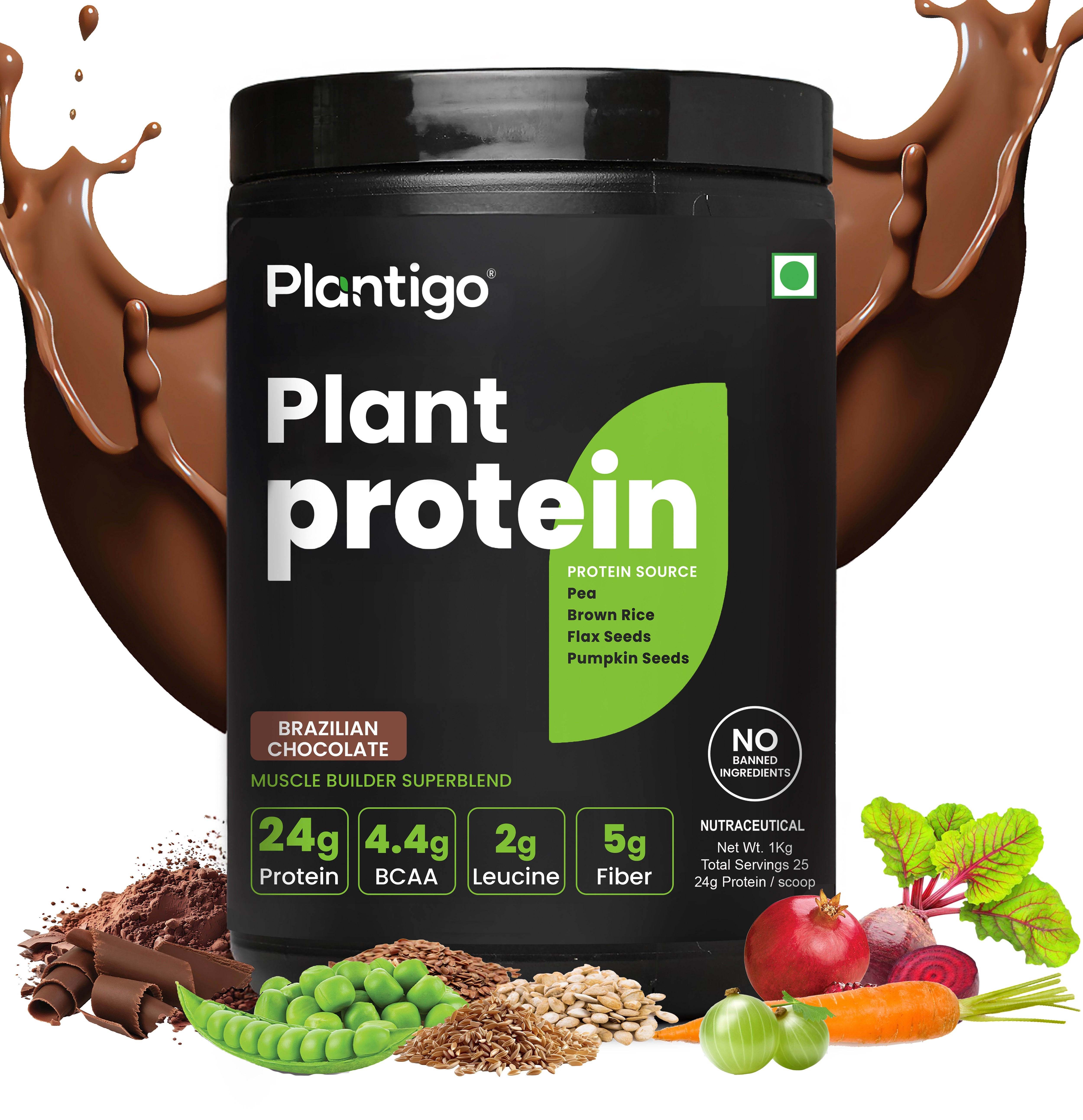
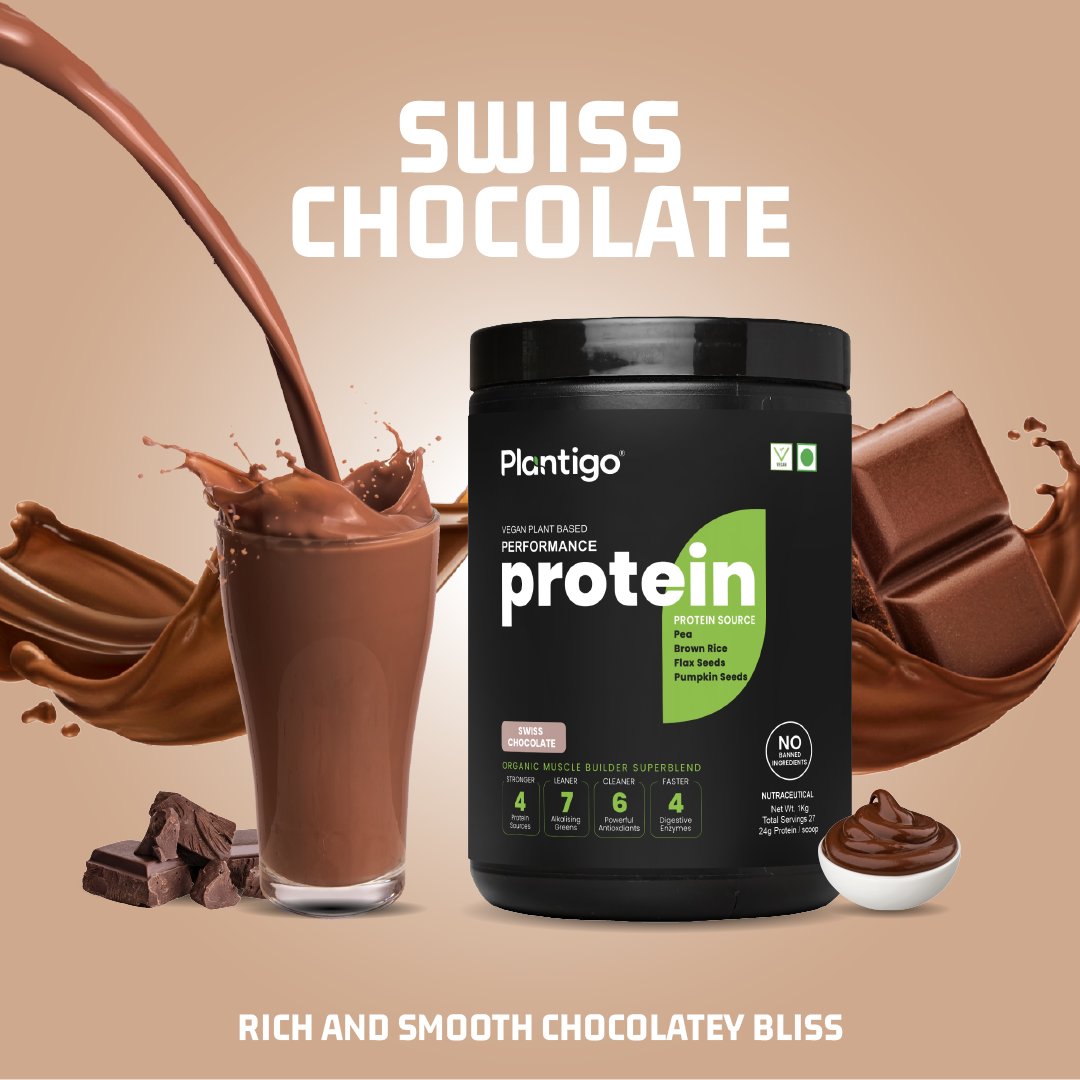
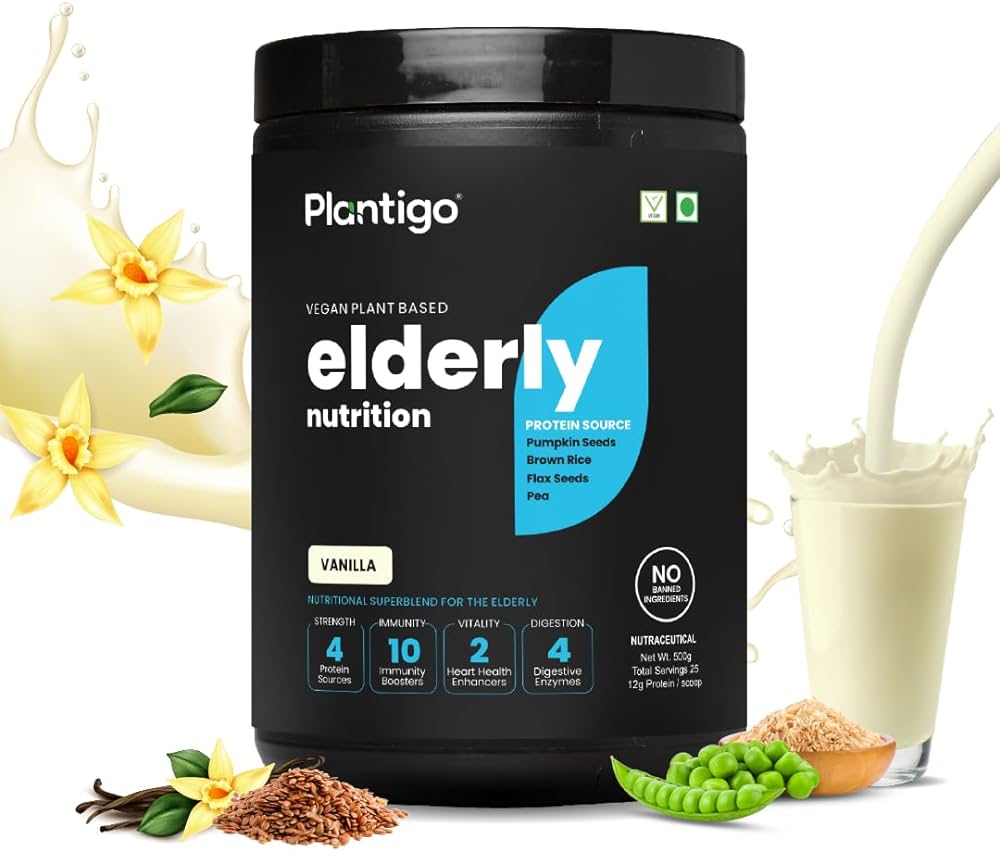
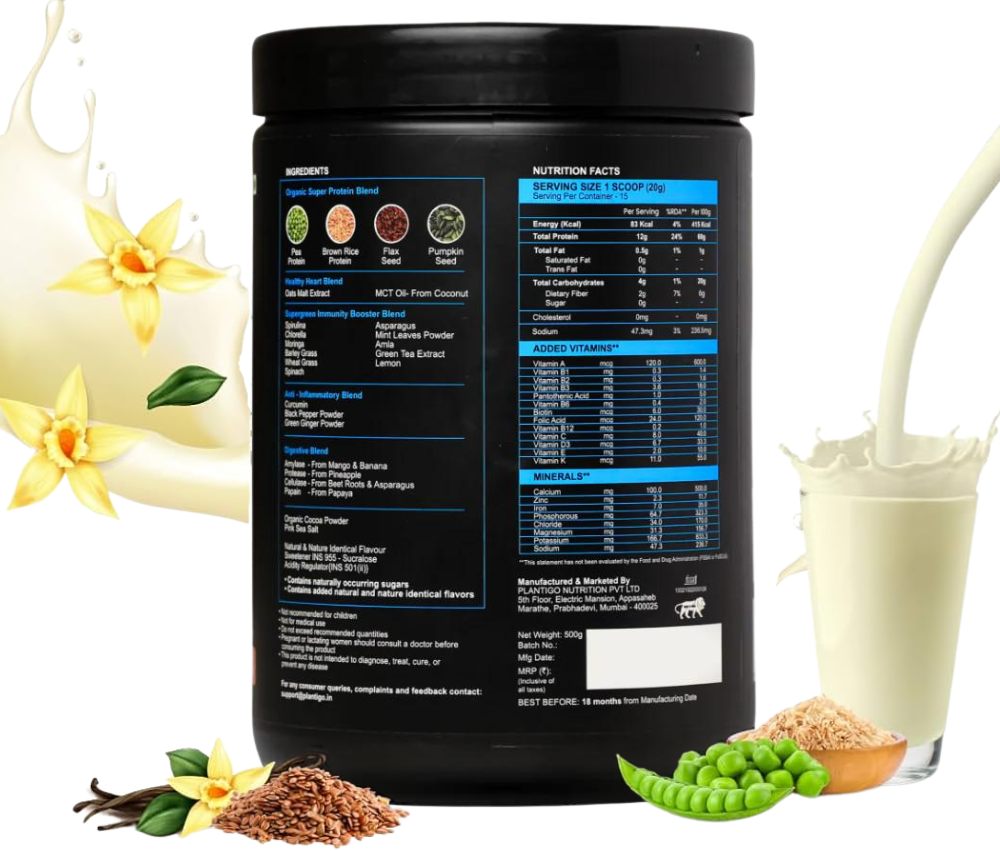
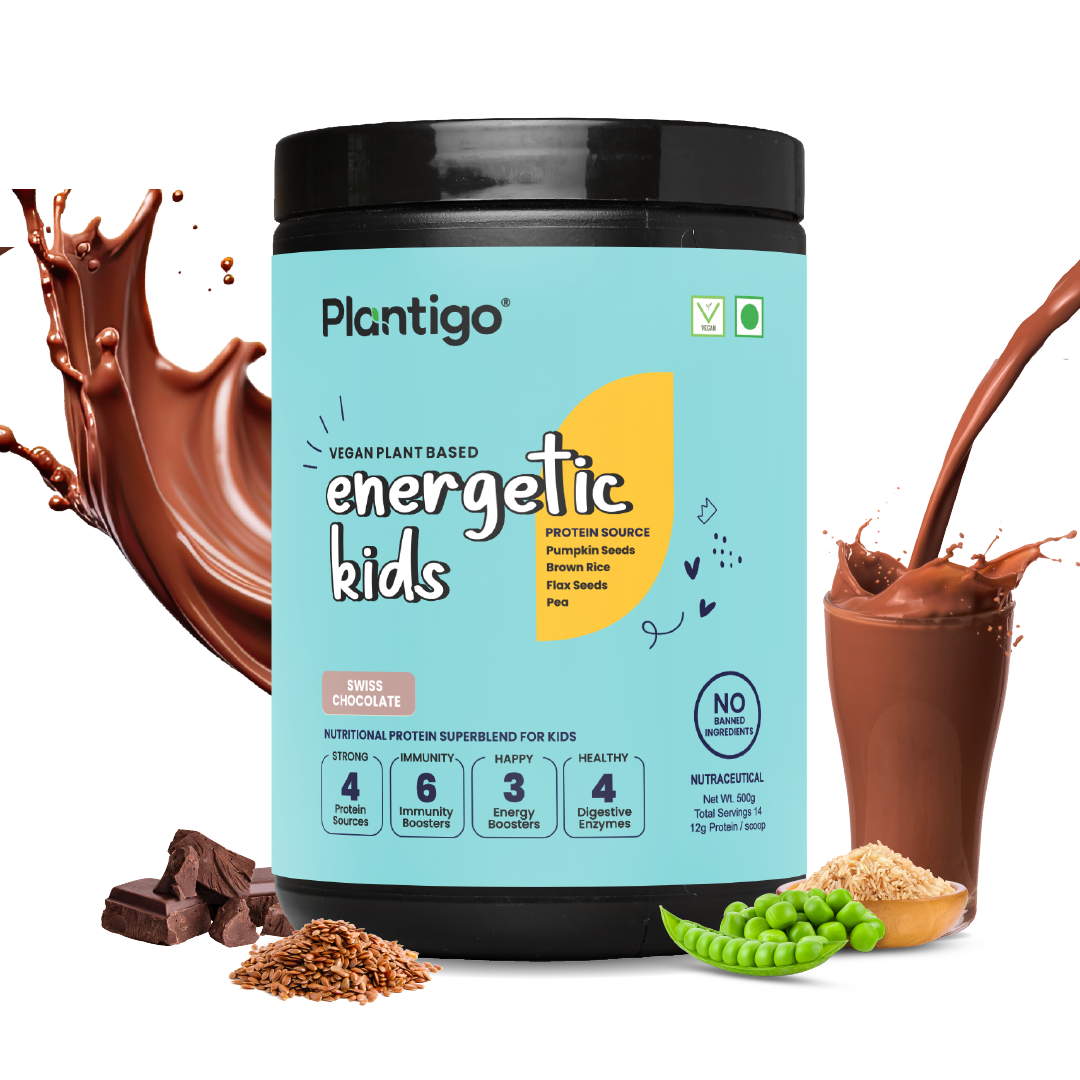
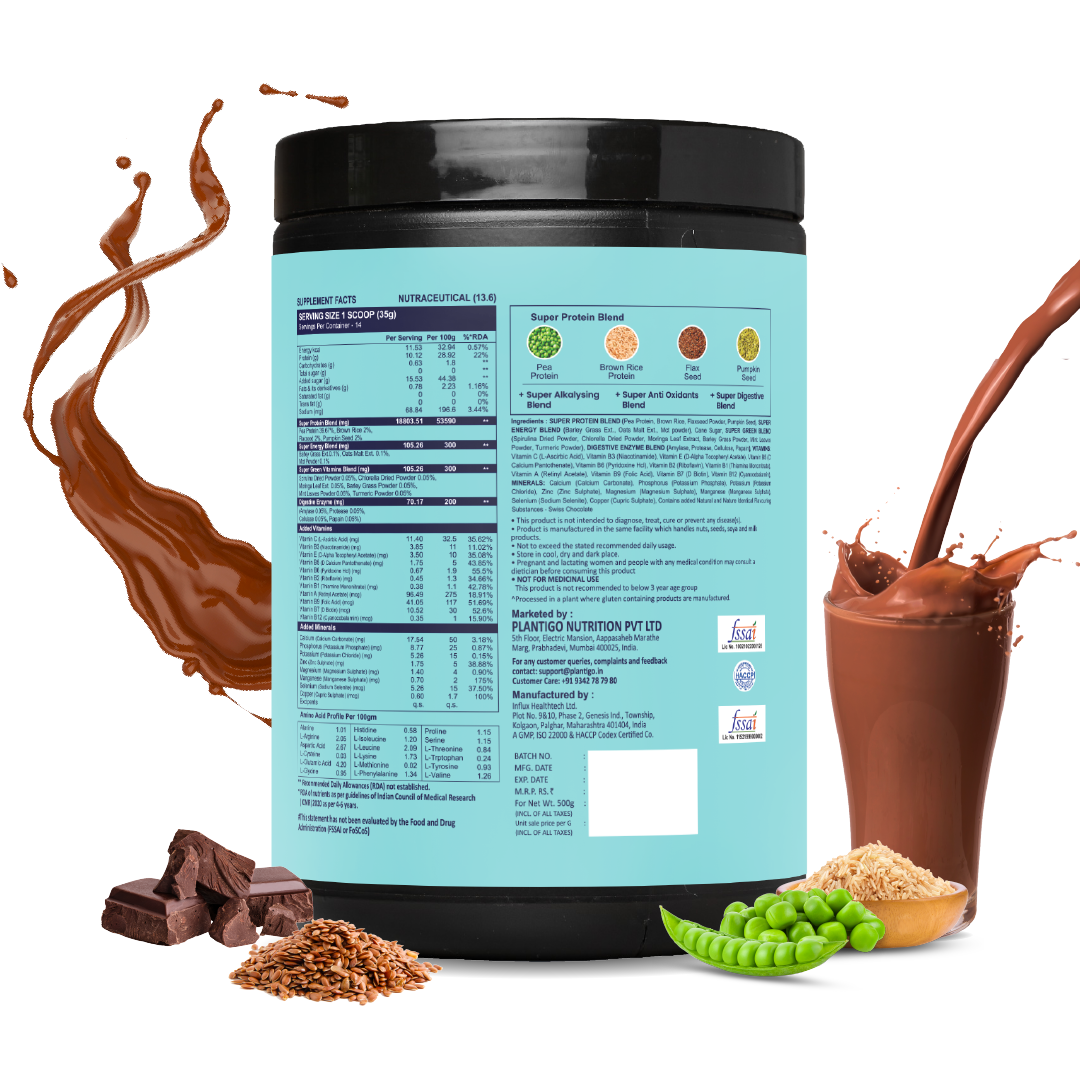
If you're building a complete protein strategy around Indian food, Plantigo plant protein works naturally alongside a roti-based diet — adding the amino acids that wheat protein lacks, without requiring you to abandon the food culture that makes eating sustainable.
Optimise your roti. Optimise your nutrition. Start today.
Frequently Asked Questions
Q1: How much protein is in 1 roti?
Protein in 1 roti made from standard whole wheat atta sits at approximately 3–4g for a medium roti. Flour type, size, and accompaniments significantly affect the final number.
Q2: Which flour gives the most protein in roti?
Soy-enriched atta delivers the highest protein — approximately 6–8g per roti. Besan rotis come second at 5–6g. Both are significantly higher than standard whole wheat.
Q3: Is roti good for weight loss?
Yes — when portion-controlled. The fiber content, moderate GI, and satiety effect make whole wheat roti a better weight loss staple than white rice or refined bread.
Q4: How can I increase the protein in my roti?
Switch to multigrain or soy-enriched atta, add besan to your dough, or make stuffed rotis with paneer or dal. Each method meaningfully increases protein per roti without significantly changing the taste.
Q5: Is roti a complete protein?
No — wheat is deficient in lysine. Pairing roti with dal creates a complete protein by combining complementary amino acid profiles. This is why dal-roti is nutritionally superior to roti consumed alone.
References
%20contains%203%E2%80%934g%20protein,%20along%20with%20fiber%20and%20complex%20carbs.%0A%0A%0AProtein%20content%20varies%20based%20on%20flour%20type,%20size,%20and%20preparation%20%E2%80%94%20and%20can%20go%20up%20to...)